


Barcelona makes much more sense when you know which layer of its history you are standing on. A Roman tower, a palace of the counts, an 1888 brick arch and shrapnel marks from 1938 can all be within a ten-minute walk of each other. Here is the city's history in brief, era by era, with the dates that really matter, the facts kept apart from the legends, and the place where you can see each period today.
Before Rome, the plain between the Besòs and Llobregat rivers was the land of the Laietani, an Iberian people who lived in hilltop settlements. One of them stood on the Turó de la Rovira, the hill that is now one of the city's best-known lookout points. The Romans arrived on the peninsula in 218 BC, during the Second Punic War, chasing the Carthaginians.
Legend
Two stories tried to give Barcelona an epic origin. According to the first, Hercules was sailing with Jason and the Argonauts when a storm separated the ninth of their ships from the rest. The ship reached the coast near Montjuïc, and there they founded "Barca Nona," the city of the ninth boat. According to the second, the Carthaginian Hamilcar Barca, Hannibal's father, founded a city bearing his family's name around 230 BC. Neither has any archaeological evidence behind it: they are myths, not history.
The founding of Barcelona does have a date and a founder: the colony of Iulia Augusta Faventia Paterna Barcino was founded under Augustus, around 15-10 BC, on Mons Tàber, a small hill by the sea. Its first settlers seem to have been veterans discharged from the Cantabrian Wars and colonists from Italy and Gaul. It was not the provincial capital, which was Tarraco (today's Tarragona). It was a small town, about 10 walled hectares, with a very busy port and a wine shipped in amphorae all over the Mediterranean.
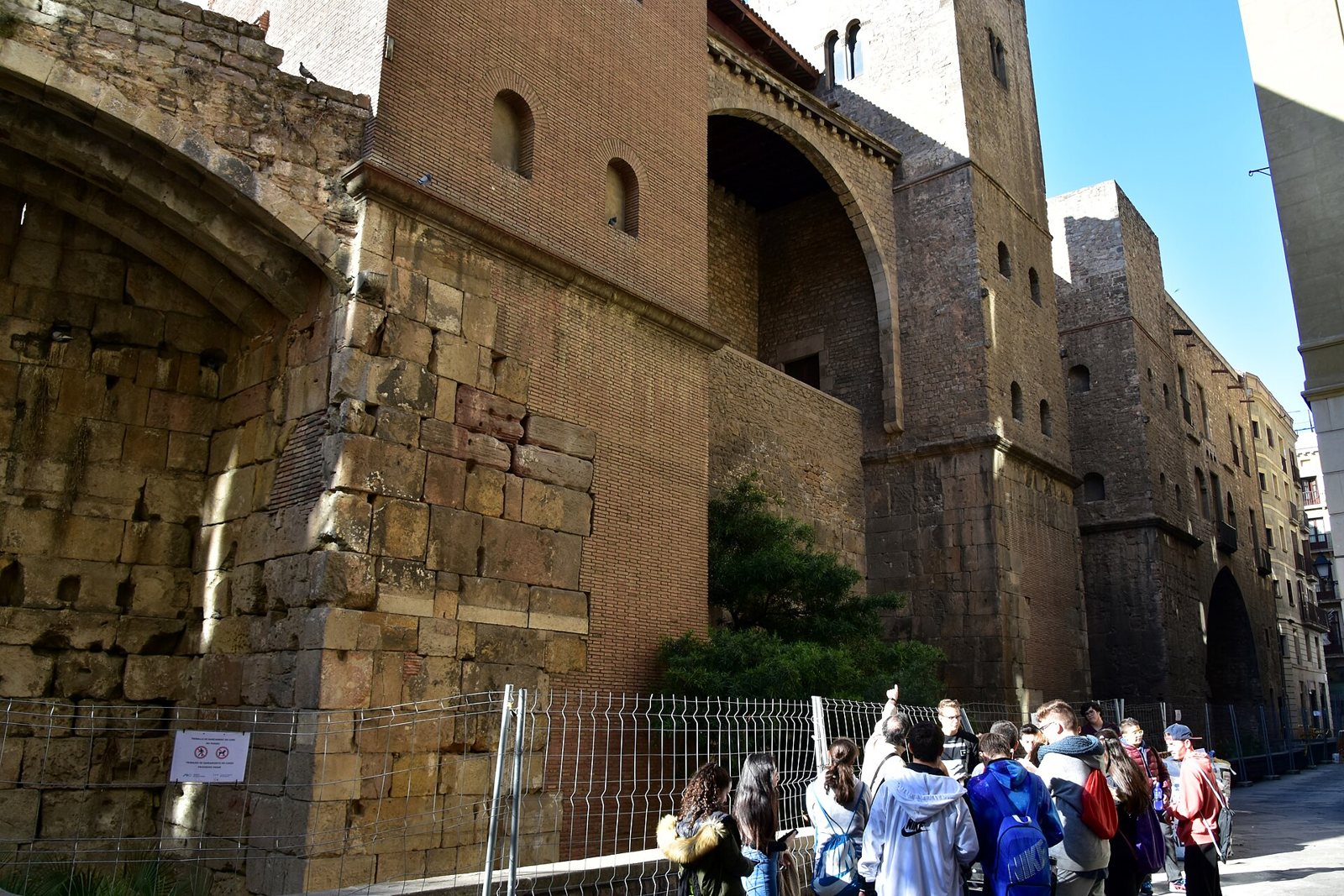
Today's Plaça de Sant Jaume sits on the center of Roman Barcino, where its two main streets crossed, and the Temple of Augustus presided over the city. During the crisis of the Empire, between the late 3rd century and the 4th century, Barcino surrounded itself with a second, much stronger wall with more than 70 towers, and in the 4th century it became the seat of a bishop. We go into detail in our post on Barcino, Roman Barcelona.
Where to look
The Roman towers in Plaça Nova, the columns of the Temple of Augustus on Carrer del Paradís, and the excavated city beneath Plaça del Rei in Barcelona, which you can visit with the Barcelona History Museum (MUHBA).
In 415 the Visigothic king Ataulf entered Barcelona with his wife, the Roman princess Galla Placidia, and set up his court here. It was a short episode: he was murdered in the city that same year. Historians see it more as a court passing through than as a true capital. In the 6th century, after losing Gaul, the Visigothic kings lived in Barcelona again for a few years, until the court settled for good in Toledo. The city came to be called Barcinona and kept its role as a bishop's seat.
After Muslim armies arrived on the peninsula in 711, Barcelona surrendered without a fight in the early 8th century. Its elites made a deal with the new rulers. The city came to be called Barshiluna and spent less than a century under Muslim rule. In 801 the Frankish army of Louis the Pious, son of Charlemagne, took it after a siege of several months. Barcelona then became part of the Hispanic March, the frontier of the Carolingian Empire facing al-Andalus, governed by counts the emperor appointed.
In 878 the Frankish king gave Wilfred the Hairy (Guifré el Pilós) the counties of Barcelona, Girona and Besalú. When he died, Wilfred left the county to his sons without asking the Frankish kings for permission, and from then on the succession stayed in his family. The break came a century later. In 985 Almanzor besieged Barcelona, took it, burned it and carried off many of its people as captives. The Frankish kings never came to help. In 988 Count Borrell II did not renew his homage, and from then on the county acted as if it were independent.
In the 11th century Ramon Berenguer I gained supremacy over the other Catalan counties and grew rich on the parias, the tributes that Muslim kingdoms paid in exchange for peace. The counts' palace, next to the Roman wall, is the origin of the Palau Reial Major in Plaça del Rei.
Legend
According to tradition, the four red stripes on a gold background of the Catalan flag were born when, after a battle, the Frankish king ran his fingers, stained with Wilfred's blood, across his golden shield. It is a legend: there is no document from the time to back it up.
In 1137 Count Ramon Berenguer IV married Petronilla, heiress to the Kingdom of Aragon. The County of Barcelona and the Kingdom of Aragon were united under a single dynasty, each with its own laws and institutions. That union is the Crown of Aragon.
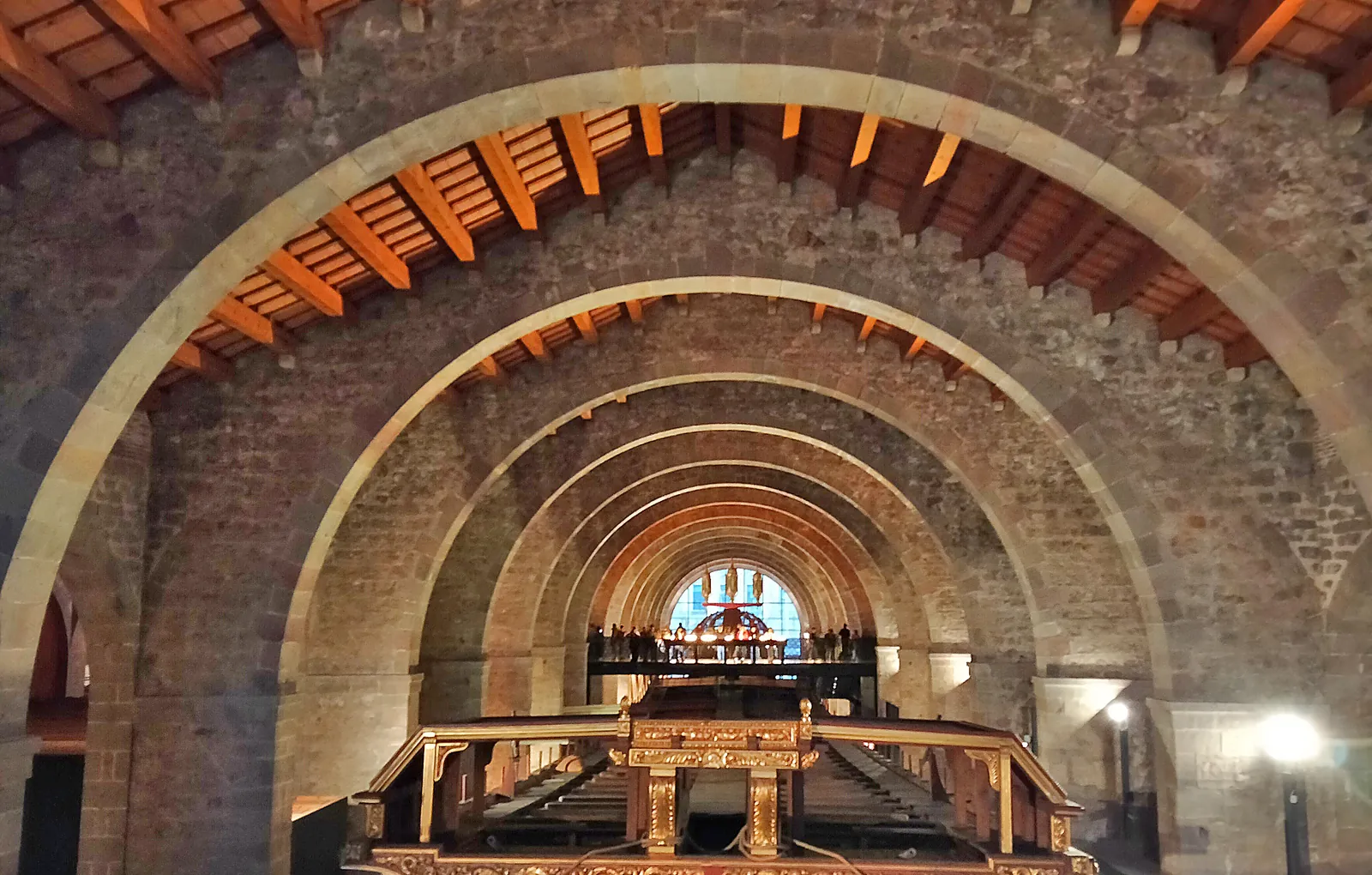
The 13th and 14th centuries were the age of merchant Barcelona. In the mid-13th century came the Consell de Cent, the municipal government that ran the city until 1714. In 1258 came the Consulate of the Sea, which gave its name to the leading book of maritime law in the Mediterranean. James I conquered Mallorca in 1229. The Drassanes (the royal shipyards) built galleys, and Barcelona had consulates in ports such as Alexandria, Tunis and Naples. In 1329 work began on Santa Maria del Mar, the church built by the people of the La Ribera neighborhood. At the same time the Gothic Barcelona Cathedral was rising and the kings were enlarging the palace in Plaça del Rei.
That prosperity had its dark side. The Black Death of 1348 killed between a third and half of the population. In 1391 the Jewish quarter was attacked. We tell you more in our post on Barcelona's Jewish quarter. Between 1462 and 1472 a civil war pitted the city against its own king, John II, who laid siege to it.
Where to look
The Gothic Quarter is, above all, the Barcelona of this period. For the full route, here is what to see in the Gothic Quarter, stop by stop.
In 1493 Barcelona welcomed Columbus back from his first voyage, but from 1503 trade with the Americas was in Seville's hands and the city was left in the Mediterranean. Tensions with the Crown exploded on June 7, 1640, in the Corpus de Sang. That day, the reapers killed the viceroy in Barcelona, and the Reapers' War (Guerra dels Segadors) began, lasting until 1652.
The great turning point came with the War of the Spanish Succession. In 1705 Barcelona backed Archduke Charles of Austria against Philip V of Bourbon. When the allied powers signed the Peace of Utrecht in 1713, Catalonia was left on its own. The Bourbon siege lasted about 14 months, from July 1713 to September 1714, with systematic bombardment. The city was defended by soldiers and the Coronela, the guilds' militia, against a far larger army. On September 11, 1714, after the final assault, Barcelona surrendered. That day is now the Diada, Catalonia's national day. In other words, the national day commemorates a defeat.
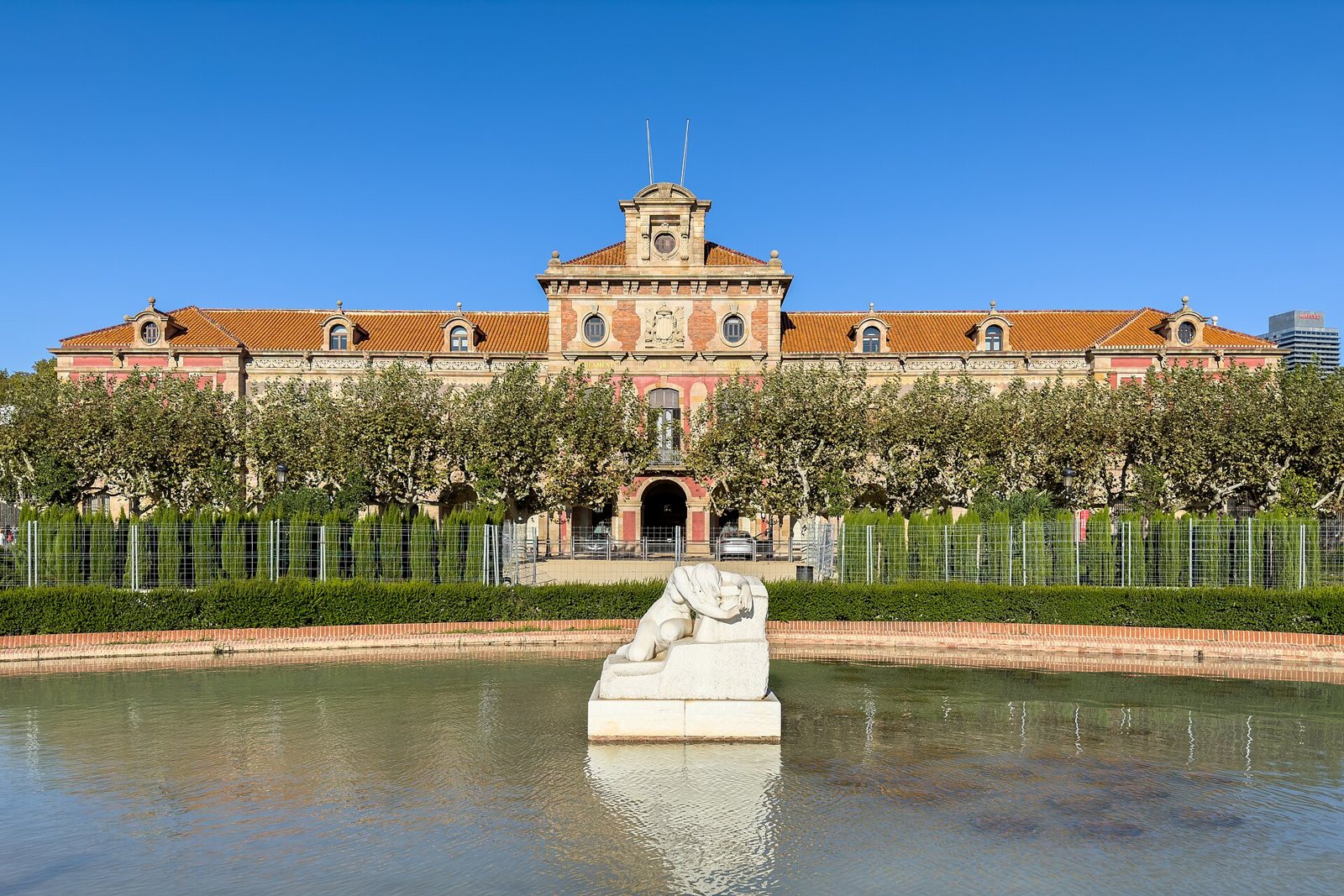
The consequences were immediate. The Nueva Planta decrees of 1716 abolished the Generalitat, the Corts and the Consell de Cent. To keep watch over the city, Philip V built the Ciutadella, a fortress for which a large part of the La Ribera neighborhood was torn down. More than a century and a half later, that hated place became Ciutadella Park.
Where to look
At MUHBA El Born, beneath the old market hall, lie the remains of the streets torn down to build the fortress. You need the guided tour to go down to them. The Passeig del Born was the headquarters of the defense in 1714. Here is what to see in El Born, Barcelona.
Barcelona recovered through trade and industry. In the 18th century it grew from about 30,000 people to more than 130,000, and Barceloneta was built (1753). In 1778 direct trade with the Americas opened up, and the "indianas," printed cotton fabrics, took off. In the 19th century came the steam-powered factories and, on October 28, 1848, the first railway on the peninsula, between Barcelona and Mataró.
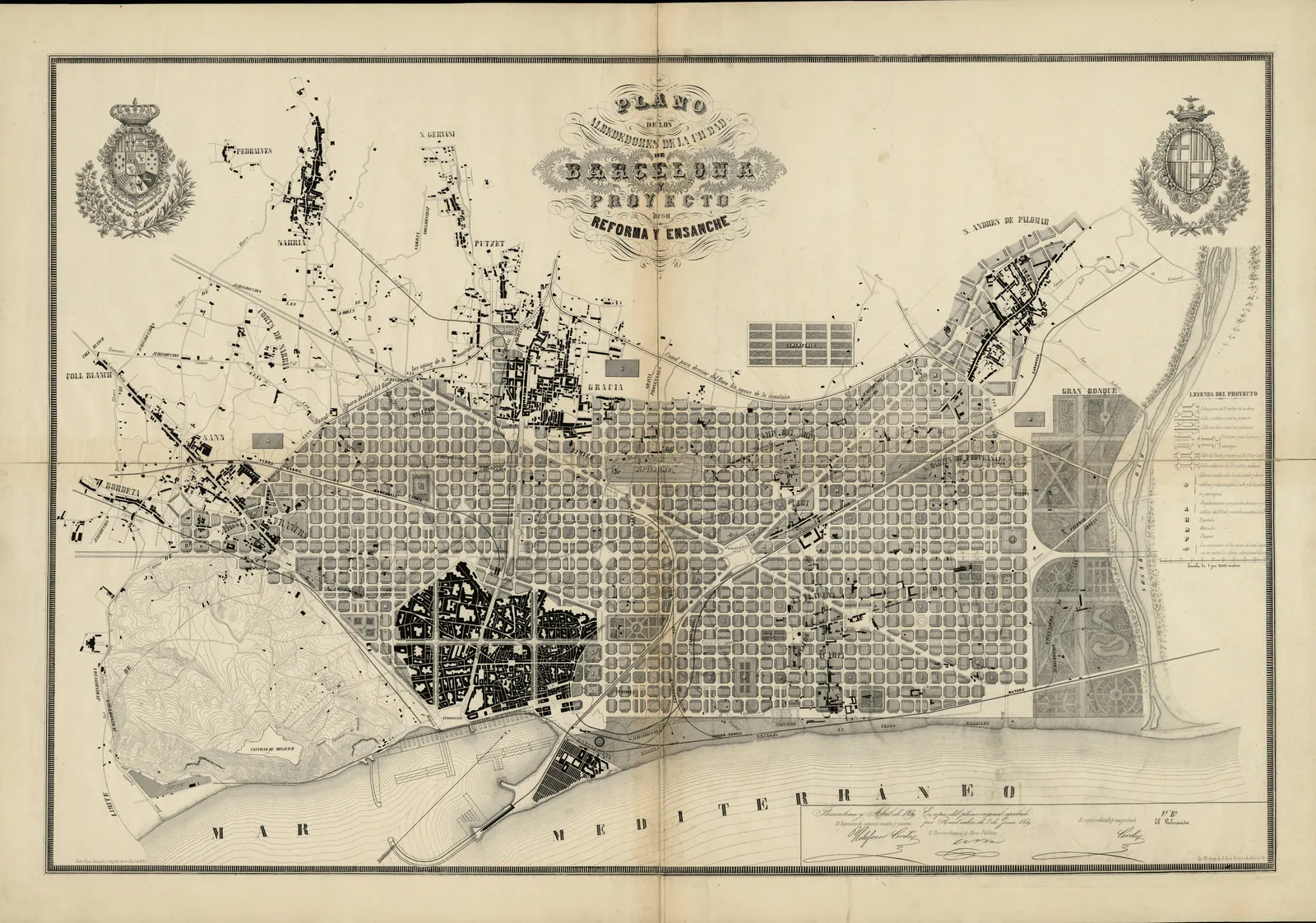
But the city was still locked inside its medieval walls. It was a fortified town where nothing could be built outside the walls, and inside, factories and homes were piled on top of each other. Density topped 850 people per hectare and life expectancy was around 30 years. In 1854 a royal order finally allowed the walls to be torn down. The City Council held a competition for the expansion and Antoni Rovira i Trias won it, but the government in Madrid approved the plan by engineer Ildefons Cerdà in 1860.
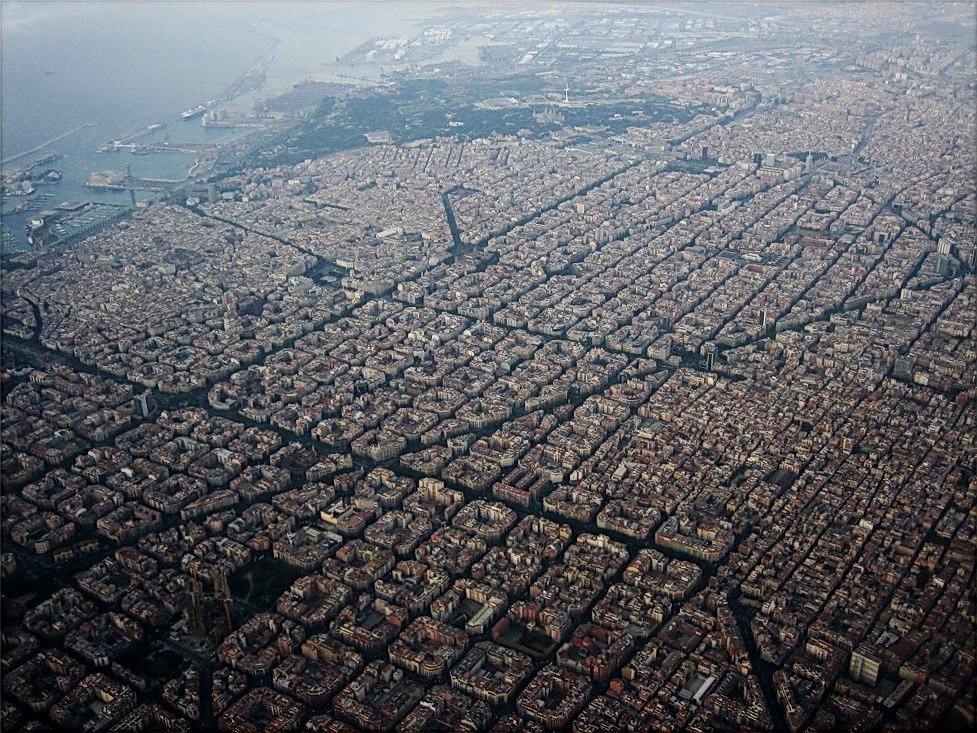
Cerdà's Eixample is the grid you see from the air: blocks 113 meters (about 370 feet) on each side, streets 20 meters (about 66 feet) wide and cut-off corners, designed to give light, visibility and room to turn. The idea was for the inner courtyards of the blocks to be gardens, but they ended up built over, and the neighborhood meant to be egalitarian became the showcase of the bourgeoisie. Cerdà died in 1876, broke and barely recognized.
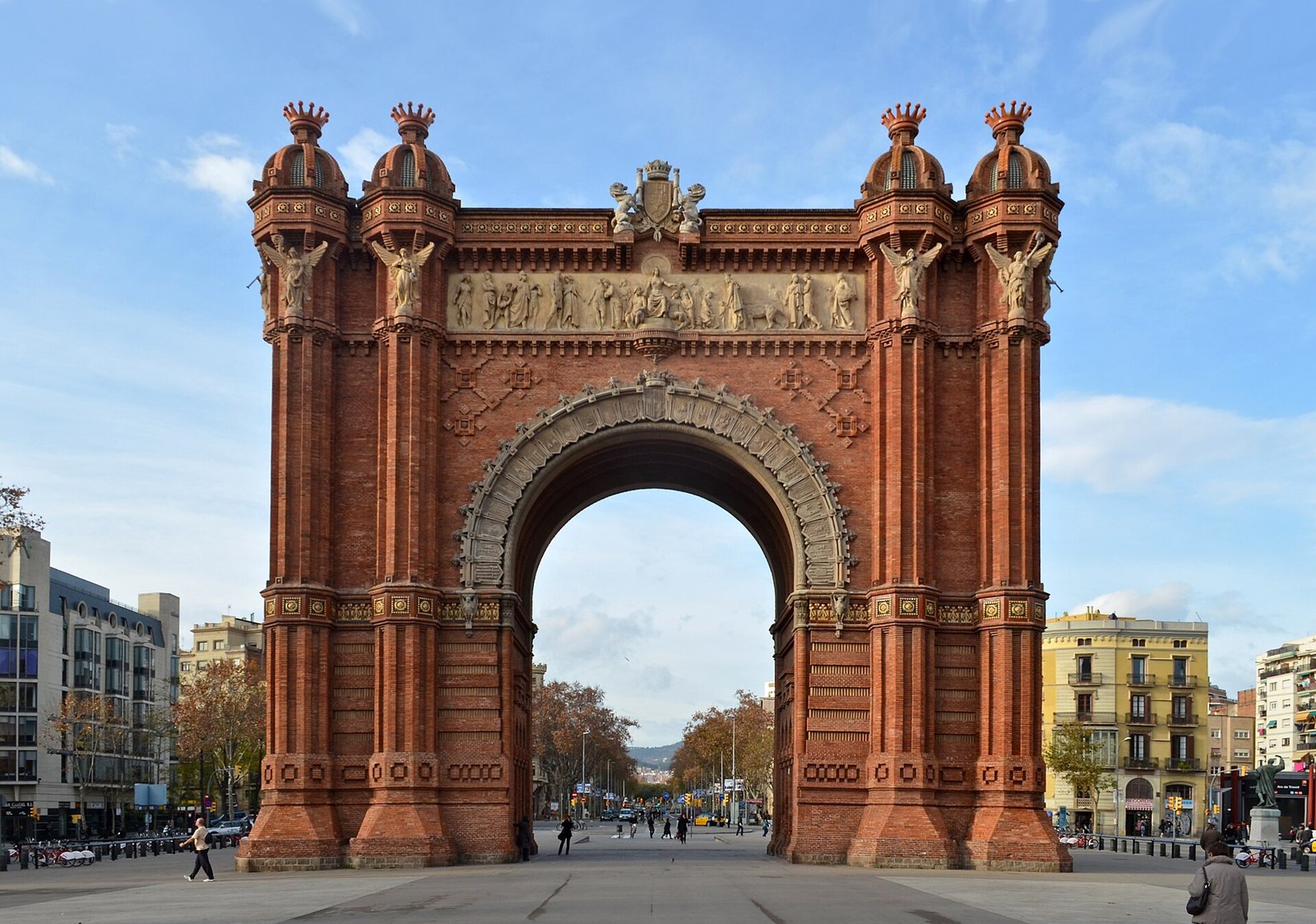
In 1869 General Prim's government handed the Ciutadella over to the city to make a park, and there mayor Rius i Taulet held the 1888 Universal Exposition. Its main gateway was the Arc de Triomf in Barcelona, where our welcome tour starts today. Those same years saw the birth of Modernisme, the Catalan version of Art Nouveau. In 1883 Antoni Gaudí took over the Sagrada Família, a project started by Francisco de Paula del Villar. And between 1905 and 1908 Lluís Domènech i Montaner built the Palau de la Música Catalana.
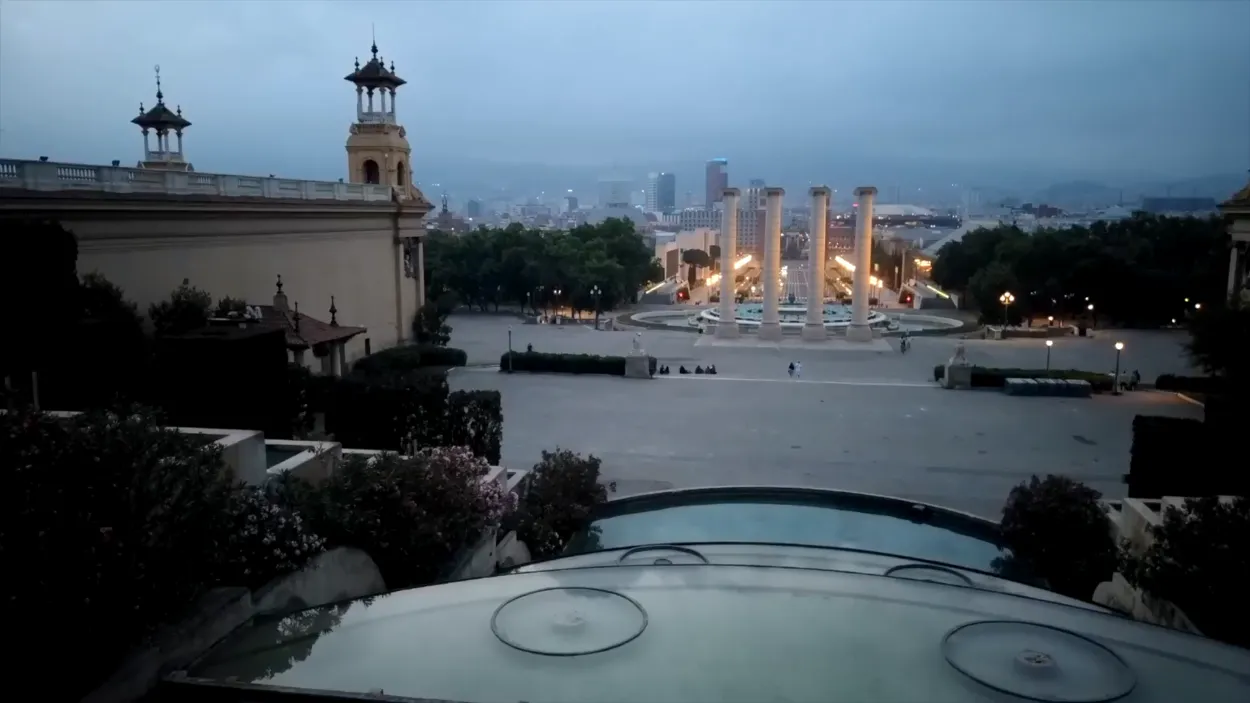
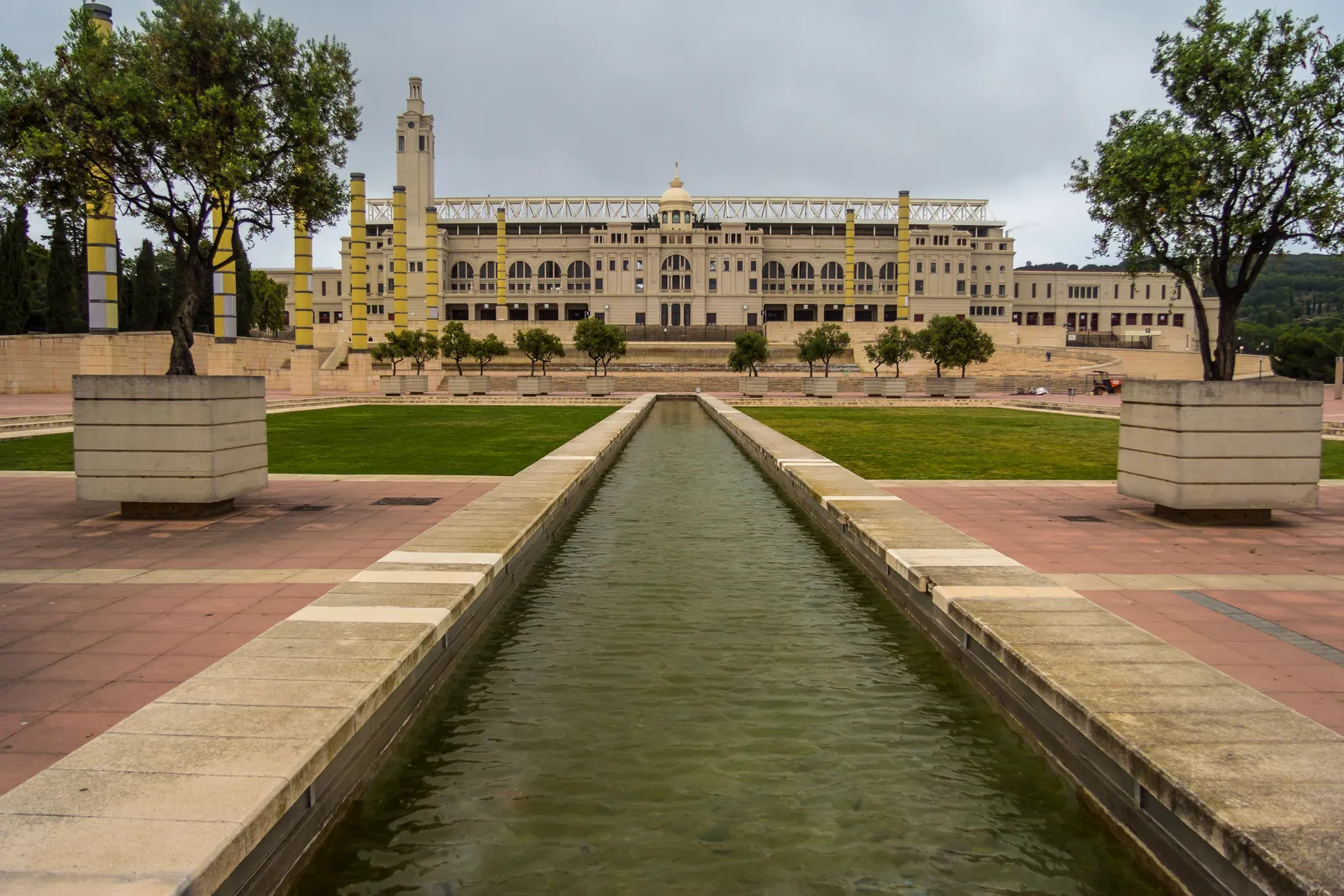
The second great exposition took a long time to arrive. It was first proposed in 1909, World War I postponed it, and in the end the Primo de Rivera dictatorship completed it. Alfonso XIII opened the International Exposition on Montjuïc on May 19, 1929. It left behind the Palau Nacional (now the National Art Museum of Catalonia), the Poble Espanyol, the stadium and the Magic Fountain. Mies van der Rohe's German Pavilion was taken down when the fair ended, and the one you see today is a reconstruction.
With the Second Republic, in 1931, the Generalitat was restored. In July 1936 the military coup broke out, and in Barcelona it failed. George Orwell arrived in December 1936 and described that revolutionary Barcelona in "Homage to Catalonia." The city was in the Republican rear guard and suffered bombing raids by the Italian air force, Franco's ally.
On January 30, 1938, a bomb fell on Plaça de Sant Felip Neri and 42 people died, most of them children. The shrapnel marks are still on the church facade. The heaviest attacks came on March 16, 17 and 18, 1938. According to the Enciclopèdia Catalana, thirteen air raids in just over 40 hours killed close to a thousand people. On January 26, 1939, Franco's troops entered Barcelona, and hundreds of thousands of people fled toward France.
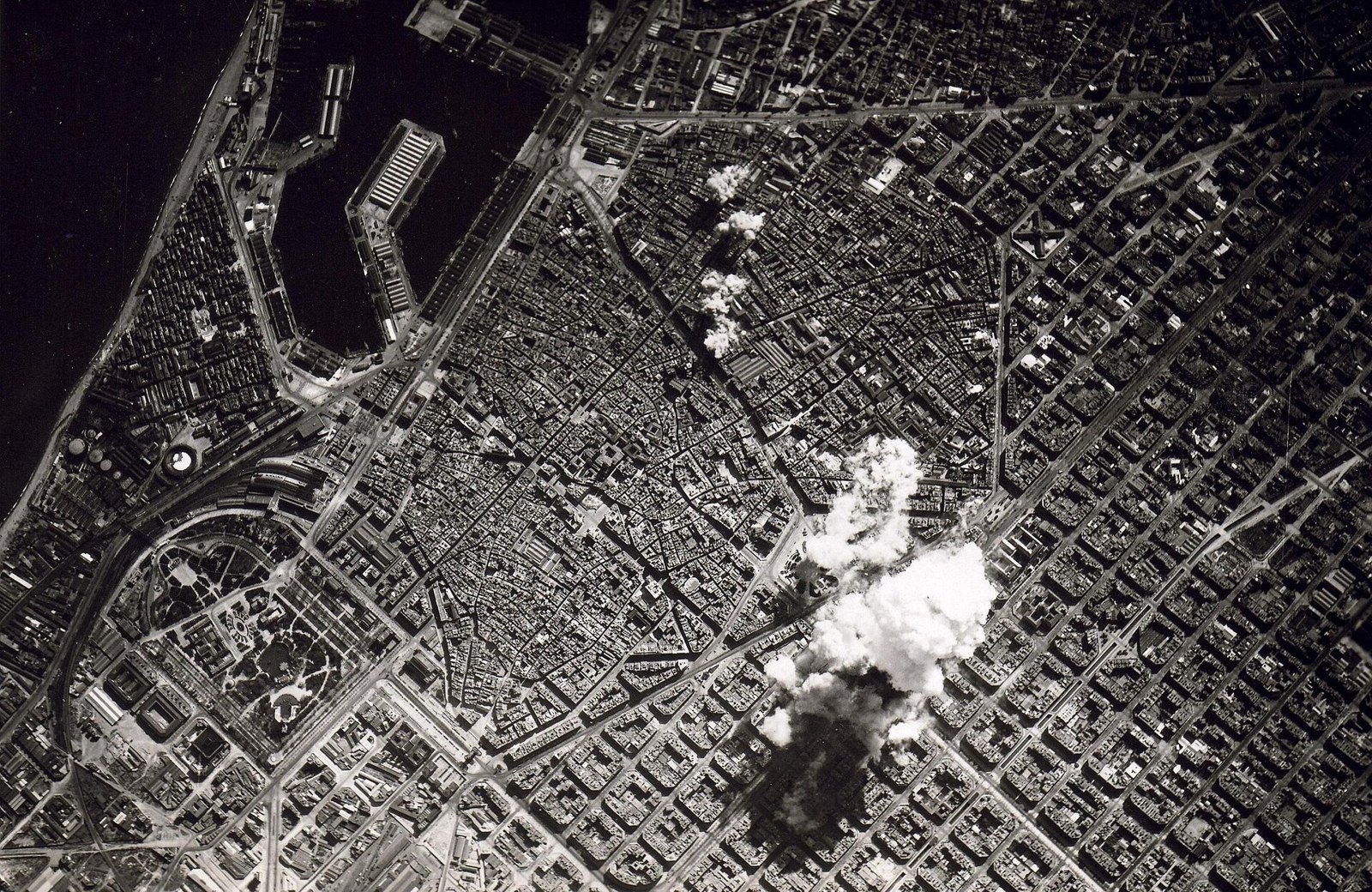
If this is the chapter that interests you most, our private Civil War tour in Barcelona takes you to the places where it happened with an official guide.
The postwar years were hard. The president of the Generalitat, Lluís Companys, had gone into exile in France. There the Gestapo arrested him and handed him over to Franco's regime, which had him shot at Montjuïc Castle in October 1940. Catalan disappeared from public life: books, newspapers and songs in Catalan were banned. In the 1950s and 60s a large wave of immigrants arrived from Andalusia, Murcia and Extremadura, and shantytowns grew in places like El Carmel and the Poblenou shoreline. Franco died in November 1975 and the Generalitat was restored in 1977.
In 1986 Barcelona won the 1992 Olympic Games. Mayor Pasqual Maragall used them to carry out the biggest urban transformation since the Cerdà plan. Factories in Poblenou were torn down, the railway tracks along the sea were put underground, and the Olympic Village and the Port Olímpic were built. Miles of industrial coastline that had been closed to the public became beaches and a seafront promenade. On July 25, 1992, in the Montjuïc stadium, Paralympic archer Antonio Rebollo lit the Olympic cauldron with an arrow.
Today Barcelona has 1,729,963 residents, according to the municipal register as of January 1, 2026, from the City Council's Municipal Data Office. Housing prices and the pressure of tourism are its big challenges. And its history is still in plain sight: the Ciutadella is a park, La Ribera is one of the most visited neighborhoods, and the medieval Drassanes now house the Maritime Museum.
If after this summary you want to see the history with your own eyes, one museum and a short walk through the center are all you need. Here is what we at Willy's Plan recommend, and why.
Almost every list names the same three museums for understanding the city's history. The first is the Barcelona History Museum (MUHBA), in Plaça del Rei. The second is the Museum of the History of Catalonia, in the Palau de Mar, by Port Vell. The third is El Born, which people often describe as free, with views from above of the ruins of the Barcelona of 1700.
Our pick is MUHBA Plaça del Rei, because it is the museum of the city's own history and the only one of the three that covers it from the Roman founding on. An elevator takes you down beneath the square, where a Roman laundry, a dye workshop, a fish-salting factory and a winery survive, along with the first bishop's complex. Above them stands the Palau Reial Major of the counts and kings, with the Saló del Tinell and the Chapel of Santa Àgata. In the same complex, the Casa Padellàs hosts "Barcelona Flashback," the historical overview exhibition MUHBA uses to sum up the city from ancient Barcelona to the 21st century. In about 2 hours you get 2,000 years of Barcelona, in order.
The other two have their place, but they do not answer the question of how to understand Barcelona's history. The Museum of the History of Catalonia is very well put together and highly interactive, great with kids, but its permanent exhibition tells the history of Catalonia from prehistory on, not the story of the city. El Born, now part of the museum as MUHBA El Born, is the place to understand 1714: beneath the old market hall lie the streets and houses of the La Ribera neighborhood torn down to build the Ciutadella. But free entry only covers the main hall. You need the guided tour to go down to the archaeological site, and its permanent exhibition is being renovated. It is a good add-on if 1714 interests you, not the main museum.
Tip. Start at the bottom, in Roman Barcino, and work your way up. Save Barcelona Flashback for the end, because it covers the centuries the underground ruins do not. MUHBA Plaça del Rei is open Tuesday to Saturday from 10 a.m. to 7 p.m. and Sunday from 10 a.m. to 8 p.m. It is closed on Mondays. General admission is €7.30 and includes other MUHBA sites, such as El Call and Refugi 307. It is free on Sundays from 3 p.m., all day on the first Sunday of the month, and for under-16s. Our private Gothic Quarter tour passes through Plaça del Rei, so the museum makes a good plan right before or after it.
The historical routes suggested by Barcelona City Council and Barcelona Turisme start with Roman Barcino, continue through the medieval Gothic Quarter and, for 1714, lead to the Fossar de les Moreres and El Born. There is no official list of three places. This one is ours, designed to take you from Barcino to today in about 15 minutes on foot, in this order.
We picked these three because they cover the three eras people ask about most (Roman, medieval, and 1714 to today), they are almost in a straight line, and you can see them for free from the street. The first two are stops on our private Gothic Quarter tour, and El Born is part of the welcome tour. If the 20th century interests you, add Plaça de Sant Felip Neri, about 3 minutes from Sant Jaume, with its facade scarred by the 1938 bombing.
Tip. Follow this order: Plaça de Sant Jaume, Temple of Augustus, Plaça del Rei, Via Laietana and Carrer de l'Argenteria down to Santa Maria del Mar and the Fossar, and finish at El Born. The Temple of Augustus is open Tuesday to Saturday from 10 a.m. to 7 p.m., Sunday from 10 a.m. to 8 p.m. and Monday only from 10 a.m. to 2 p.m., with free admission. Remember that the Fossar is a memorial. It is not a place to sit down for lunch or take goofy photos on the monument.
The best way to understand Barcelona history is to walk it in reverse, from the most recent to the oldest. Our Barcelona welcome tour starts under the 1888 Arc de Triomf, heads into the Ciutadella of 1714, crosses El Born and reaches the Gothic Quarter, where medieval and Roman Barcelona appear, before continuing toward El Raval. In 3 hours on foot you pass through almost every era in this article. It is a private tour, just your group, with an official guide, in English or Spanish, at 10:30 a.m. or 4:30 p.m. Kids 0 to 11 go free and you can cancel for free up to 48 hours before.
If you want to spend more time in the old city, our private Gothic Quarter tour focuses on Barcino, the counts and medieval Barcelona, with entry to the Cathedral included.
“He demonstrated not only the vertical architecture of the beautiful city but the horizontal and how it is played out.”
Clifford · Viator, welcome tour with Pablo, 2024
Before you go. The dates in this summary have been checked against several sources; where historians disagree (for example, the exact year of the Muslim arrival), we give only the period. Main photo: the Eixample from the air, by Alhzeiia (Wikimedia Commons, CC BY-SA 2.0). Photo of the 1938 bombing: Italian air force, public domain (Wikimedia Commons). Population data from Barcelona City Council and 1938 bombing data from the Enciclopèdia Catalana, checked in November 2026.
Barcelona was founded by the Romans under Emperor Augustus, around 15-10 BC, with the name Barcino. The stories of Hercules and Hamilcar Barca as founders are legends with no archaeological evidence.
Barcelona is about 2,000 years old as a city, counting from the Roman founding of Barcino around 15-10 BC. Before that, there were already Iberian settlements of the Laietani on the surrounding hills.
The name comes from Barcino, the Roman colony. Under the Visigoths the city was called Barcinona, and in the Muslim period Barshiluna, which led to the current name.
Because on September 11, 1714, Barcelona fell to the troops of Philip V after a siege of about 14 months. The Diada commemorates that defeat and the loss of the Catalan institutions that followed.
Almost all of it is on display in the center: Roman Barcino and the medieval city in the Gothic Quarter and the MUHBA, 1714 in El Born and the Ciutadella, the 19th-century Eixample, the Montjuïc of 1929 and the 1992 waterfront. A guided tour of the center connects them in a single morning or afternoon.
MUHBA in Plaça del Rei, the city's history museum. In a visit of about 2 hours you go down to Roman Barcino, up to the palace of the medieval counts and kings, and see an overview of 2,000 years of the city in the Casa Padellàs. The Museum of the History of Catalonia tells the history of Catalonia, not of Barcelona, and El Born is an add-on for understanding 1714.
MUHBA Plaça del Rei is free on Sundays from 3 p.m., all day on the first Sunday of every month, and for under-16s. The rest of the time, general admission is €7.30 and includes other MUHBA sites, such as El Call and Refugi 307.
For a first visit, the private Barcelona welcome tour, which goes from the Arc de Triomf to the Gothic Quarter and El Raval in 3 hours with an official guide. If you are most interested in Roman and medieval Barcelona, the private Gothic Quarter tour, and for the 20th century, the Civil War tour.