Guided tour of La Rambla · Barcelona

Private tour of Barcelona's La Rambla with an official guide

Walking route along Barcelona's most famous promenade: the Canaletes Fountain, the Rambla dels Estudis, the Palau de la Virreina, La Boqueria market, the Miró mosaic, the Gran Teatre del Liceu, Plaça Reial, the Palau Güell and the Columbus Monument, down to the Rambla de Mar. Tour with an official tour guide.

Rating on TripAdvisor and Viator
0 ★
Exterior and interior duration
0 h
Certified official tour guides
0 +
Exclusive private groups
0 %
About this tour

Private Tour of Barcelona's La Rambla: the city's most historic route

La Rambla is really five promenades that run one after another from Plaça de Catalunya down to the port over 1.2 kilometers (three-quarters of a mile): the Rambla de Canaletes, dels Estudis, de Sant Josep, dels Caputxins and de Santa Mònica. The singular name stuck through everyday use, but the plural, Las Ramblas, better captures its nature: each stretch has its own character, its own buildings and its own history.

La Rambla began as a seasonal streambed that ran alongside the medieval city wall. When that section of wall was torn down from 1775, the space became a tree-lined promenade. Since then La Rambla has been the stage for many of the great moments in Barcelona’s history: the Tragic Week of 1909, the street fighting of May 1937 that George Orwell described in Homage to Catalonia and, more recently, the attack of August 2017.

On this 3-hour private guided walk, the route covers the five stretches from north to south, stopping to explain the buildings, the historical events and the details that people miss when they walk the street on their own: the Palau de la Virreina, La Boqueria market, the Joan Miró mosaic, the Gran Teatre del Liceu, Plaça Reial, Gaudí’s Palau Güell and, at the end, the Columbus Monument.


What we'll visit

Las Ramblas tour itinerary: from Canaletes to the port

The tour begins at Plaça de Catalunya and heads south, following the five sections of the axis. Each stop has a specific theme:

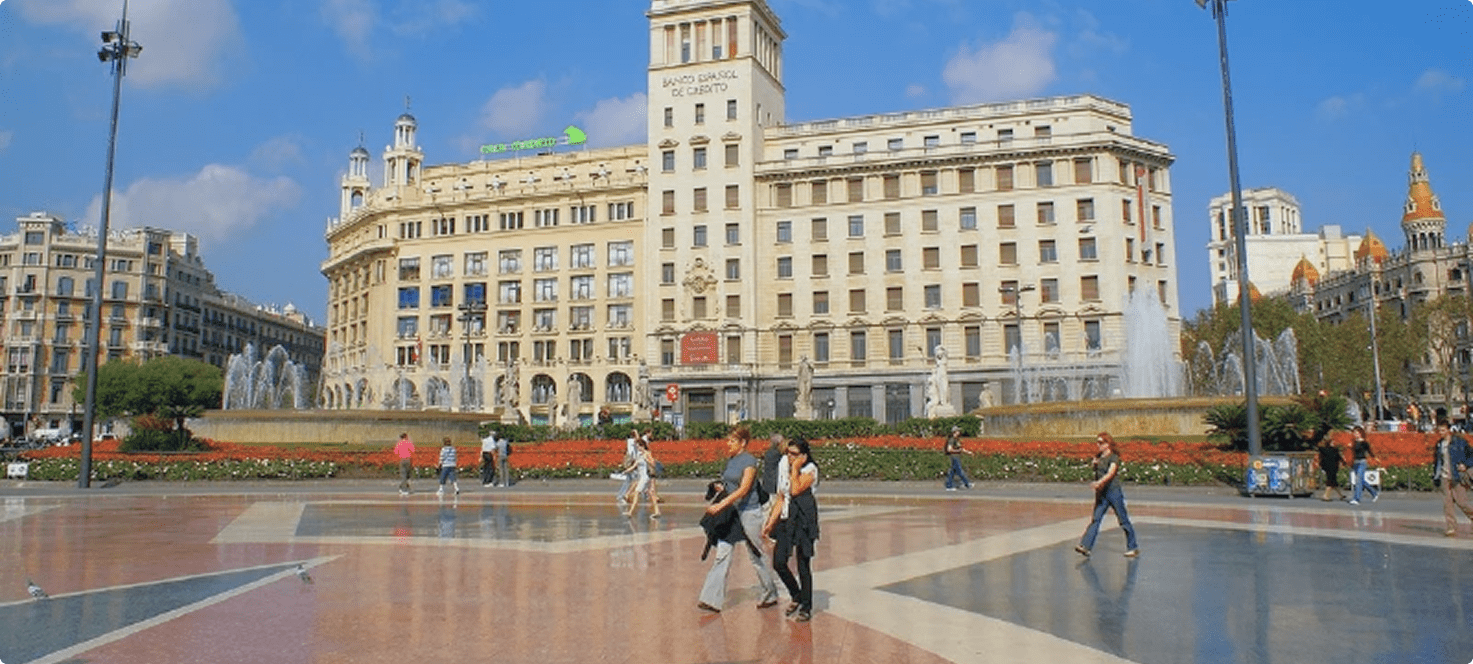
Plaça de Catalunya and the start of La Rambla

The meeting point of the old town and the Eixample. The square took its current shape in the 1920s, ahead of the 1929 International Exposition. From here your guide explains how Ildefons Cerdà’s 1860 plan shaped modern Barcelona and why La Rambla marks the border between the two cities.

Canaletes Fountain (Rambla de Canaletes)

The cast-iron fountain on the first stretch of La Rambla. Legend has it that anyone who drinks its water will always come back to Barcelona. It’s also where FC Barcelona fans celebrate titles, a custom dating back to the 1930s, when the newspaper La Rambla posted match results here.

Rambla dels Estudis and Palau Moja

This stretch is named after the Estudi General, Barcelona’s old university, which Philip V moved to Cervera after the defeat of 1714 to punish the city. For decades it was also the ‘bird Rambla’, lined with stalls selling birds. Here you’ll see the façade of the Palau Moja, built in the late 18th century for the Marquises of Moja and one of the few neoclassical palaces still standing in the city.

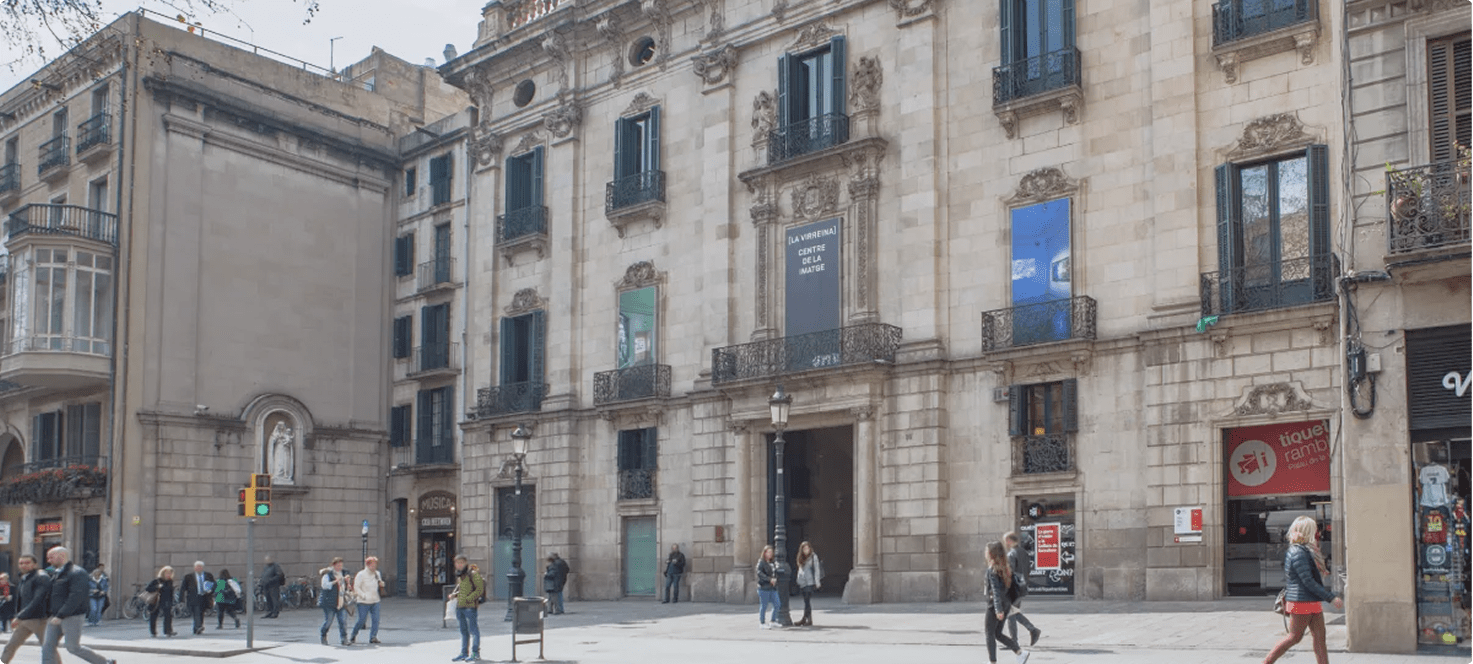
Palau de la Virreina (Rambla de Sant Josep)

Built between 1772 and 1778, commissioned by Manuel d’Amat i de Junyent, Viceroy of Peru, who wanted to build the most ostentatious palace of his time in Barcelona. The architect was Josep Ausich, although the work was directed in its final phase by Carlos Grau. The facade combines Baroque and Rococo elements in an unusual composition for the sobriety of Catalan architecture of the period. Today, it is the headquarters of the Institut de Cultura de Barcelona.

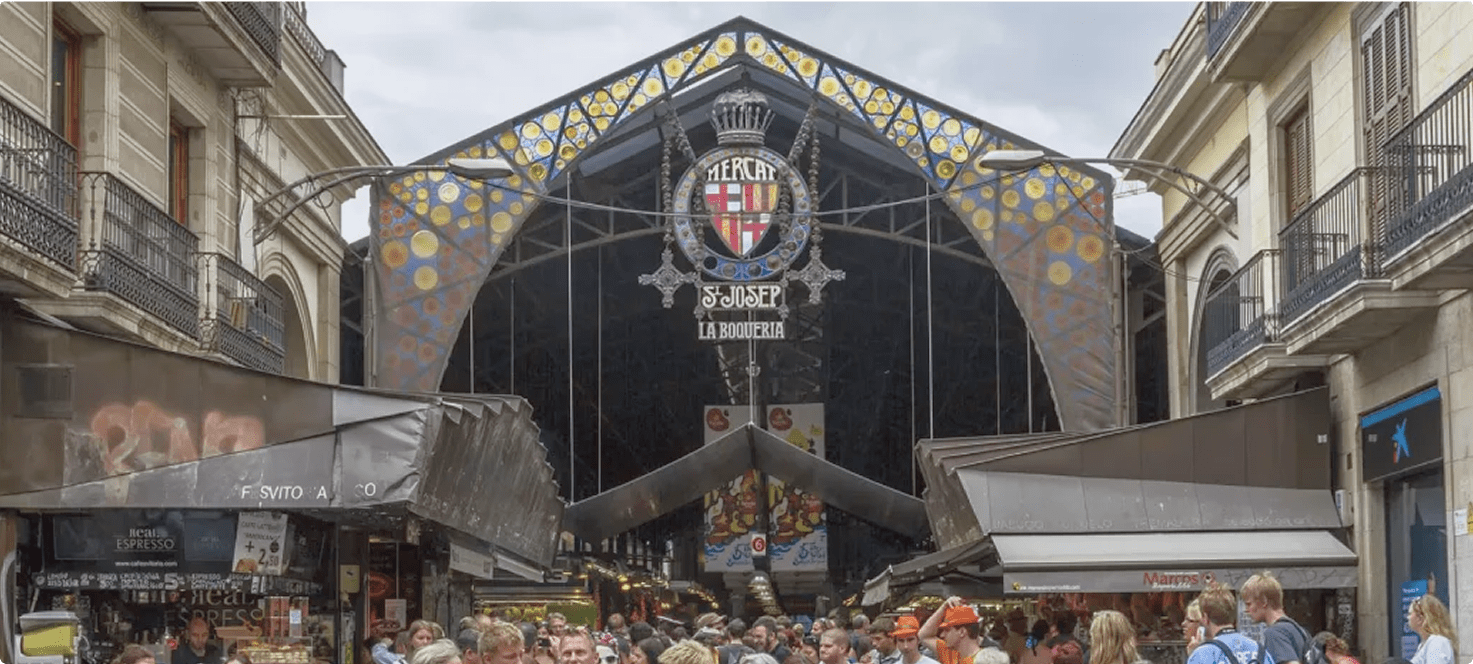
La Boqueria Market (Rambla de Sant Josep)

Barcelona’s most famous market. Trading has been recorded here since the Middle Ages, in front of the old Boqueria city gate, and from 1840 a market was built on the site of the convent of Sant Josep, torn down after 1835. The great iron roof that defines it today dates from 1914. Your guide explains the difference between the market as a historic institution and the market as a tourist stage, and why many locals now shop at other markets in the area.

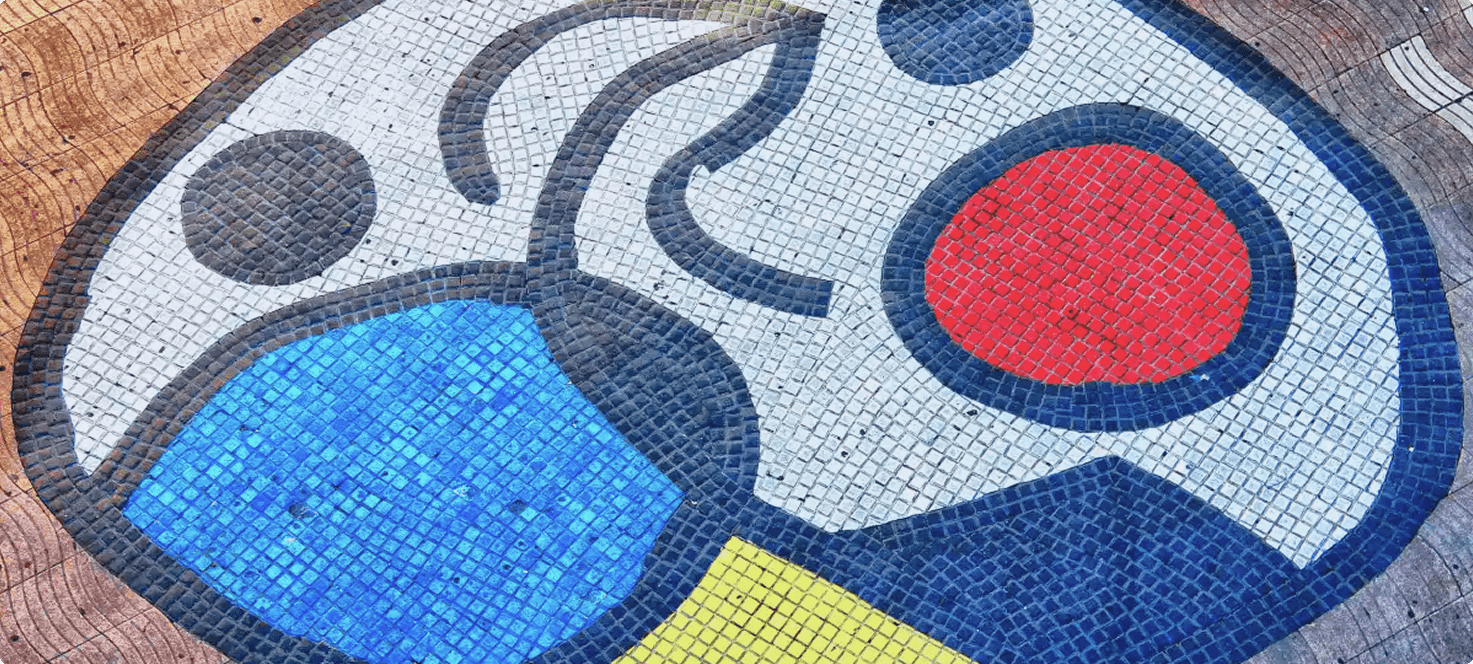
Joan Miró mosaic (Pla de la Boqueria)

The mosaic Joan Miró set into the pavement of the Pla de la Boqueria in 1976, the year after Franco’s death. Miró chose the middle of Barcelona’s busiest street so that the work would be walked on and lived with, not admired behind glass. Its colors (red, yellow, blue and black) are those of his late work.

Gran Teatre del Liceu (Rambla dels Caputxins)

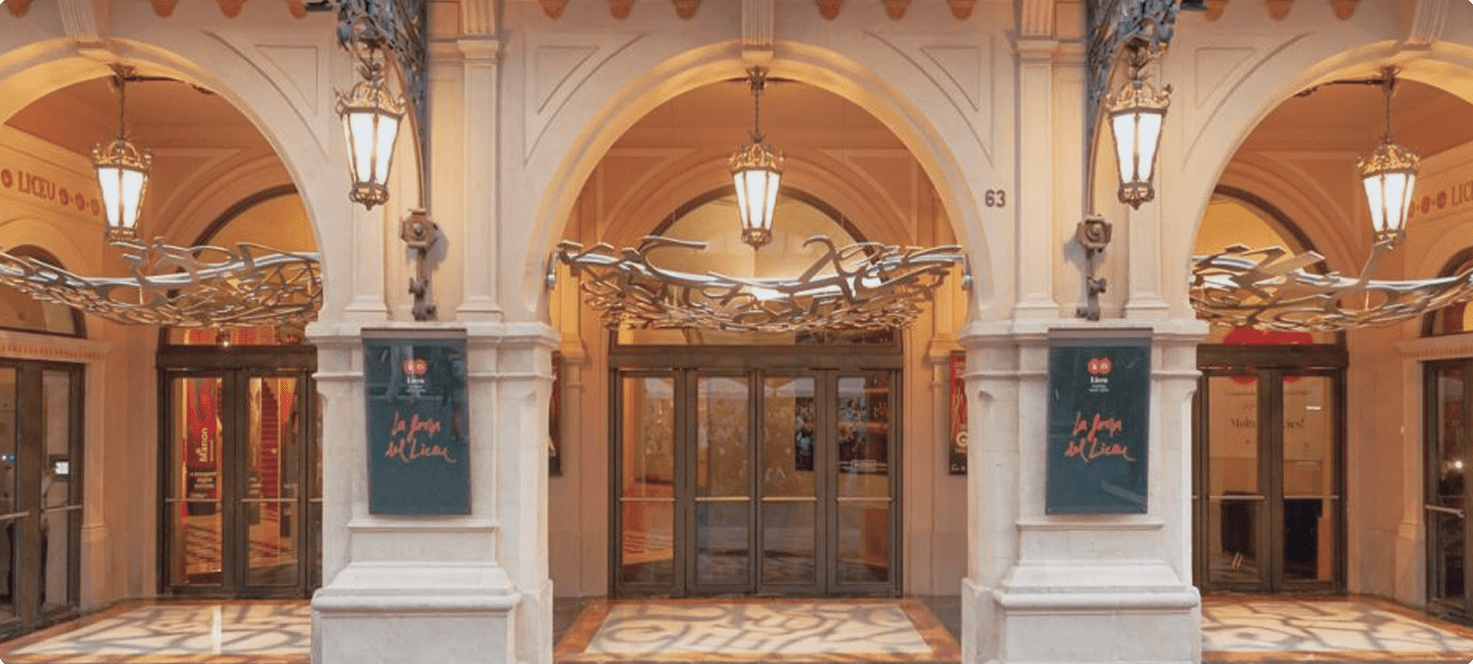
Opened in 1847 on the site of the old convent of the Discalced Trinitarians, the Liceu is one of Europe’s great opera houses. It has burned twice, in 1861 and 1994, and was the scene of the 1893 anarchist attack, when Santiago Salvador threw two Orsini bombs into the stalls during a performance of William Tell: only one exploded, killing about twenty people. Your guide explains the 1999 rebuilding and the debate over whether to restore the old theater or build a new one.

Plaça Reial

The arcaded square Francesc Daniel Molina designed from 1848 on the site of the Capuchin convent, torn down after the church property confiscations of 1835. Its uniform façades and arcades follow the model of Europe’s great neoclassical squares. The two six-armed lampposts are one of the young Antoni Gaudí’s first public commissions, designed for the City Council in 1878, and the Fountain of the Three Graces stands at the center. Your guide explains how the square went from a symbol of the 19th-century bourgeoisie to one of the liveliest spots just off La Rambla.

Palau Güell (Carrer Nou de la Rambla)

The palace Antoni Gaudí built between 1886 and 1890 for his patron, Eusebi Güell, a few steps from La Rambla. It is one of his first major works in Barcelona, recognizable by its two parabolic wrought-iron gates. Your guide explains the façade and the building’s history, from the Güell family home to the property of the Barcelona Provincial Council, which bought it in 1945.

Rambla dels Caputxins and the old Barrio Chino

The busiest stretch of La Rambla. To the right, heading toward the sea, lies the old Barrio Chino, a name the journalist Francesc Madrid popularized in 1925 by comparing it to San Francisco’s Chinatown underworld, even though there was never a Chinese community here. It was the land of cabarets, brothels and bars portrayed by Jean Genet. Today it is part of the Raval neighborhood.

Rambla de Santa Mònica, Columbus Monument and Rambla de Mar

The last stretch, the Rambla de Santa Mònica, leads to the Columbus Monument, a column of about 60 meters (200 feet) topped by a statue of Christopher Columbus, unveiled for the 1888 Universal Exposition. Columbus points out to sea rather than toward the Americas, a detail locals like to joke about. The tour ends on the Rambla de Mar, the footbridge over the harbor opened in 1994, with views of the Moll de la Fusta and the Port Vell.


What's included

What is included in this private tour of La Rambla

INCLUDED

  • ✓ Official private tour guide
  • ✓ 3-hour guided tour
  • ✓ Visit to the Boqueria Market
  • ✓ The five sections from north to south
  • ✓ Available in Spanish and English
  • ✓ Free cancellation (up to 48h in advance)

NOT INCLUDED

  • ✗ Entrance to the interior of Palau Güell (optional)
  • ✗ Access to the dome of the Mirador de Colom
  • ✗ Food or drinks
  • ✗ Transport to the meeting point

Pricing

Private La Rambla tour price: per group, not per person

The price is per group, not per person: the total is split among everyone, so the more people in your group, the less each person pays.

Low season (October 1 – April 30)

PeopleTotalPer person
1 person€326.70€326.70 / person
2 people€314.60€157.30 / person
3 people€326.70€108.90 / person
4 people€387.20€96.80 / person
5 people€453.75€90.75 / person
6 people or more—€84.70 / person

High season (May 1 – September 30)

PeopleTotalPer person
1 person€326.70€326.70 / person
2 people€314.60€157.30 / person
3 people€326.70€108.90 / person
4 people€387.20€96.80 / person
5 people€453.75€90.75 / person
6 people or more—€84.70 / person

Tour schedule

Available time slots

Book early if you’re arriving in Barcelona in high season.

  • 10:30 AMMorning session
  • 16:30 hrsAfternoon session

Tour details

Languages, accessibility and practical information

DURATION
3 hours
TOUR TYPE
100% private: only your group
LANGUAGES
Spanish · English
GUIDE
Official tourist guide (Catalonia Tourist Guide License, Government of Catalonia)
ACCESSIBILITY
Fully accessible. The route runs entirely along sidewalks and pedestrian areas with no steps.
PETS
Inquire upon booking
MINIMUM BOOKING
7 days prior (earlier in high season)
KIDS
Free (0–11 years). All ages welcome.

Meeting point

Where to find your guide for the La Rambla tour

Next to the Canaletes Fountain, at the start of La Rambla (Plaça de Catalunya)

Your guide will be waiting for you next to the Canaletes Fountain, at the northern end of the promenade, near Plaça de Catalunya. It is the most recognizable landmark at the start of Las Ramblas. After booking, we will provide you with the guide’s phone number so you can easily find each other.

Canaletes Fountain, start of La Rambla

Tour checkpoints


Cancellation Policy

Free cancellation up to 48 hours before the tour

Free cancellation available

You can cancel free of charge up to 48 hours before the tour start time. Cancellations made less than 48 hours in advance or no-shows will not be refunded.


FAQs

Frequently Asked Questions about the private tour of La Rambla

Does the tour include entering the Mercat de la Boqueria?

Yes, the tour of La Rambla includes a stop at the Mercat de la Boqueria, where you will see the cast-iron structure and the market’s main points of interest. What is not included is any consumption inside the venue. If you are interested in making a longer stop and trying something at one of the indoor stalls, let the guide know at the start of the tour and we will adjust it.

Can you enter Palau Güell during the tour?

The tour includes the façade of the Palau Güell from Carrer Nou de la Rambla, with an explanation of the building and its history. Visiting the interior requires a ticket bought separately on the Palau Güell website. If you’d like to combine the tour with the inside visit, let us know when booking and we’ll coordinate the route.

Is La Rambla dangerous? Are there pickpockets?

La Rambla has a very high tourist density, especially between the Boqueria and the Liceu, and pickpockets operate in highly crowded areas. The guide points out the areas of highest concentration and gives you practical advice at the start of the tour. The basic advice: keep your documents and cash in inside pockets, not in your backpack. The neighborhood is safe to walk around; the precautions are the same as in any top-tier European tourist destination.

What is the best time to take the La Rambla tour?

The morning session (10:30 am) offers a walk with fewer tourists and the Boqueria market in full swing: stalls start to close from midday. The afternoon session (4:30 pm) has more atmosphere but also larger crowds between the Boqueria and the Liceu. In both time slots, the full route is possible; the difference is the pace when passing through the busiest areas.

Is La Rambla worth a guided tour, or can you explore it on your own?

You can walk it on your own, but most people cross it without understanding what they’re looking at. In 1.2 kilometers you’ll find a market with centuries of history, an opera house that has survived two fires and a bombing, one of Gaudí’s first major works, a Miró mosaic with a very specific political meaning and a statue of Columbus pointing out to sea. Without context, they’re pretty façades. With a guide who knows every layer, the walk changes completely.

How far in advance do I need to book the tour?

A minimum of 7 days. During high season (May–September), guides work at full capacity: if you are traveling in summer, book two weeks in advance to have available time slots.


Reviews

Reviews of our private tour of La Rambla

★★★★★

I had walked along La Rambla three times before this tour and knew nothing of what the guide told me. The history of the Liceu and the 1893 attack left me speechless.

Amanda R.Boston, USA · TripAdvisor
★★★★★

The detail about Miró's mosaic and what it means for it to be on the ground of the promenade, to be stepped on, was the most interesting part of the tour. The guide has a way of explaining things that really hooks you.

Carlos y María T.Madrid, ES · Google
★★★★★

We went with the kids and the guide adapted the level perfectly. The Boqueria part was what they liked the most. Highly recommended for families.

The Williams FamilyManchester, UK · Viator
★★★★★

I didn't know that La Rambla is actually five different ramblas. That detail, which seems small, completely changes how you read the promenade as you walk. Three hours very well spent.

Mark D.Toronto, CA · TripAdvisor

Other tours you might also be interested in

More private tours in Barcelona

Montjuïc · Neighborhood

Private tour of Montjuïc with official guide

A walk through Montjuïc, the hill from which power controlled Barcelona for centuries. From here the city was bombarded and here Lluís Companys, president of the Generalitat, was executed; on this same hill Barcelona staged the 1929 International Exposition and the 1992 Olympic Games. Tour with an official tour guide.
First visit · Welcome

Welcome tour to Barcelona

Private welcome itinerary through the central neighborhoods of Barcelona: the Arc de Triomf, Ciutadella Park, El Born, the Gothic Quarter, and El Raval. Tour with an official tour guide.
Dark · History

Tour of mysterious and forbidden Barcelona

Walking route through the Raval, La Rambla, the Gothic Quarter and Plaça de Catalunya: the Inquisition, the old Barrio Chino, famous crimes, bombings and the stories the city’s official version would rather forget. Tour with an official tour guide.

Contact

Do you have questions about the tour? We reply within 24h

If you have any questions or special needs before booking, write to us — we reply in less than 24 hours.


Write to us

This site is protected by reCAPTCHA and the Google Privacy Policy and Terms of Service apply.

Great! We have received your information.

You can also find us on

Book your tour
From €84.70 / person (groups of 6+) Book now