The stretch of Paral·lel was a revelation. I never imagined that avenue had been Barcelona's equivalent of Broadway. The guide had vintage photos on their phone so we could see what it used to look like.
Home / Private Tours in Barcelona / Barcelona Music Tour
Walking itinerary through the landmarks that define Barcelona's musical history: the Arc de Triomf, the Palau de la Música Catalana by Lluís Domènech i Montaner, Carrer Petritxol, La Rambla, the Gran Teatre del Liceu, El Raval, and Paral·lel: Barcelona's Broadway during the first half of the 20th century. Guided tour with an official guide.
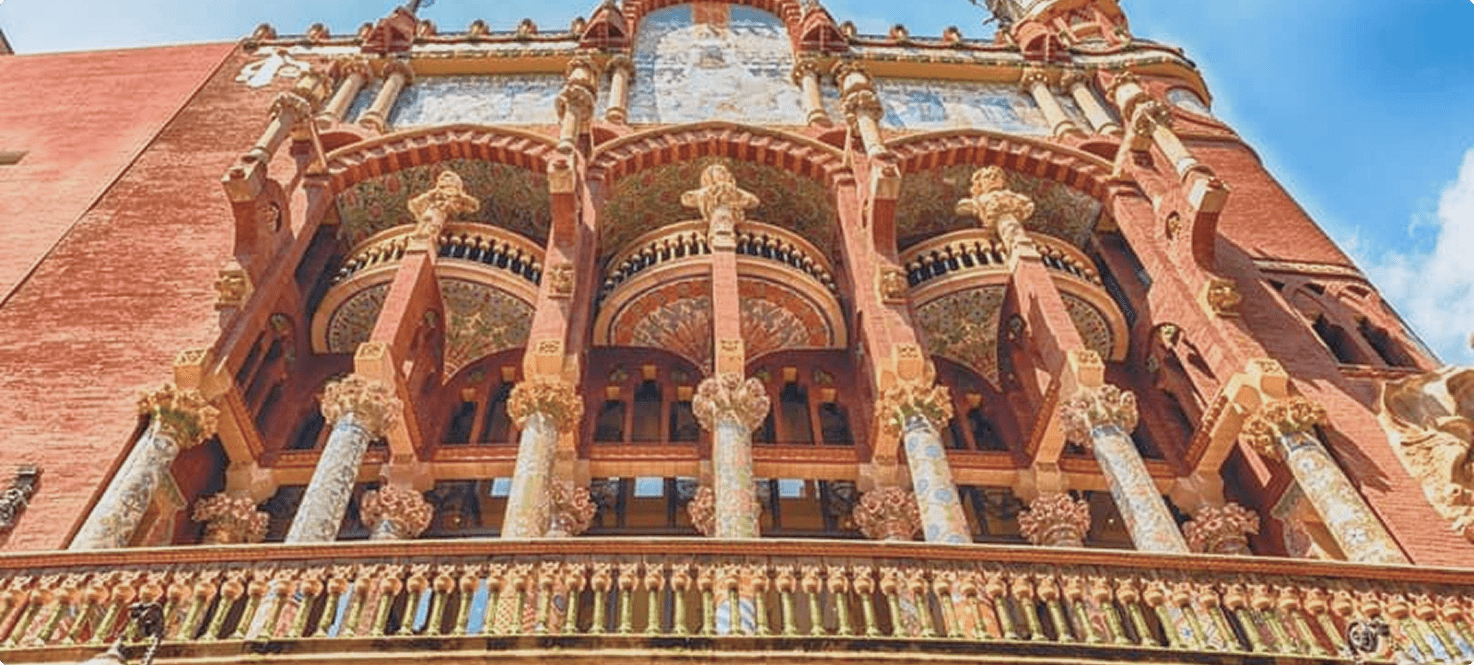
Barcelona’s musical history is also the story of the city: the Italian opera companies that filled the Liceu in the 19th century, the choral movement that gave voice to the Renaixença, the singing cafés and flamenco of the Raval, and the cabaret singers and variety artists who made the Paral·lel the city’s great center of popular entertainment in the first half of the 20th century. At the heart of it all stands the Palau de la Música Catalana, which Lluís Domènech i Montaner built between 1905 and 1908 for the Orfeó Català choral society and which has been a UNESCO World Heritage Site since 1997.
This private guided tour connects the actual places where that history happened: theaters, streets and squares where composers, performers and audiences shaped the city’s musical life. At each stop, your guide places the site in its historical context, with names and dates.
The guided tour lasts 3 hours and is a walking tour through Barcelona’s historic center. Your official tour guide (holding the *Títol de Guia de Turisme de Catalunya* issued by the Generalitat de Catalunya) will accompany you throughout the tour.
The route starts at Arc de Triomf and heads south through the historic center to El Paral·lel:
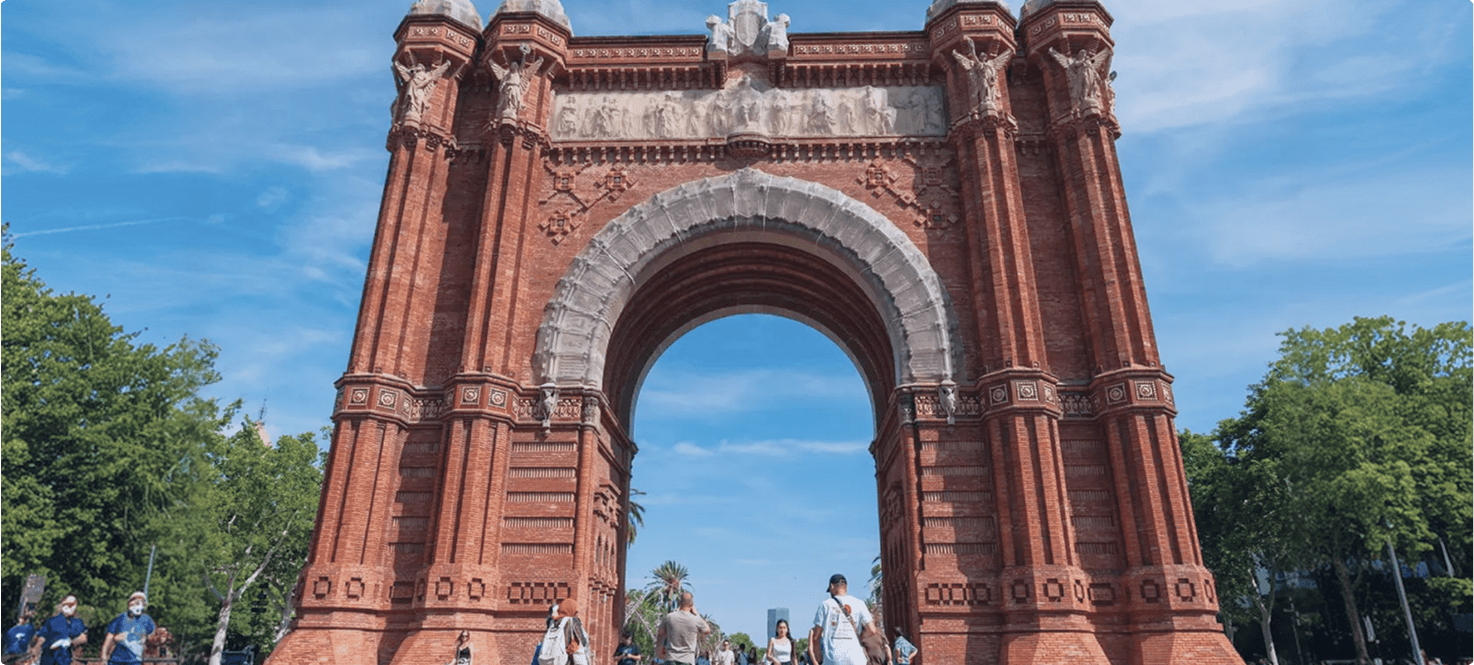
The starting point links music to the Barcelona that reinvented itself in the late 19th century. The arch, built by Josep Vilaseca as the main entrance to the 1888 Universal Exposition, is the symbol of a city determined to prove it was modern. Your guide explains the Renaixença, the Catalan cultural revival, and why the choral movement founded by Josep Anselm Clavé was inseparable from the Catalan cultural identity of the time.
The Orfeó Català choral society, founded in 1891, commissioned Lluís Domènech i Montaner to build its home, and he raised it between 1905 and 1908. Your guide reads the façade: Lluís Bru’s mosaics, the busts of great composers and Miquel Blay’s sculpture group La Cançó Popular Catalana, which sums up the building’s idea of a temple for the people’s music. Your guide also describes the interior, which isn’t visited on the tour: Antoni Rigalt’s stained-glass skylight, the stage with its muses and the two sculpture groups that frame it, one devoted to Catalan folk song with Clavé and the other to universal music with Beethoven.
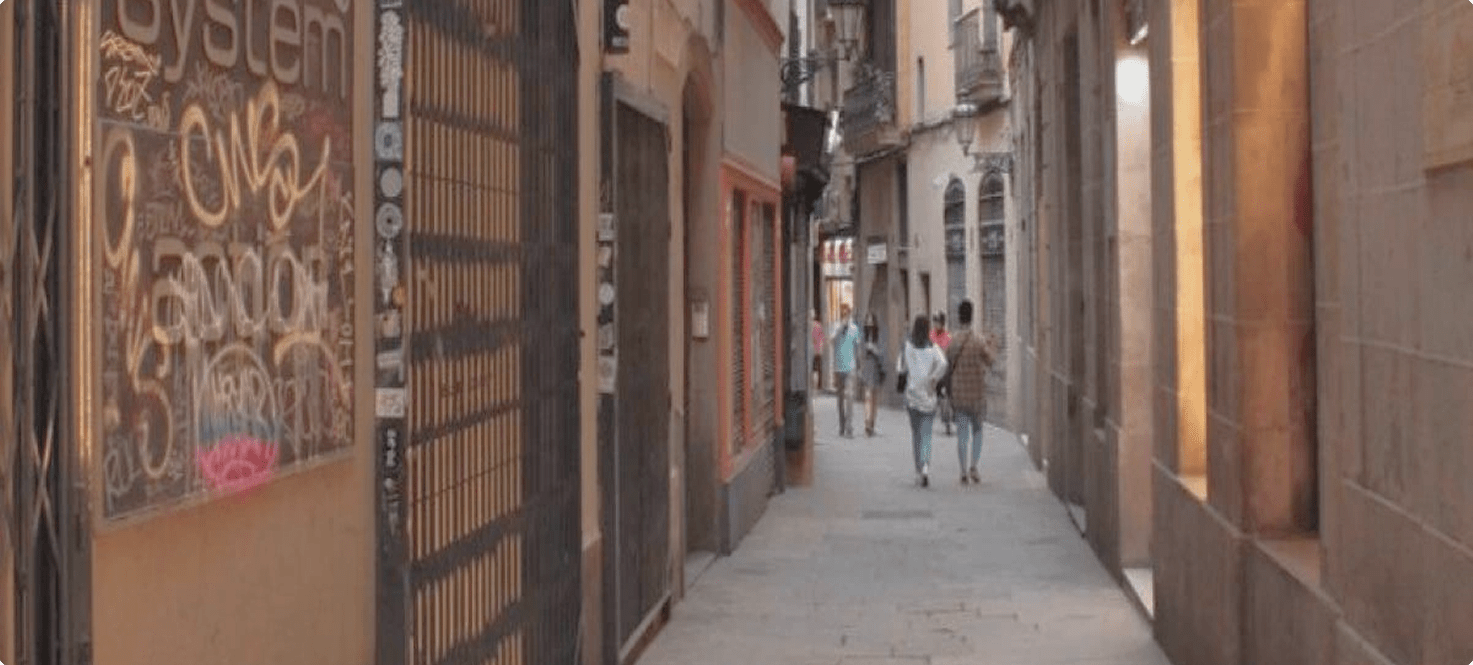
One of the narrowest and most charming streets in the old town. Àngel Guimerà, the great playwright of the Catalan revival, lived and died at number 4: his play Terra baixa became the opera Tiefland by composer Eugen d’Albert, premiered in 1903 and staged all over Europe. The same street is home to the Sala Parés, the city’s oldest art gallery. Your guide explains how literature, painting and music crossed paths in this Barcelona.
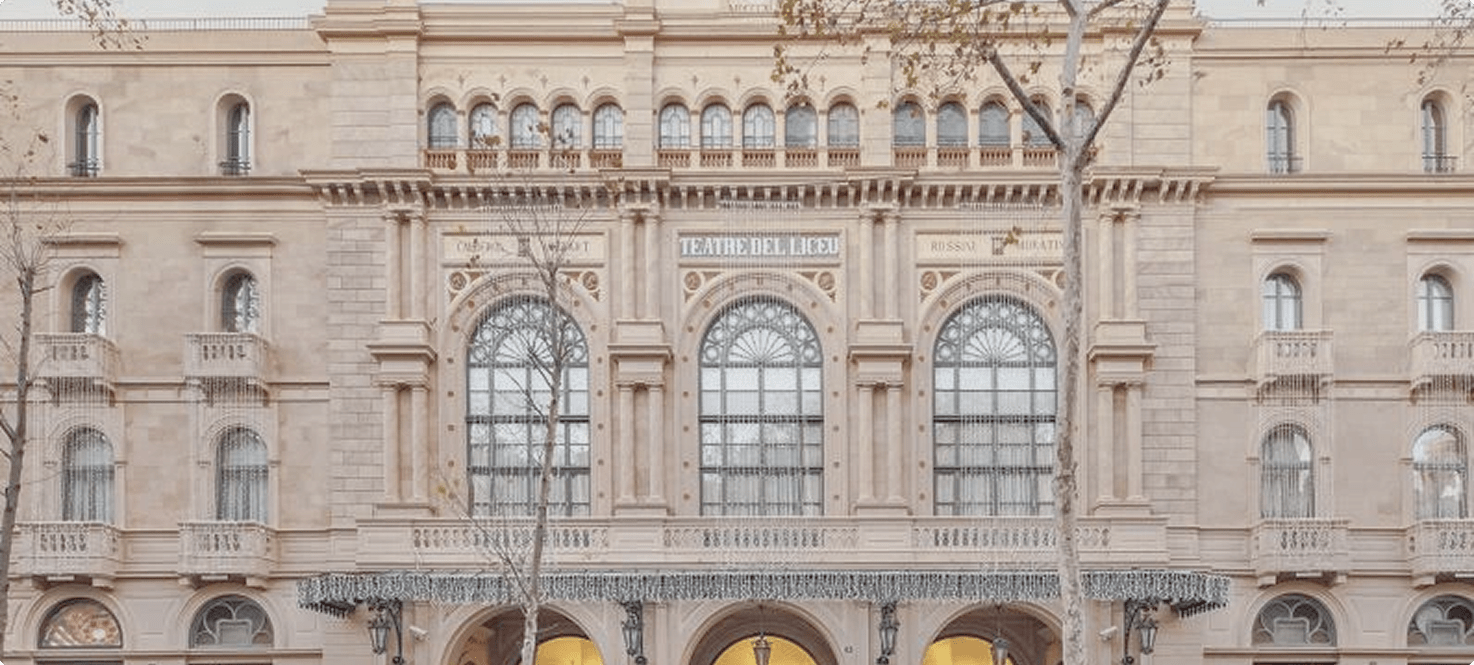
For more than a century La Rambla was the backbone of the city’s musical life, with cafés with orchestras and opera lovers arguing about singers as they strolled. At its center, the Gran Teatre del Liceu, opened in 1847, was for decades one of Europe’s great opera houses. Your guide tells its story: the 1861 fire and reopening the following year; the 1893 anarchist attack, when Santiago Salvador threw two bombs from the fifth floor during a performance of William Tell and some twenty people died; and the 1994 fire, which destroyed the auditorium and stage but spared the lobby and the Hall of Mirrors. Today’s Liceu reopened in 1999.
Across La Rambla, the Raval was the center of Barcelona’s popular urban music in the 19th and early 20th centuries: singing cafés with flamenco, variety acts and popular song on the ground floors of apartment buildings. Your guide walks the streets where those venues stood and explains how the high culture of the Liceu and the popular music of the Raval coexisted, and clashed, just a few steps apart.
The avenue opened in 1894 and owes its name to the fact that it runs almost exactly along the 41° 22′ north parallel. In the first half of the 20th century it was Barcelona’s great center of popular entertainment, with dozens of theaters, cabarets and music halls. Your guide brings that world back to life, the cuplé songs, the bohemian nights and stars like Raquel Meller and La Bella Dorita, explains its decline after the Civil War and points out the venues still open today, such as the Apolo, the Victòria and El Molino.
INCLUDED
NOT INCLUDED
The price is per group, not per person: the total is split among everyone, so the more people in your group, the less each person pays.
| People | Total | Per person |
|---|---|---|
| 1 person | €326.70 | €326.70 / person |
| 2 people | €314.60 | €157.30 / person |
| 3 people | €326.70 | €108.90 / person |
| 4 people | €387.20 | €96.80 / person |
| 5 people | €453.75 | €90.75 / person |
| 6 people or more | — | €84.70 / person |
| People | Total | Per person |
|---|---|---|
| 1 person | €326.70 | €326.70 / person |
| 2 people | €314.60 | €157.30 / person |
| 3 people | €326.70 | €108.90 / person |
| 4 people | €387.20 | €96.80 / person |
| 5 people | €453.75 | €90.75 / person |
| 6 people or more | — | €84.70 / person |
* Children (0 to 11 years old): free. No hidden fees or booking surcharges.
Book early if you’re arriving in Barcelona in high season.
* We recommend booking a minimum of 7 days in advance to guarantee guide assignment. During peak season (May–September), guides work at full capacity.
Your guide will be waiting for you at the foot of the Arc de Triomf, on Passeig de Lluís Companys. After booking, we will provide you with the guide’s phone number so you can meet up without any hassle. Metro: Arc de Triomf (L1).
Under the Arc de Triomf
Free cancellation available
You can cancel free of charge up to 48 hours before the tour start time. Cancellations made less than 48 hours in advance or no-shows will not be refunded.
No. The route includes the Palau’s façade, with an explanation of its imagery: Lluís Bru’s mosaics, the busts of composers and the sculpture group La Cançó Popular Catalana. Your guide also describes the interior, but going inside requires a tour or concert ticket and isn’t included. If you’d like to see it inside, you can book a guided tour of the Palau separately and combine it with this walk.
The route focuses on Barcelona’s musical history from the 19th to the mid-20th century, with special attention to Modernisme, opera and the popular entertainment of the Paral·lel. The contemporary scene (jazz, the Nova Cançó, rock or electronic music) isn’t included because its venues are spread across neighborhoods that would make the route far too long. If you’re interested in a particular scene, mention it when booking and your guide can point you in the right direction.
To enjoy this tour, you don’t need to know anything about music. The tour assumes no prior musical knowledge. The guide contextualizes each location historically before going into any technical or musical details. The main focus is urban history: why Barcelona built these venues, what social and political conflicts they reflected, and how they transformed the neighborhoods that hosted them.
No. It is a guided walking tour of the historic venues, not a concert experience. If you are looking to combine the tour with a live performance, the Palau de la Música schedules concerts almost daily: you can check the schedule at palaumusica.cat and book tickets separately for the same night or the day after the tour.
Our private Modernisme tour widens the context of the Palau de la Música to the rest of the movement, with Casa Batlló, Casa Amatller and La Pedrera, and places Domènech i Montaner alongside Gaudí and Puig i Cadafalch. If you’d like to explore the Raval in depth, our El Raval tour devotes three hours to a neighborhood this music tour only touches on.
The stretch of Paral·lel was a revelation. I never imagined that avenue had been Barcelona's equivalent of Broadway. The guide had vintage photos on their phone so we could see what it used to look like.
We are musicians and were in Barcelona for a concert. We took this tour the day before, and the context it gave us about the Liceu and the 1893 anarchist attack was incredible. Highly recommended for anyone coming to play here.
Solo la explicación del exterior del Palau de la Música ya valió la pena por todo el tour. Nuestro guía nos explicó cada una de las esculturas de la fachada y pasamos 40 minutos allí de pie. Excelente.
The story of the attack at the Liceu in 1893 left us speechless. A bomb in the middle of the opera. You won't find that level of historical detail in any travel guide.
If you have any questions or special needs before booking, write to us — we reply in less than 24 hours.