We have been visiting cities with Modernist architecture for years and this was the best tour we've ever done. The guide explained the Manzana de la Discordia building by building: we knew nothing about Puig i Cadafalch and we left fascinated.
Home / Private Tours in Barcelona / Barcelona Modernism Tour
A Barcelona architecture tour on foot: the Arc de Triomf, Ciutadella Park, the Palau de la Música Catalana and Passeig de Gràcia, with Casa Batlló, Casa Amatller, Casa Lleó Morera and La Pedrera. Tour with an official tour guide.
Catalan Modernisme was a cultural and architectural movement that, roughly between 1880 and 1920, turned industrial Barcelona into a European capital with its own identity. Three architects left their most ambitious work here: Antoni Gaudí, Lluís Domènech i Montaner and Josep Puig i Cadafalch. Gaudí and Domènech both have buildings on the UNESCO World Heritage list; Puig i Cadafalch, less known outside Catalonia, is the big surprise for many visitors.
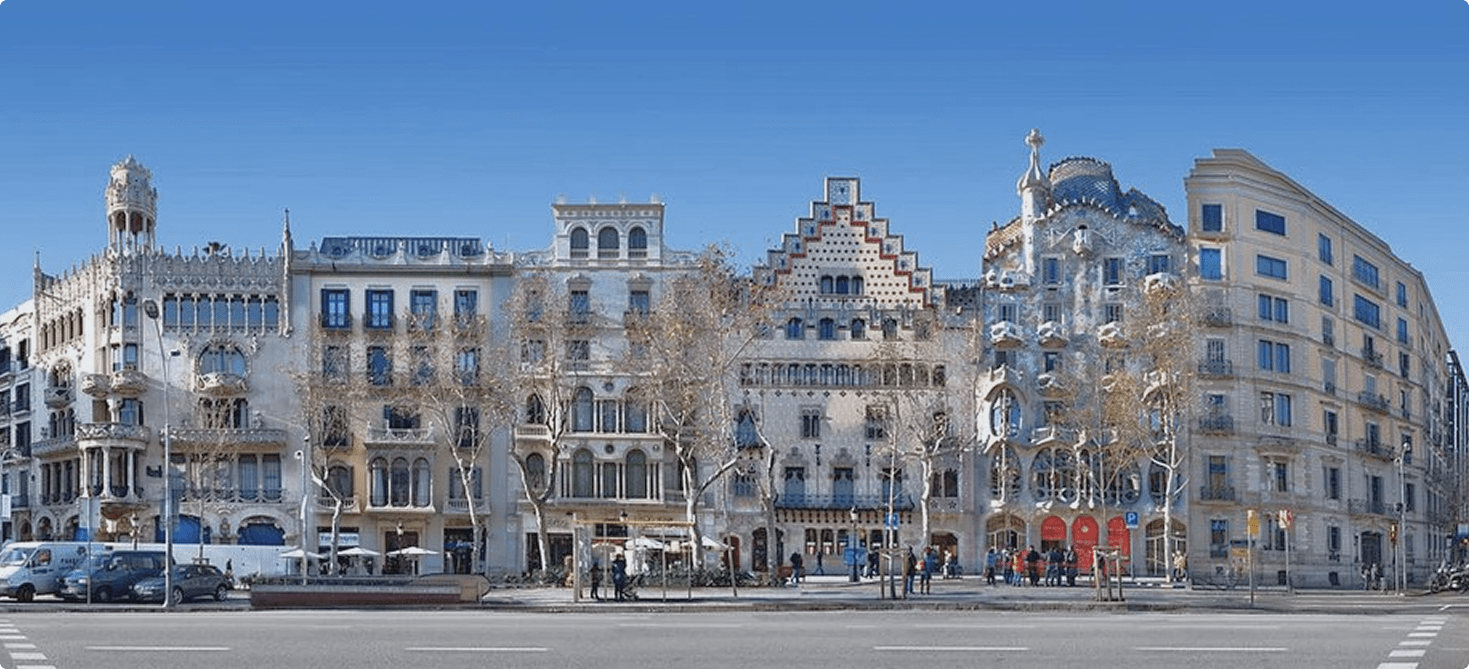
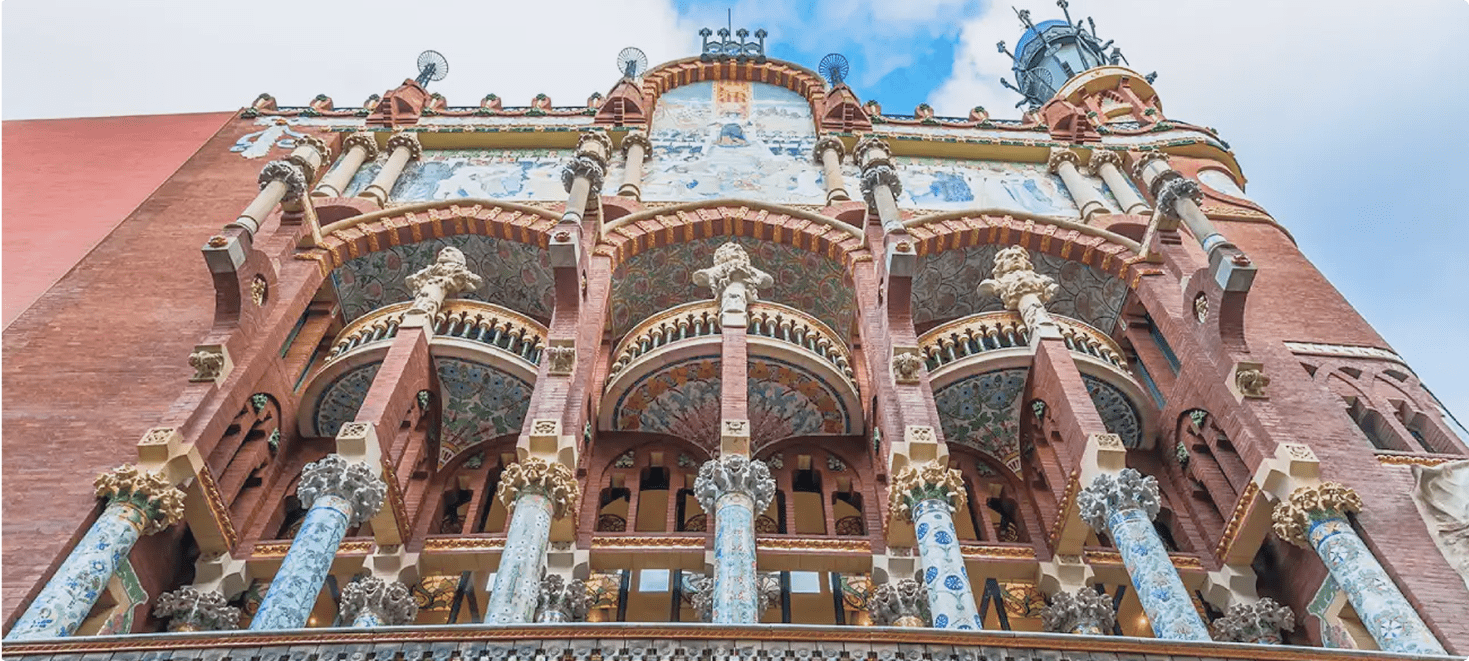
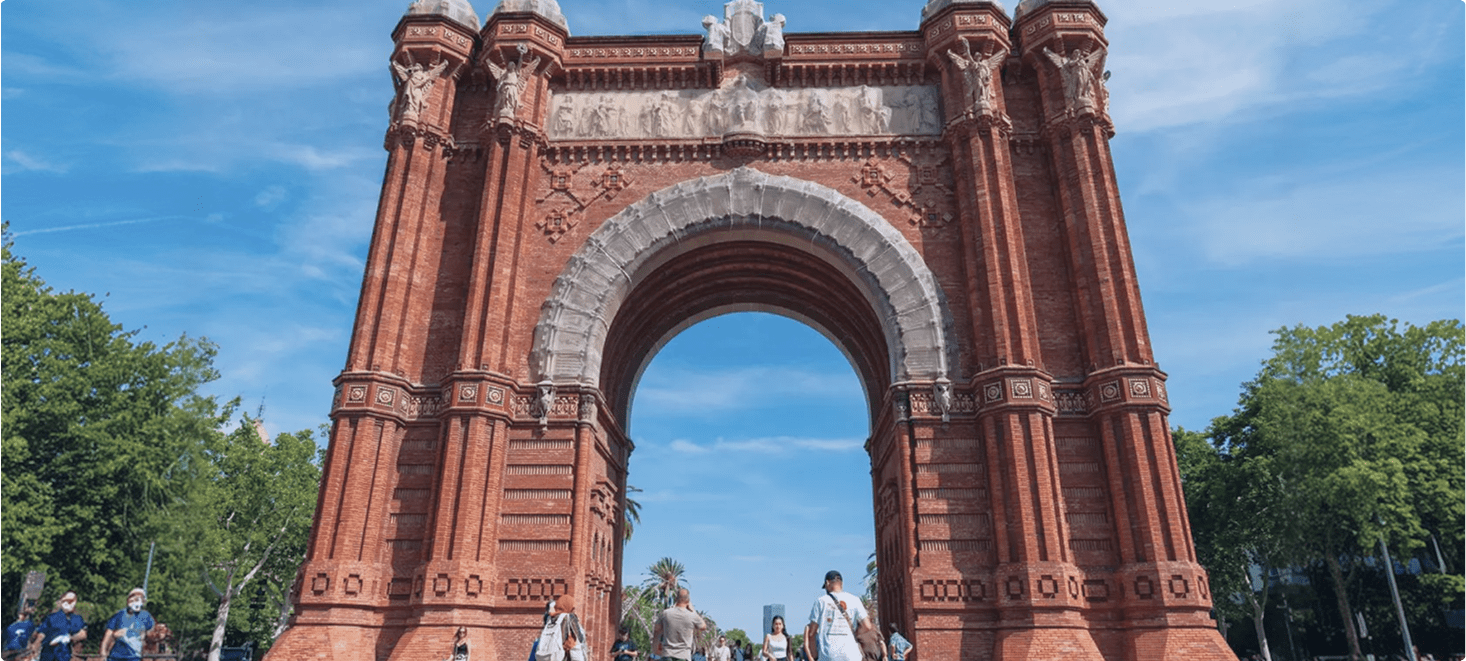
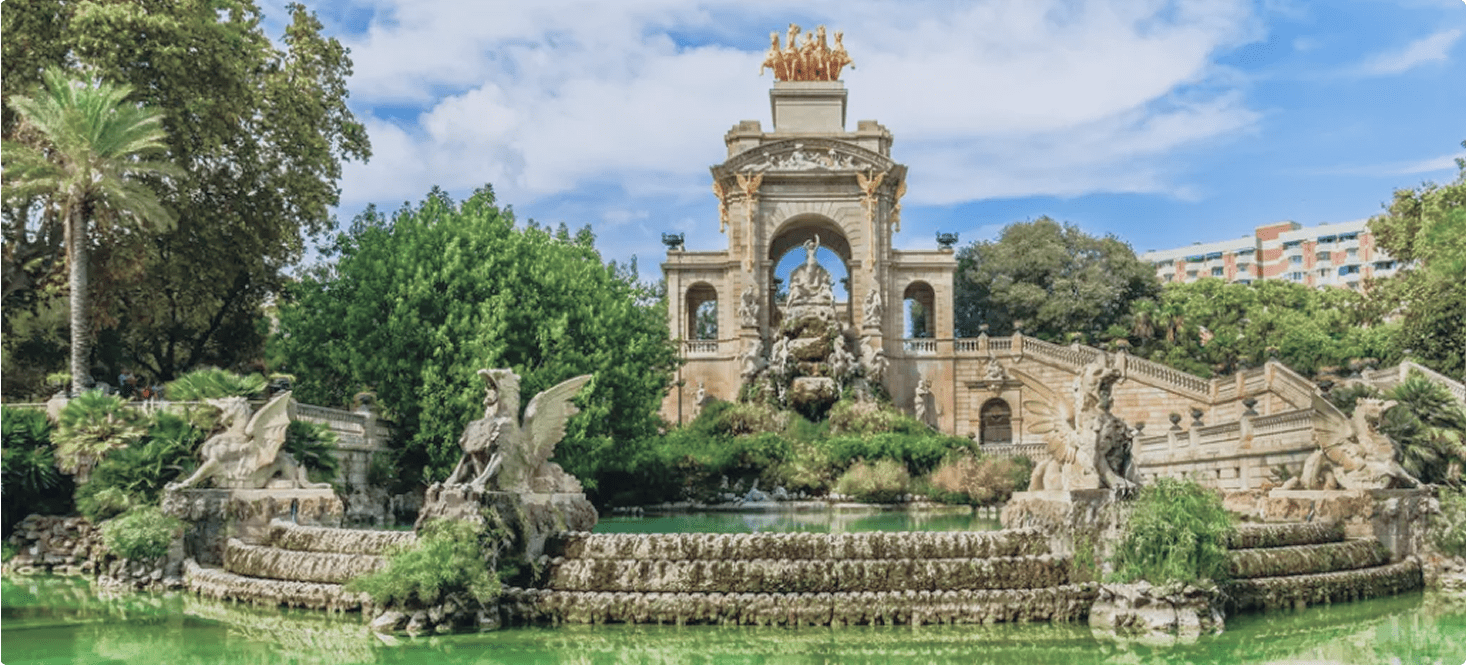
This Barcelona architecture tour covers the key works of the movement without stopping at Gaudí. It starts at the Arc de Triomf, which Josep Vilaseca built in exposed brick as the gateway to the 1888 Universal Exposition, passes through Ciutadella Park and reaches Domènech i Montaner’s Palau de la Música Catalana, opened in 1908. The central stretch follows Passeig de Gràcia and the Block of Discord, where Puig i Cadafalch’s Casa Amatller (1898-1900), Domènech i Montaner’s Casa Lleó Morera (1902-1906) and Gaudí’s Casa Batlló (1904-1906) stand side by side. The tour ends in front of La Pedrera, the last apartment building Gaudí designed.
Over 3 hours, your official tour guide connects the buildings with the context that made them possible: Catalonia’s late 19th-century bourgeoisie, the Renaixença cultural revival, the 1888 Universal Exposition and the rivalry between architects that filled the Eixample with masterpieces.
Starting point of the tour. Josep Vilaseca built it as the main entrance to the 1888 Universal Exposition, in exposed brick and a neo-Mudéjar style that heralds Modernisme. Your guide sets the historical scene: a Barcelona eager to show Europe it was a modern city, with industry, its own bourgeoisie and a distinct cultural identity.
Within the grounds of the former Bourbon citadel (demolished in 1869 to return the land to the city) two iron and glass structures were erected during the Universal Exposition that anticipate the structural language of Modernisme: the Hivernacle by Josep Amargós and the Umbracle by Josep Fontserè. The guide explains the political transformation of the site: from a repressive fortress to a public park, an urban planning gesture with enormous symbolic weight in Restoration-era Barcelona.
Lluís Domènech i Montaner’s work for the Orfeó Català choral society, opened in 1908 and a World Heritage Site since 1997. The façade packs in Modernisme’s decorative program: Lluís Bru’s mosaics, busts of great composers and Miquel Blay’s sculpture group La Cançó Popular Catalana. Your guide also explains the interior, which isn’t visited on the tour, with Antoni Rigalt’s great stained-glass skylight designed to fill the hall with natural light. Domènech was working on the Hospital de Sant Pau at the same time, his other World Heritage building, which he never saw finished: he died in 1923 and his son Pere Domènech i Roura completed it in 1930.
Along roughly a hundred meters of Passeig de Gràcia stand three buildings commissioned by Catalan bourgeois families from the three great Modernista architects: Domènech i Montaner’s Casa Lleó Morera (No. 35), Puig i Cadafalch’s Casa Amatller (No. 41) and Gaudí’s Casa Batlló (No. 43). The name is a Spanish pun: ‘manzana’ means both a city block and an apple, as in the Apple of Discord of Greek mythology. Your guide decodes the imagery of each façade: Saint George and the dragon on Casa Batlló, the Flemish-inspired stepped gable of Casa Amatller, commissioned by chocolate maker Antoni Amatller, and the allegorical figures of Casa Lleó Morera, whose ground floor lost Eusebi Arnau’s sculptures in 1943 to make way for a shop.
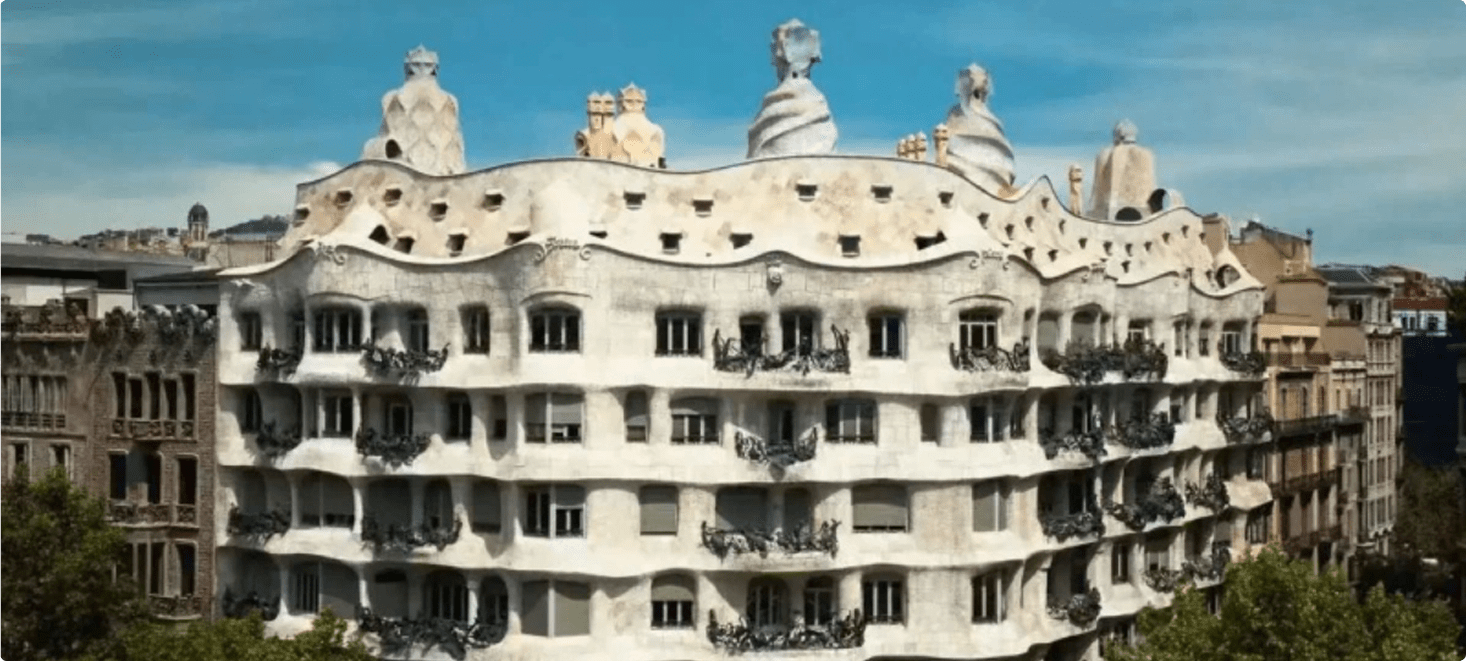
Gaudí’s last apartment building, built between 1906 and 1912. The nickname ‘La Pedrera’, the stone quarry, caught on amid mockery in the satirical press, which saw its undulating stone façade as unfinished or simply ridiculous. Today it’s a World Heritage Site. Its famous sculptural chimneys stand on the rooftop, which can only be visited with a ticket. Your guide explains why Gaudí never finished the building as he conceived it: after the convent burnings of the Tragic Week in 1909, the owners, Pere Milà and Roser Segimon, gave up the sculpture of the Virgin of the Rosary planned for the façade.
INCLUDED
NOT INCLUDED
The price is per group, not per person: the total is split among everyone, so the more people in your group, the less each person pays.
| People | Total | Per person |
|---|---|---|
| 1 person | €326.70 | €326.70 / person |
| 2 people | €314.60 | €157.30 / person |
| 3 people | €326.70 | €108.90 / person |
| 4 people | €387.20 | €96.80 / person |
| 5 people | €453.75 | €90.75 / person |
| 6 people or more | — | €84.70 / person |
| People | Total | Per person |
|---|---|---|
| 1 person | €326.70 | €326.70 / person |
| 2 people | €314.60 | €157.30 / person |
| 3 people | €326.70 | €108.90 / person |
| 4 people | €387.20 | €96.80 / person |
| 5 people | €453.75 | €90.75 / person |
| 6 people or more | — | €84.70 / person |
* Children (0 to 11 years old): free. The tour is outdoors: there are no mandatory additional tickets. No hidden fees or booking surcharges.
Book early if you’re arriving in Barcelona in high season.
* We recommend booking a minimum of 7 days in advance to guarantee guide assignment. During peak season (May–September) guides work at full capacity: the earlier you book, the more schedule options you will have available.
Your guide will be waiting for you at the foot of the Arc de Triomf, on Passeig de Lluís Companys. After booking, we will provide you with the guide’s phone number so you can meet up without any hassle.
Under the Arc de Triomf
Free cancellation available
You can cancel free of charge up to 48 hours before the tour start time. Cancellations made less than 48 hours in advance or no-shows will not be refunded.
It depends on what grabbed you most. If Gaudí took center stage, the natural next step is our private Sagrada Família tour, which takes its façades slowly and, with tickets, the interior too. If you’re drawn to the man himself, our Antoni Gaudí tour connects his life with his work. And if the Eixample hooked you, our private Passeig de Gràcia tour spends more time on the boulevard and its façades. Your guide will point you in the right direction at the end.
No. The tour is outdoors. The guide explains each building from the street, with the time and depth needed to read the facades, understand the iconography, and connect each work with the context of who commissioned it and who built it. Access to the interior of Casa Batlló, La Pedrera, or the Palau de la Música requires separate tickets, which each visitor manages on their own. If you are interested in combining the guided tour with interior access to any of these buildings, please ask us when booking and we will guide you on how to organize it.
Lluís Domènech i Montaner (1850-1923) is, alongside Gaudí, the great architect of Catalan Modernisme. Two of his buildings are World Heritage Sites, the Palau de la Música Catalana and the Hospital de Sant Pau, and he directed Barcelona’s School of Architecture for years. He shows up less on tour routes because his work lacks Gaudí’s instantly recognizable imagery, but your guide gives him his own space on this tour.
No. Your guide starts from scratch and builds the story from the historical context (who Catalonia’s bourgeoisie were in 1888, what they wanted to prove with these commissions, how the architects related to each other) before getting into each building’s details. Technical concepts come in when they add something, like why La Pedrera’s façade has barely a straight line. If you have a background in architecture or art history, your guide will adjust the level.
Yes, it works well from about age 7 or 8. The Block of Discord makes an instant visual impression: Casa Batlló’s dragon, the Amatller’s gable or the figures on the Lleó Morera grab kids without any introduction. Your guide adapts the language to the group. Children ages 0 to 11 don’t pay for the tour. Let us know their ages when booking.
The itinerary shares the Arc de Triomf and the Parc de la Ciutadella as a starting point. From there, they diverge completely: the Welcome Tour turns towards El Born, the Gothic Quarter, and El Raval; this tour heads towards the Palau de la Música, the Eixample, and Passeig de Gràcia. If you have already done the Welcome Tour, there is no significant overlap. If you haven’t, the Arc de Triomf and the Ciutadella receive a treatment in this tour focused exclusively on Modernisme, without the general context of the city provided by the Welcome Tour.
We have been visiting cities with Modernist architecture for years and this was the best tour we've ever done. The guide explained the Manzana de la Discordia building by building: we knew nothing about Puig i Cadafalch and we left fascinated.
The Palau de la Música section was what surprised us the most. We had walked past it without ever going inside and had no idea what it hid. The guide explained Domènech i Montaner's natural light system to us in incredible detail.
We are architects and we had doubts about whether the tour would offer us anything. We were wrong. The history of La Pedrera and the conflict between Gaudí and the Milàs over the sculpture of the Virgin was something we were completely unaware of.
We did it after the Welcome Tour and it was the perfect combination. With the context of the city already in place, understanding Modernism from Passeig de Gràcia made much more sense. The guide connected everything with the political history of the time.
If you have any questions or special needs before booking, write to us — we reply in less than 24 hours.