I knew that Columbus had arrived in America, but I didn't know that he had presented the trip in Barcelona. The guide's explanation of the Indianos and the Eixample buildings was the most interesting part of the trip.
Home / Private Tours in Barcelona / Tour of US culture in Barcelona
Private guided walk through the ties between Barcelona and the United States: the American volunteers of the Spanish Civil War, the Sixth Fleet sailors who filled La Rambla for nearly four decades, the jazz of Plaça Reial, the 1888 Columbus Monument and Roy Lichtenstein's Barcelona Head. Tour with an official tour guide.
Barcelona’s relationship with the Americas begins in 1493, when the Catholic Monarchs received Christopher Columbus here on his return from his first voyage. But the story that ties the city to the United States is far more recent, and it’s right there in the streets: the American volunteers who came to defend the Republic in the Spanish Civil War, the thousands of Sixth Fleet sailors who came ashore between 1951 and 1987, the jazz that played in Plaça Reial and the pop art Roy Lichtenstein left facing the sea in 1992.
This private guided tour walks from Plaça de Catalunya down to the port, following that story. Along the way you’ll also see the other side of Barcelona’s ties to the Americas: the ‘indianos’ who made fortunes in Cuba and transformed the city, and the debate sparked in 2018 when the statue of Antonio López, a shipping magnate linked to the slave trade, was taken down.
Over 3 hours on foot with an official tour guide, the tour connects specific places with specific episodes. It’s designed especially for American travelers, but works for anyone curious about how Barcelona has seen itself in the mirror of the Americas.
The tour starts at Plaça de Catalunya and heads down La Rambla toward the sea. Each stop tells a specific episode in the story of Barcelona and the United States:
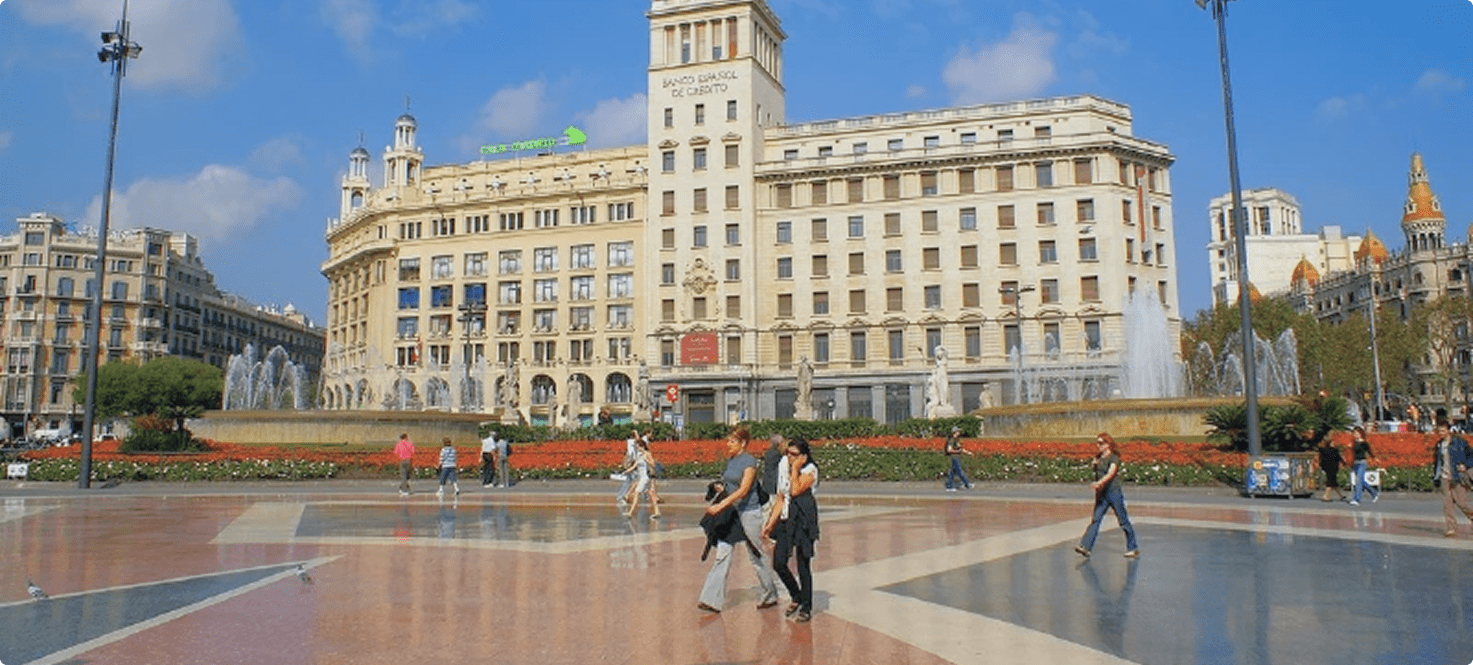
The heart of modern Barcelona, laid out in its present form in the 1920s. This is where the military uprising of July 19, 1936, was stopped, and soon afterward thousands of foreign volunteers arrived to defend the Republic, among them the Americans of the Abraham Lincoln Brigade. Your guide explains who they were, why they came and how Barcelona bid farewell to the International Brigades with a huge parade on October 28, 1938.
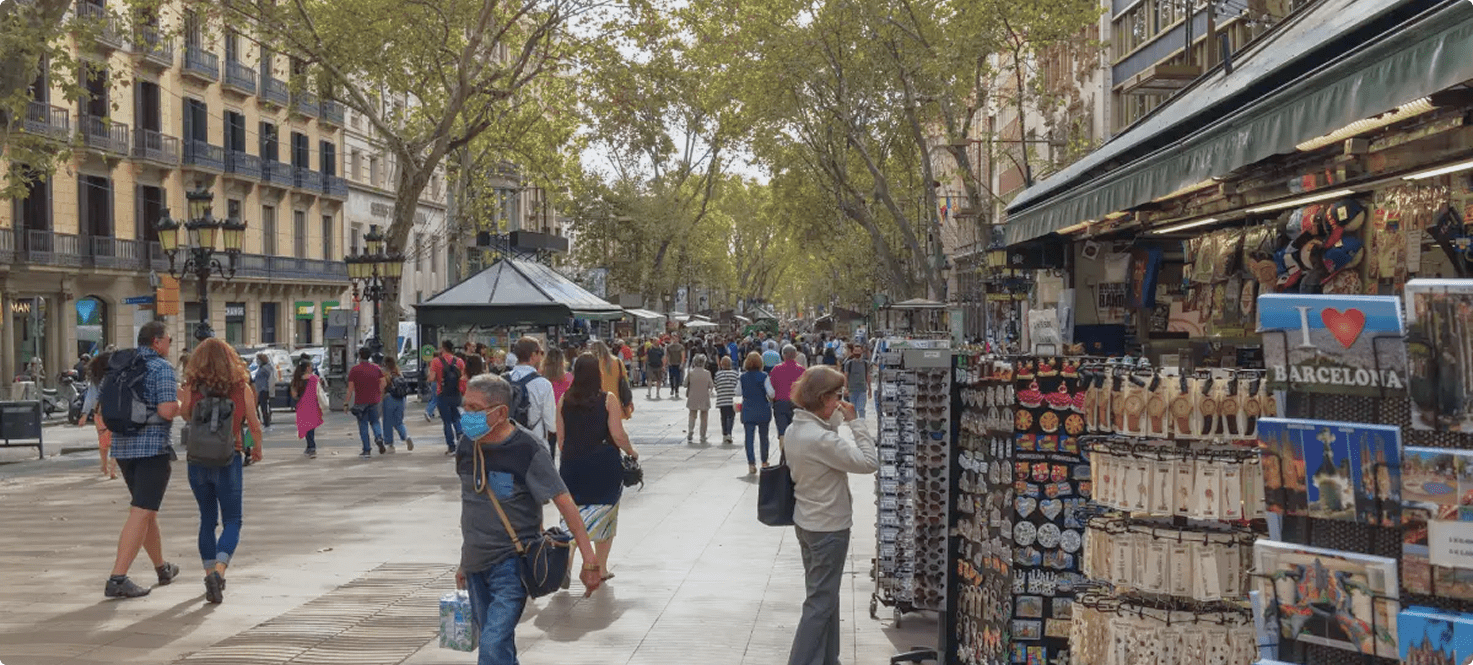
In January 1951 the US Sixth Fleet made its first port call in Barcelona, and for nearly four decades its sailors were a familiar sight on La Rambla: the first mass tourism the city ever knew, with dollars in their pockets in the hungry postwar years. Your guide explains how bars and businesses in the center changed, why so many places took American names to draw them in, and how the relationship ended in 1987 after an attack on a venue popular with sailors. Your guide also recalls the correspondents who passed through during the Civil War, such as Ernest Hemingway.
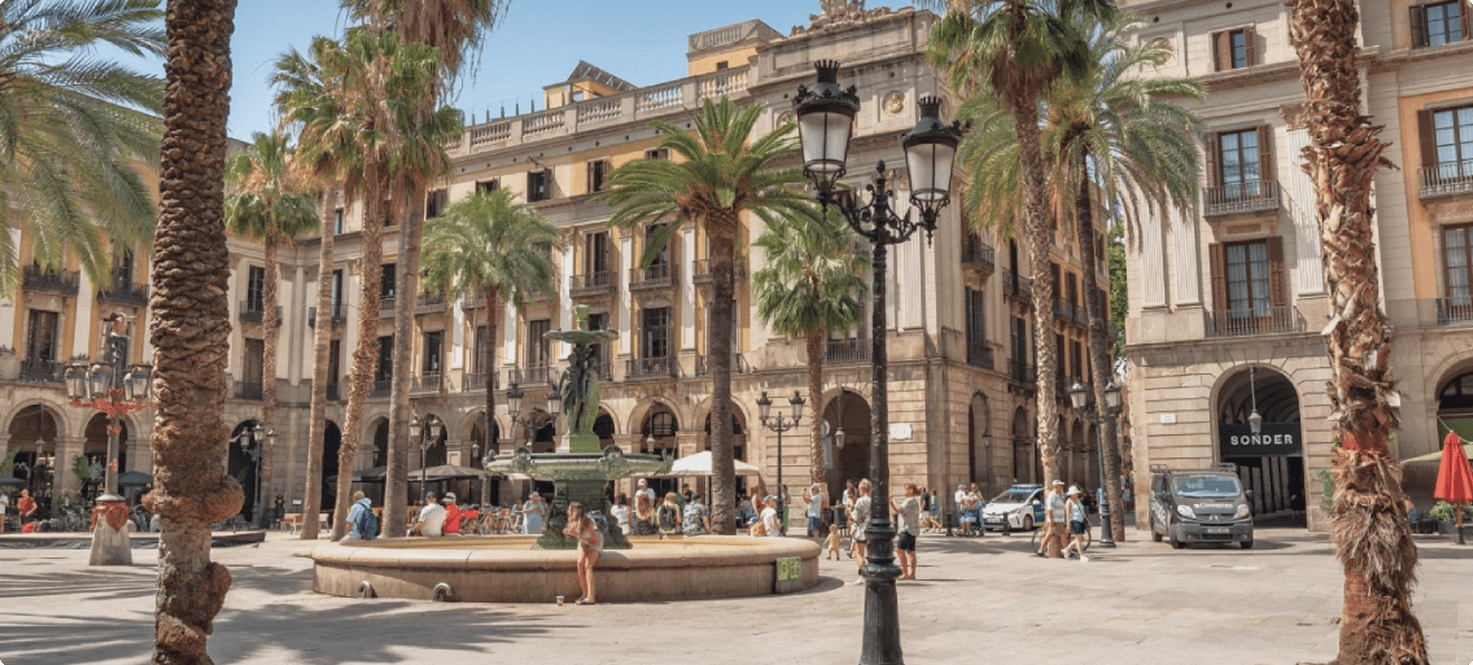
This arcaded square from 1848, with lampposts designed by the young Gaudí for the City Council, was a meeting point for American sailors and for the music arriving from across the Atlantic. The Jamboree, one of the city’s most important jazz clubs, opened here in 1960, and here stood the Texas, one of the bars named to attract the sailors, now the Sidecar music club.
The southern Raval got this name in the 1920s, when journalist Francesc Madrid compared it to San Francisco’s Chinatown, even though there was never a Chinese community here. It was a district of bars, cabarets and nightlife that, decades later, would welcome the Sixth Fleet sailors. Some places from that era, such as the Kentucky, opened in 1947, are still open and keep mementos of those years.
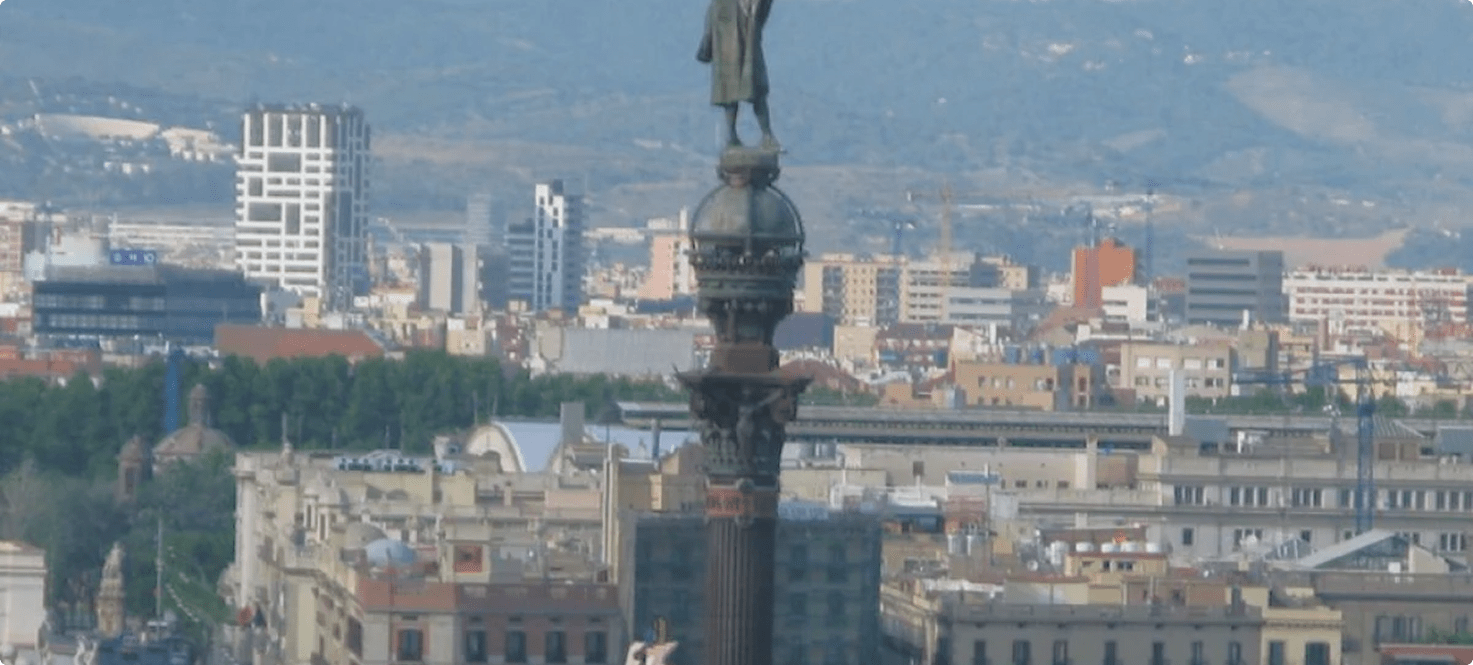
The roughly 60-meter monument was unveiled for the 1888 Universal Exposition, and Columbus points out to the Mediterranean, not toward the Americas. Your guide explains why Barcelona dedicated this monument to him: the Catholic Monarchs received him here in 1493, on his return from his first voyage. Close by, a memorial honors the 49 American sailors who drowned off the port on January 17, 1977, when the launch taking them back to their ships collided with another vessel.
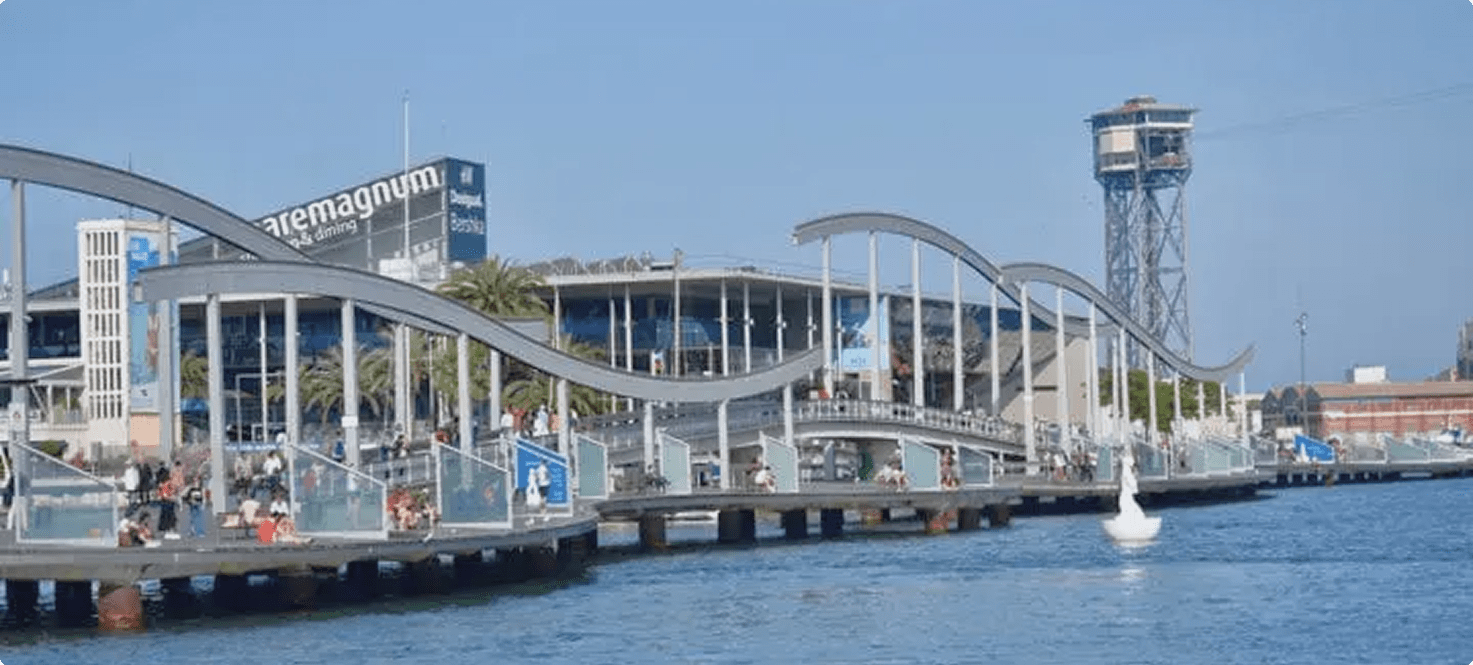
The footbridge opened in 1994 extends La Rambla over the water. From here your guide explains Barcelona’s other great link with the Americas: trade with Cuba and the Caribbean, which from the late 18th century, once Catalonia was allowed to trade directly with the Americas, made the fortunes of many Catalan families, the ‘indianos’, who came back to build homes, factories and banks. You’ll also hear how the 1992 Olympics transformed the port and gave the waterfront back to the city.
The tour ends in front of El Cap de Barcelona, the giant trencadís head that American pop artist Roy Lichtenstein designed for the 1992 Games as a tribute to Gaudí. A few steps away, at the end of Via Laietana, stands the pedestal that once held the statue of Antonio López, the shipping magnate who made his fortune in Cuba and was linked to the slave trade. The City Council removed it on March 4, 2018, and part of the square is now named after Idrissa Diallo. Your guide closes the tour with this debate: how a city decides which history to remember in its streets.
INCLUDED
NOT INCLUDED
The price is per group, not per person: the total is split among everyone, so the more people in your group, the less each person pays.
| People | Total | Per person |
|---|---|---|
| 1 person | €326.70 | €326.70 / person |
| 2 people | €314.60 | €157.30 / person |
| 3 people | €326.70 | €108.90 / person |
| 4 people | €387.20 | €96.80 / person |
| 5 people | €453.75 | €90.75 / person |
| 6 people or more | — | €84.70 / person |
| People | Total | Per person |
|---|---|---|
| 1 person | €326.70 | €326.70 / person |
| 2 people | €314.60 | €157.30 / person |
| 3 people | €326.70 | €108.90 / person |
| 4 people | €387.20 | €96.80 / person |
| 5 people | €453.75 | €90.75 / person |
| 6 people or more | — | €84.70 / person |
* Children (0 to 11 years old): free of charge. No hidden charges or reservation surcharges.
Book early if you’re arriving in Barcelona in high season.
* We recommend booking at least 7 days in advance to guarantee the assignment of the guide. In high season (May-September), the earlier you book, the more schedule options you will have available.
Your guide will be waiting for you by the central fountain in Plaça de Catalunya, at the Catalunya metro exit (lines 1 and 3). Once you’ve booked, we’ll send you the guide’s phone number so you can meet up easily.
Plaça de Catalunya, central fountain
Free cancellation available
You can cancel free of charge up to 48 hours before the tour start time. Cancellations made less than 48 hours in advance or no-shows will not be refunded.
Barcelona is where the Catholic Monarchs received Columbus in 1493, on his return from his first voyage. The monument, unveiled for the 1888 Universal Exposition under Mayor Francesc Rius i Taulet, set out to claim that episode at a time when Barcelona was presenting itself as a major international city. Seville, home of the Casa de Contratación that ran trade with the Americas from 1503, also has monuments to Columbus.
‘Indianos’ was the name given to emigrants who left for Cuba, Puerto Rico and other parts of the Americas, mostly in the 19th century, and came back with fortunes made in trade, farming or the sugar industry. Their money paid for homes, factories, banks and churches in Barcelona and in many coastal towns. Some of those fortunes were tied to the slave trade, which carried on illegally after it was banned: this was the case of Antonio López, whose statue the city removed in 2018.
The name was coined in 1925 by journalist Francisco Madrid in an article for the weekly El Escándalo, comparing the mix of cultures, poverty and nightlife of the southern Raval with the Chinatowns of American cities -especially San Francisco. “Barrio Chino” and “El Raval” are not two neighborhoods: Barrio Chino is the popular nickname for the southern sector of Raval. There was never a significant Chinese community in the area. Since the 1990s the City Council has been promoting the official name of El Raval for the whole neighborhood.
Yes. Ernest Hemingway covered the Spanish Civil War as a correspondent and passed through Barcelona several times. Tradition places one of his stays at the Hotel Oriente on La Rambla. He wasn’t the only one: American writers and journalists such as John Dos Passos and Martha Gellhorn also lived through the war in Spain, and George Orwell, who was British, left the best-known account of Barcelona in 1937 in Homage to Catalonia.
No. The itinerary runs entirely through public spaces: squares, streets and the Port Vell promenade. There are no entrances included or access to the interior of buildings. If you are interested in combining this tour with a visit to the interior of the Gothic Quarter or the Columbus Monument -which has a viewpoint in the dome-, please contact us and we will suggest how to organize your day.
Yes, although it isn’t a general introduction to the city. If it’s your first visit and you’d like an overview of the essential neighborhoods first, our Barcelona welcome tour is the best place to start. This tour works very well as your second or third guided walk, once you have the general context.
I knew that Columbus had arrived in America, but I didn't know that he had presented the trip in Barcelona. The guide's explanation of the Indianos and the Eixample buildings was the most interesting part of the trip.
The part of Chinatown and the history of American jazz in Las Ramblas surprised us a lot. We did not expect to find such a direct connection to American culture in the heart of the historic center.
We arrived at the Columbus Monument thinking it was just a beautiful statue. The guide explained to us the controversy about the finger (pointing to the Mediterranean, not America) and all the political history behind it. Impressive.
We have been in Barcelona for two days and this was the best tour. The guide connected each place to something concrete: Hemingway on Las Ramblas, jazz in Plaza Real, ships bound for Cuba. Real history, not postcard tourism.
If you have any questions or special needs before booking, write to us — we reply in less than 24 hours.