It was our third trip to Barcelona and we decided to get off the beaten path. The history of Refugi 307 and the 1938 bombings was the most impactful thing we have heard on a tour. Absolutely recommended.
Home / Private Tours in Barcelona / Poble Sec Tour
Walking route through Poble Sec: the Portal de Santa Madrona, the Three Chimneys of La Canadenca, the Miramar Gardens, the Teatre Grec, the Civil War Refugi 307, Carrer de Blai and Avinguda del Paral·lel. Tour with an official tour guide.
Poble Sec has a dense, unpolished layer of history that standard tourist routes do not reach. The neighborhood was born at the end of the 19th century as a welcoming area for workers arriving in industrial Barcelona (immigrants from southern Spain, Valencia, and Aragon) and built its collective identity around labor, popular theater, and political resistance.
This private guided tour runs from the edge of the old city to the slopes of Montjuïc: from the Portal de Santa Madrona, the only surviving gate of the Raval wall, to the Three Chimneys of La Canadenca, where the strike that won the eight-hour day in 1919 began. It then climbs to the Miramar Gardens and the Teatre Grec, and comes down to Refugi 307, dug by local residents during the Civil War.
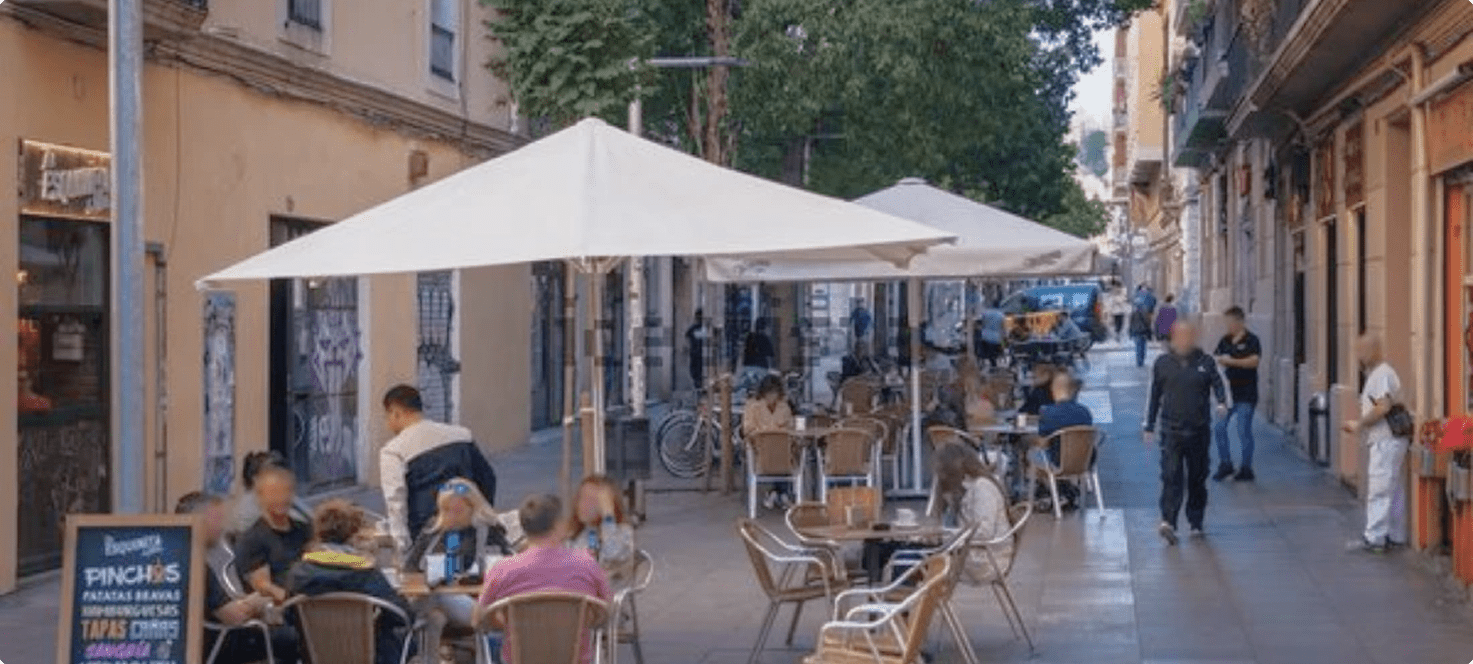
The tour ends with the neighborhood’s life today: Carrer de Blai, with its pintxos bars, and Avinguda del Paral·lel, where your guide reconstructs the backbone of Barcelona’s working-class history and popular entertainment.
The route follows a clear logic: first the edge of the old city and its working-class history, then the climb up Montjuïc and the memory of the war, and finally the neighborhood’s everyday life. There’s just one climb, to the Miramar Gardens; the rest of the route is downhill.
Starting point of the tour. The guide contextualizes Poble Sec on the city map: why it was left out of the 1860 Ildefons Cerdà expansion, how Montjuïc mountain defined its western boundary, and what it meant for its inhabitants to live between the medieval city and the new industrial Barcelona.
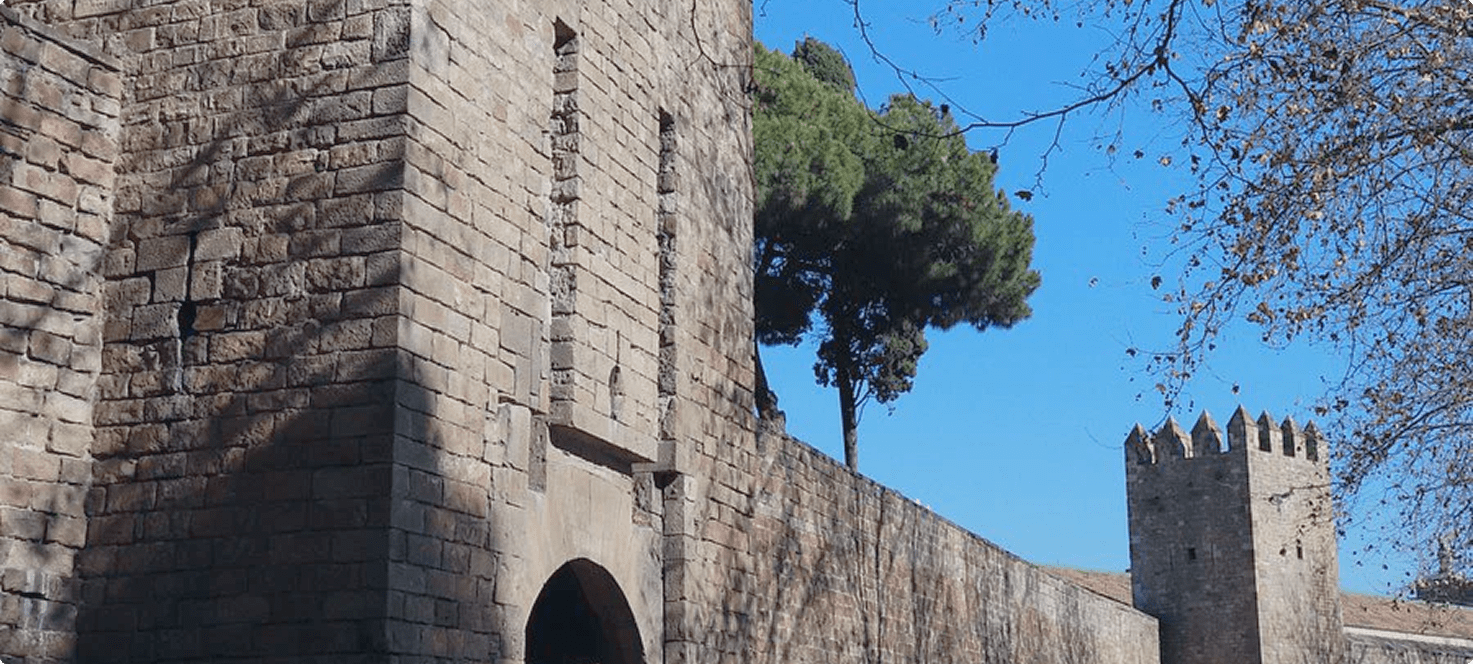
It’s the only surviving gate of the 14th-century wall that enclosed the Raval, next to the Drassanes, the royal shipyards where the galleys of the Crown of Aragon were built. Your guide explains how walled Barcelona grew and why Poble Sec, on the other side, was for centuries a land of market gardens and quarries at the foot of Montjuïc that wasn’t built up until the 19th century.
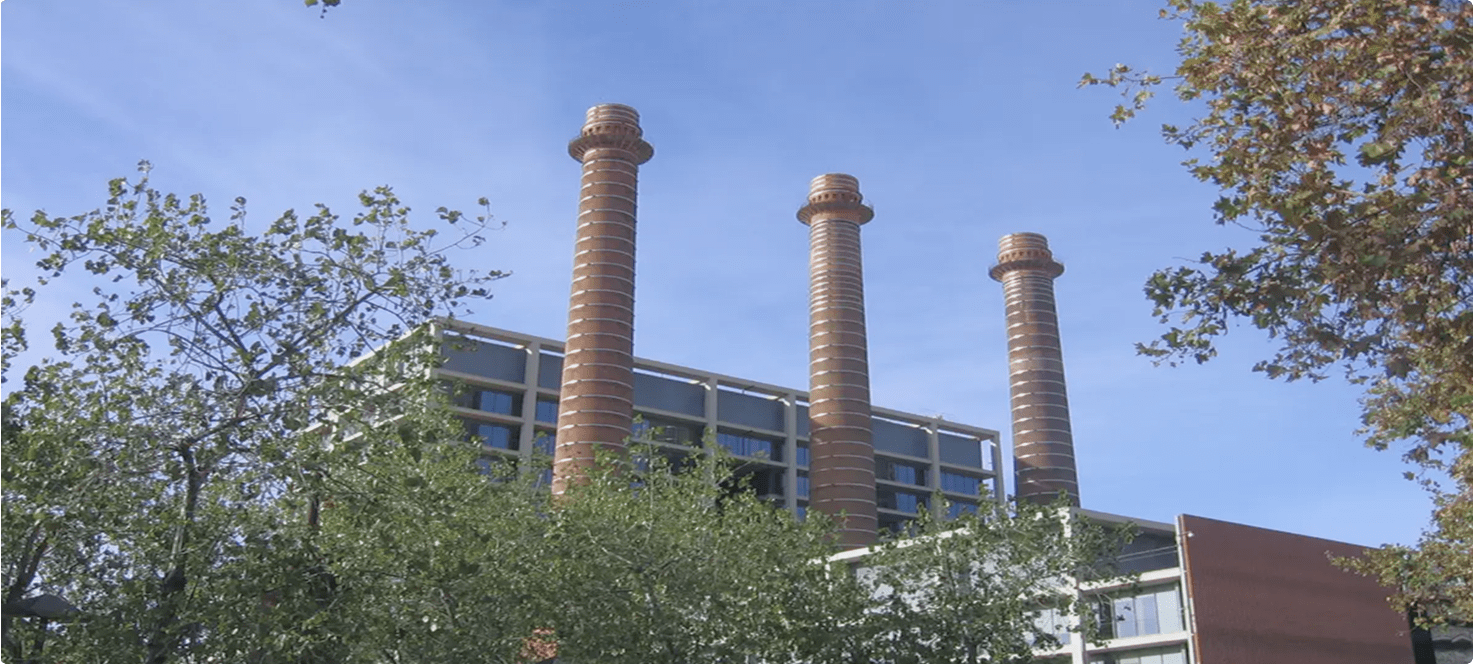
The three brick chimneys are all that’s left of the power station of Barcelona Traction, Light and Power, known as La Canadenca because of the company’s Canadian capital, which ran until 1989. In February 1919 a strike that began at the company brought Barcelona to a standstill for weeks, without electricity or transport, and ended with the eight-hour working day. Today the gardens around the chimneys are one of the few places in the city where graffiti can be painted legally, and a hangout for skateboarders.
From the Miramar Gardens, you get one of the best views of the port and coastline of Barcelona. The gardens are part of the complex created for the 1929 International Exposition, the event that transformed Montjuïc from a quarry and cemetery into an urban park. The guide explains the political significance of the ’29 Exposition under the dictatorship of Primo de Rivera: and the irony that the same year Barcelona inaugurated its great international showcase, the Second Republic was less than two years away from being proclaimed.
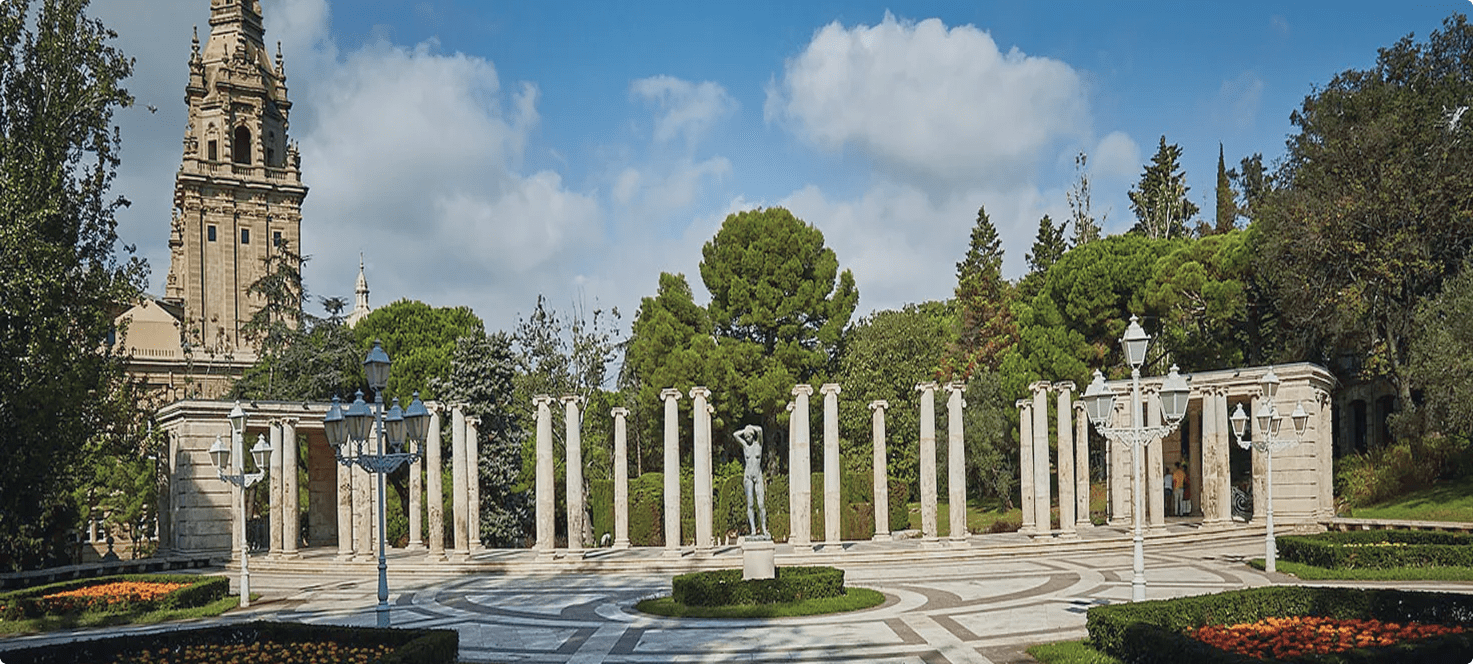
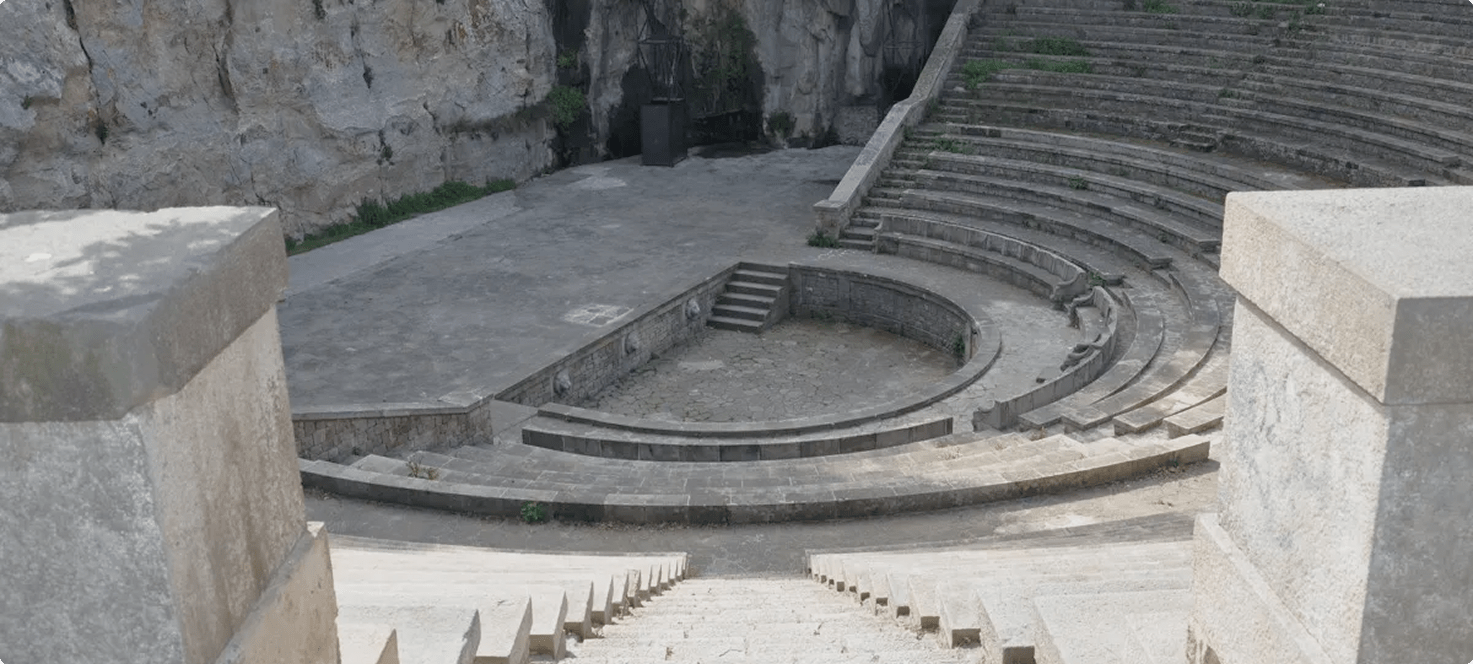
Built in 1929 as a neoclassical open-air theatre for the International Exposition, the Teatre Grec is integrated into the living rock of Montjuïc, taking advantage of a stone quarry. The guide places the theatre in the context of the festival that has borne its name since 1976 (the Barcelona Grec Festival, one of the most important performing arts festivals in Spain) and explains the relationship between the topography of Montjuïc and the history of the neighborhood that grew at its feet.
One of more than a thousand air-raid shelters built in Barcelona during the Civil War. Poble Sec residents dug it by hand from 1937 into the slope of Montjuïc: the plan was for some 400 meters of tunnels for about 2,000 people, and by the end of the war around 200 meters had been completed. Barcelona suffered nearly 200 air raids, the worst in March 1938, when the Italian air force fighting for Franco killed nearly a thousand people in three days. Today it’s run by the Barcelona History Museum (MUHBA). The interior can only be visited on Saturday and Sunday mornings, on the museum’s own guided tour with advance booking, so it doesn’t fit the afternoon session; this tour covers the outside and the full story.
Poble Sec’s liveliest pedestrian street, packed with pintxos bars and terraces. Your guide explains how the neighborhood has changed over recent decades, from a forgotten working-class area to one of the city’s go-to spots for food and nightlife, and the debate this raises about prices and longtime residents. Time for a break if your group would like one.
The finale. The avenue opened in 1894 and owes its name to the fact that it runs almost exactly along the 41° 22′ north parallel. From the late 19th century to the Civil War it was the great axis of Barcelona’s popular entertainment, with dozens of theaters, cabarets, music halls and dance halls. The Arnau, the Apolo, El Molino: your guide brings back the Paral·lel as the Broadway of working-class Barcelona, its ties to the labor movement and its decline after 1939.
INCLUDED
NOT INCLUDED
The price is per group, not per person: the total is split among everyone, so the more people in your group, the less each person pays.
| People | Total | Per person |
|---|---|---|
| 1 person | €326.70 | €326.70 / person |
| 2 people | €314.60 | €157.30 / person |
| 3 people | €326.70 | €108.90 / person |
| 4 people | €387.20 | €96.80 / person |
| 5 people | €453.75 | €90.75 / person |
| 6 people or more | — | €84.70 / person |
| People | Total | Per person |
|---|---|---|
| 1 person | €326.70 | €326.70 / person |
| 2 people | €314.60 | €157.30 / person |
| 3 people | €326.70 | €108.90 / person |
| 4 people | €387.20 | €96.80 / person |
| 5 people | €453.75 | €90.75 / person |
| 6 people or more | — | €84.70 / person |
* Children (ages 0 to 11): free. No hidden fees or booking surcharges. The optional visit inside Refugi 307 (weekend mornings only) is booked and paid separately with MUHBA.
Book early if you’re arriving in Barcelona in high season. The tour runs in two daily time slots:
* We recommend booking at least 7 days in advance to guarantee guide assignment. During high season (May–September), guides work at full capacity: the earlier you book, the more schedule options you will have available.
Your guide will be waiting for you at the exit of the Drassanes Metro on the La Rambla side. After booking, we will provide you with the guide’s phone number so you can meet up without any hassle.
Metro Drassanes (L3) · La Rambla exit
Free cancellation available
You can cancel free of charge up to 48 hours before the tour start time. Cancellations made less than 48 hours in advance or no-shows will not be refunded.
The route climbs to the Miramar Gardens on the slopes of Montjuïc along a path with a moderate gradient. It isn’t hiking, but there is a real climb. After that the tour is almost all downhill, past the Teatre Grec and Refugi 307, to Carrer de Blai and the Paral·lel. If anyone in your group has mobility issues, let us know when booking and your guide will adapt the route to skip the climb without losing the rest of the itinerary.
The tour includes the outside of the shelter and the full historical explanation. The interior can only be visited on the guided tour run by the Barcelona History Museum (MUHBA), on Saturday and Sunday mornings with advance booking: at 10:30 am in English, 11:30 am in Spanish and 12:30 pm in Catalan, with a separate ticket. That means it can only be combined with the weekend morning session. If you’re interested, let us know when booking and we’ll adjust the itinerary. Groups can also ask the museum for a private visit outside those hours.
The Civil War is one of the threads of the tour, not the only one. The air-raid shelter and the context of the 1938 bombings are a specific stop within a broader itinerary that includes the neighborhood’s working-class history, the culture of Paral·lel, and the geography of Montjuïc. If you are looking for a tour dedicated entirely to the Barcelona of the Civil War and the Republic, the Private Civil War Barcelona Tour covers this topic in depth across the entire city.
Yes, and it’s designed with them in mind. Poble Sec rarely appears on standard tourist itineraries: arriving here with an official guide means discovering a neighborhood most visitors never see. If you’ve already done the Gothic Quarter, the Sagrada Família or El Born, this tour adds a completely different layer to your understanding of the city.
Two neighborhood classics: Quimet & Quimet (Carrer del Poeta Cabanyes, 25), a tiny family-run bodega open since 1914, with no tables, famous for its montaditos made with tinned delicacies and its vermouth; and El Sortidor de la Filomena Pagès (Plaça del Sortidor, 5), in a venue with early 20th-century décor. Your guide can suggest more options at the end, depending on what you’re after.
The afternoon session has an advantage: the sunset light over the port from the Miramar Gardens is spectacular, and Carrer de Blai livens up from 6 or 7 pm, in case your group wants to stay for a drink afterward. The morning session is cooler in summer, which helps on the climb up Montjuïc.
It was our third trip to Barcelona and we decided to get off the beaten path. The history of Refugi 307 and the 1938 bombings was the most impactful thing we have heard on a tour. Absolutely recommended.
We had no idea that Poble Sec existed. The climb up to the Miramar Gardens with the views of the port, the explanation of the Paral·lel and Calle Blai at the end: a perfect route.
We have lived in Barcelona for years and had never heard the story of Paral·lel explained like this. The guide connected the architecture, politics, and daily life of the neighborhood in a way we didn't expect.
We took the sunset tour: the views from Miramar with the light falling over the harbor are incredible. And the history of the three chimneys and what that place was before '92 makes you see the city in a different way.
If you have any questions or special needs before booking, write to us — we reply in less than 24 hours.