


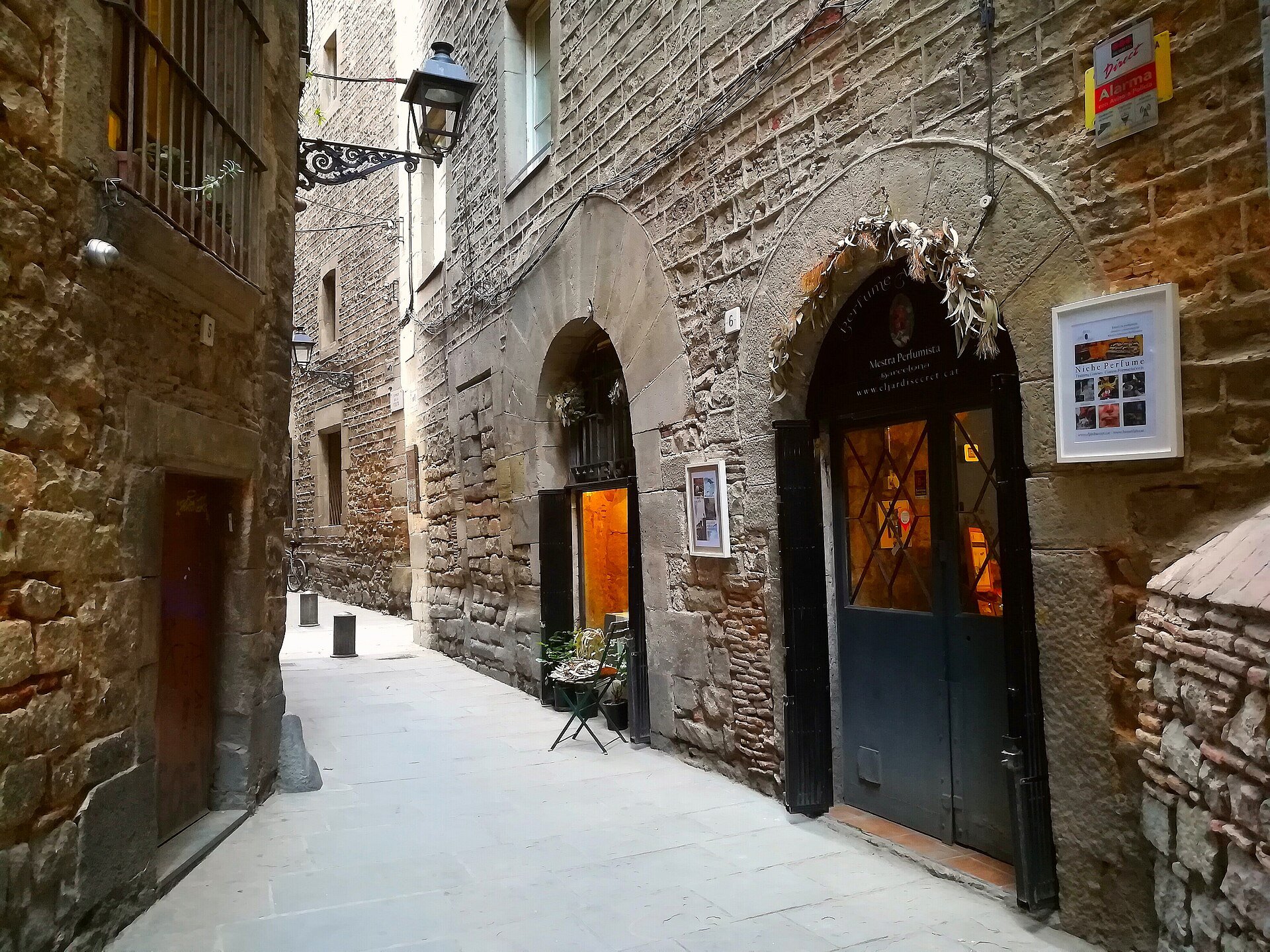
The Call is one of those parts of Barcelona that lots of people walk through without noticing. It's four or five narrow streets just steps from Plaça de Sant Jaume, with no big monuments or flashy signs. But these streets were home to a community that produced doctors, rabbis, mathematicians and royal advisers, and that vanished all at once in the summer of 1391. What's left is in the details: a stone with Hebrew letters, two holes in a door frame, the name of a street. Here we tell you what the Call was and where to look to find it.
The Call was the neighborhood where Barcelona's Jewish community lived in the Middle Ages. According to the Barcelona History Museum (MUHBA), "call" is a Catalan word meaning a narrow passage between two walls, an alley. Another widespread explanation traces it to the Hebrew "kahal," community or assembly. What's certain is that the name fits like a glove: its streets barely let two people pass at once.
The neighborhood took up a corner of the old Roman city. According to MUHBA, it reached east to just past Carrer de Sant Honorat and north to Carrer de Sant Sever. To the west it reached the Roman wall, and to the south, the Castell Nou and Carrer del Call, which lay outside the walled area. It had two gates on Carrer del Call, and its main entrance faced the area of today's Plaça de Sant Jaume.
In 1257, King Jaume I allowed Jews to settle outside the old wall, near the Castell Nou. That's how the Call Menor was born, and the original neighborhood came to be called the Call Major. According to MUHBA, in the 14th century there were five synagogues in the Call Major and one in the Call Menor, as well as schools, a hospital and ritual baths. Where the Call Menor synagogue once stood, on Carrer de Ferran, is now the church of Sant Jaume.
A few thousand people lived here: according to MUHBA, the community never made up more than 10% of the city's population. Legally, Jews were "servi camerae regis," meaning property of the royal chamber (the king's treasury). The king protected them directly in exchange for special taxes and loans. The community was organized as an aljama, with its own self-government. Its representatives shared out the taxes, settled disputes and organized religious life. The neighborhood had ovens, a butcher's shop and even a small prison for its internal affairs.
Houses grew upward more than outward, with inner courtyards and narrow staircases. The street layout can still be recognized today. People spoke Catalan, their mother tongue, as well as Hebrew, and nearly all of them could read at a time when most Christians couldn't. There were rabbis, doctors who treated both Jews and Christians, money changers, craftsmen and merchants. Some members of the wealthiest families served the kings as financiers, advisers and ambassadors.
Names that are still studied today came from here. Abraham bar Hiyya was an 11th- and 12th-century mathematician whose works were studied all over Europe. Salomó ben Adret, a great authority on rabbinic law, died in 1310. And Hasdai Crescas was, according to MUHBA, the last great Jewish thinker of Barcelona. In 1263, Jaume I called a famous religious disputation in Barcelona between the convert Pau Cristià and Rabbi Mossé ben Nahman (Nahmanides). Years later, Nahmanides ended up in exile.
And Montjuïc? Its name means "mountain of the Jews," because that's where the community buried its dead. The cemetery was used for centuries until 1391, and the area is now an archaeological site.
Living side by side had some very hard moments. In 1348, during the Black Death, the Call already suffered a first violent attack. But the final blow came in 1391. That summer, a wave of violence against Jews that had started in Seville in June spread through Valencia and Mallorca and reached Barcelona. The attack began on August 5, the feast of Saint Dominic. The neighborhood was burned, looted and destroyed, and the next day there was a second, even bigger attack.
Some families took refuge in the Castell Nou, a royal fortress next to the Call, but they weren't safe there either. Those inside were forced to choose on the spot between converting and dying. According to MUHBA, around 300 people chose death over baptism. Rabbi Hasdai Crescas lost a son in the attack and left a written account of what happened. Those who survived and didn't convert fled to North Africa or southern France.
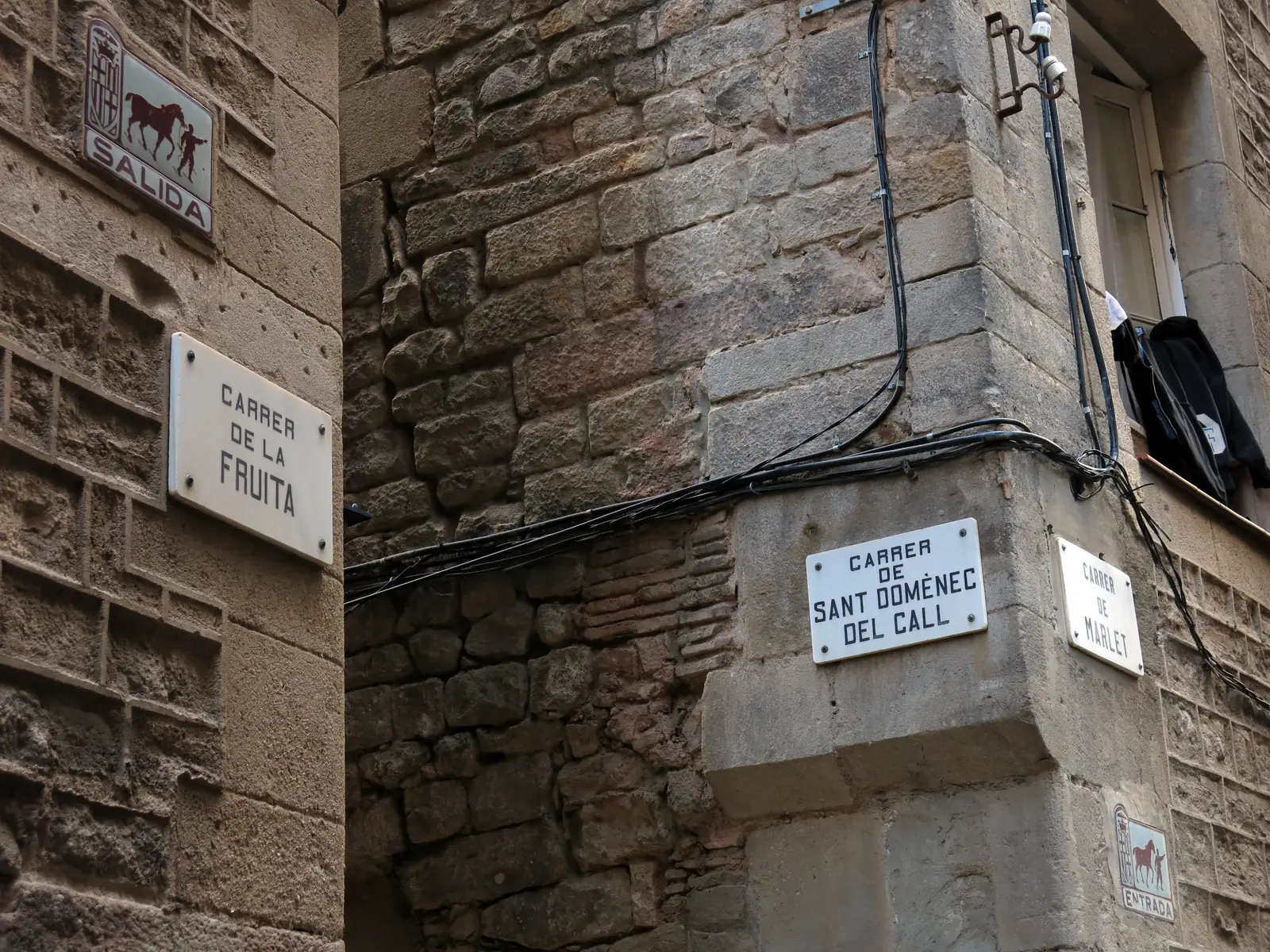
Afterward, the houses of the Call were sold, mostly to Christians. The old Synagogue street was renamed after Sant Domènec (Saint Dominic), the saint of the day of the attack. That's still its name today: Carrer de Sant Domènec del Call. In 1423, the city obtained from King Alfonso the Magnanimous the privilege of never again hosting a Jewish community. By the time the decree expelling the Jews came in 1492, there was hardly any Jewish community left in Barcelona.
At number 5 Carrer de Marlet, on the corner with Sant Domènec del Call, is the space that the Associació Call de Barcelona presents as Barcelona's old Sinagoga Major (Main Synagogue). The man who discovered it says that in 1983 he sensed that this wall was the eastern wall of a synagogue, because it turns to face Jerusalem and has two windows looking east. He checked it with a compass. The Associació, a private organization, restored the space in the 1990s and opened it to the public in 2002.
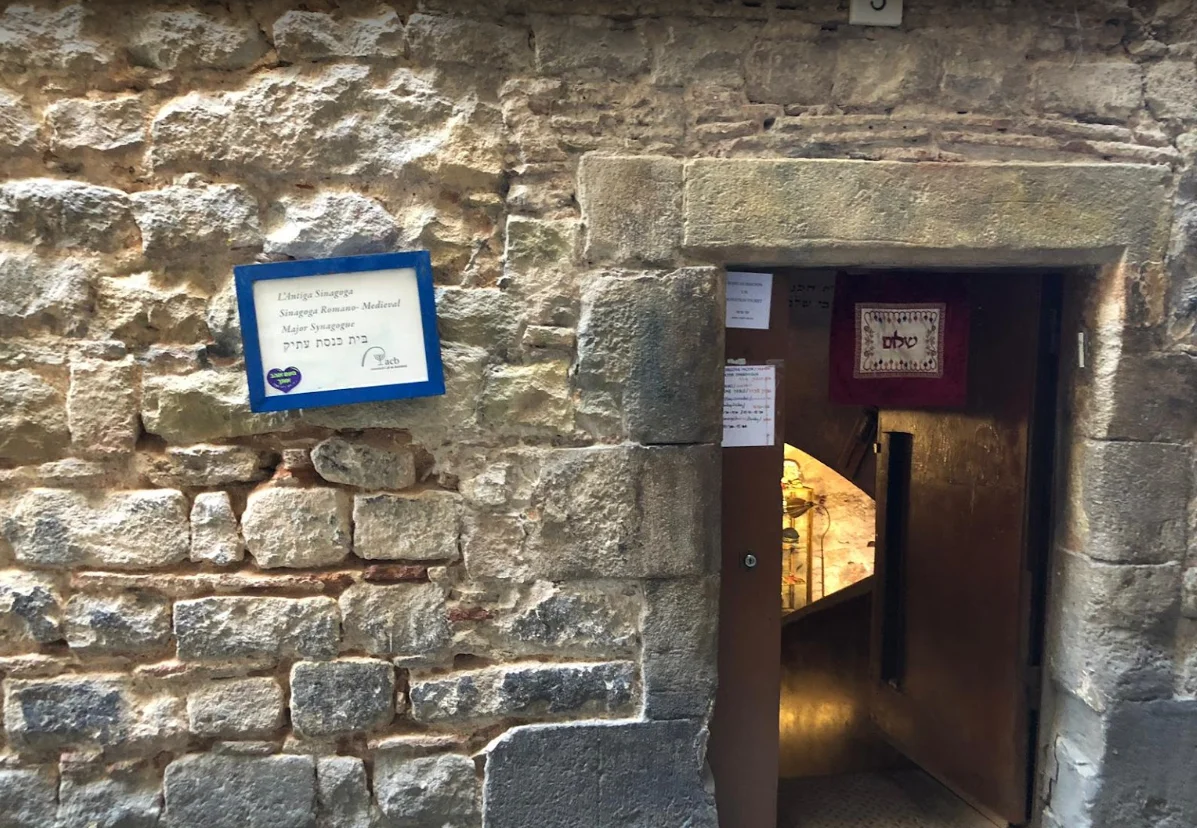
It isn't a place of worship. It works as a museum and a center for sharing Jewish culture, and bar and bat mitzvahs are held there. Many guides call it "one of the oldest synagogues in Europe," but it's worth knowing there's some debate. The Barcelona History Museum (MUHBA) places the main synagogue on this same block, the one formed by Sant Domènec del Call, Marlet, Arc de Sant Ramon del Call and Placeta de Manuel Ribé. But it doesn't identify it with number 5 Marlet. The orientation toward Jerusalem is a clue, not proof, and the Associació stands by its version. It's a small space: two rooms below street level, an entrance hall and a main room. According to the association that runs it, synagogues in Barcelona couldn't be bigger than Christian churches. Go with that in mind: it's a meaningful place of Jewish memory, even if we can't say for sure it was the Sinagoga Major.
Where to look
From the street, notice the corner of the building and the width of Carrer de Marlet, which keeps its medieval size. The wall that turns toward the east is the key piece the Associació relies on to identify it.
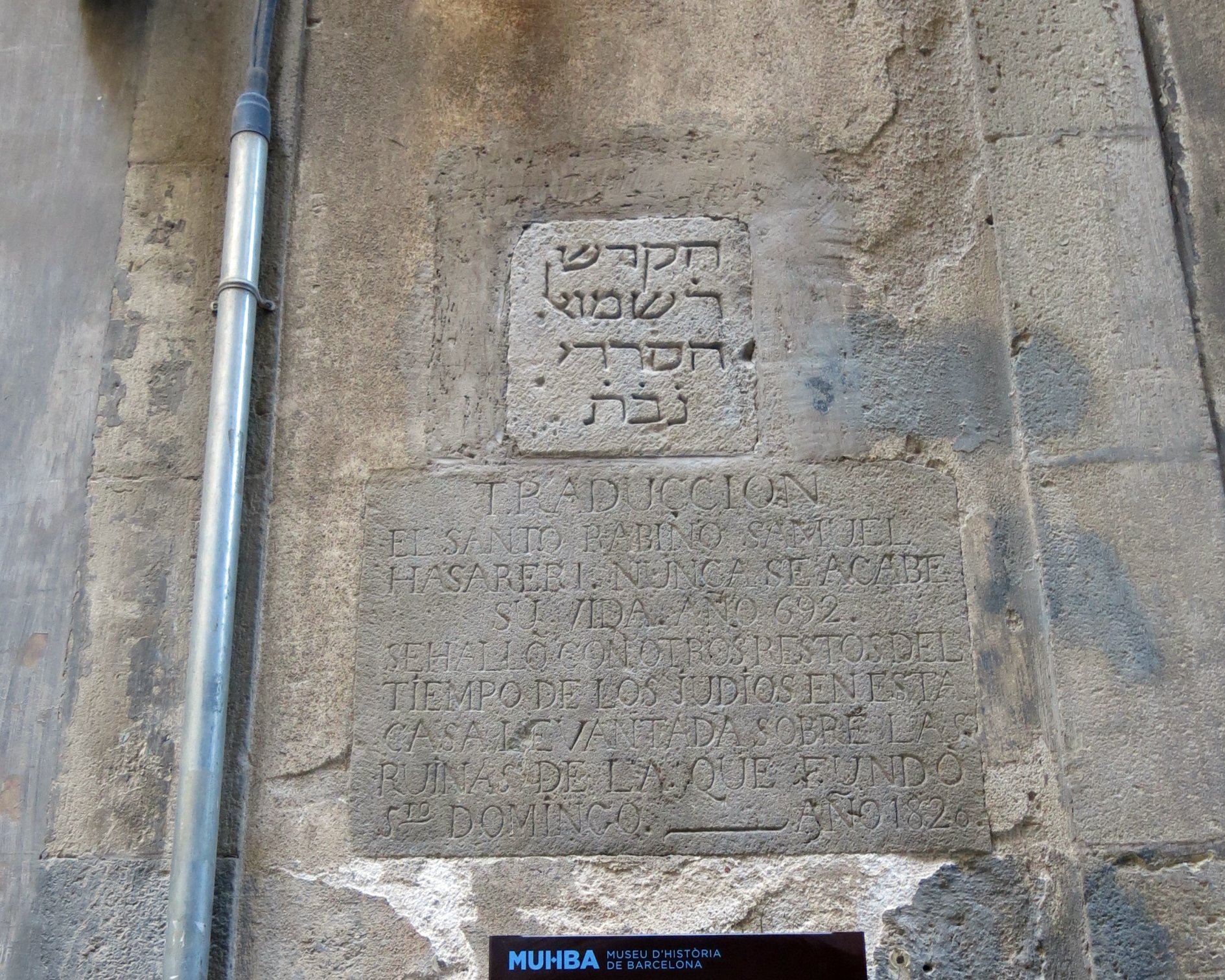
A few steps farther along the same Carrer de Marlet is one of the most moving pieces in the Call: a stone with a Hebrew inscription recalling a foundation by Samuel ha-Sardí, a prominent member of the community. The one you see on the wall is a faithful copy. The original, from around 1260, was found inside the earlier building and is now kept by the Barcelona History Museum.
Where to look
The stone is at chest height, on a street where two people can barely pass each other. Most people walk by looking straight ahead and miss it: lower your gaze a little.
At number 6 Carrer de Sant Domènec del Call is Casa Adret, a 14th-century house that betevé, Barcelona's public TV station, describes as the oldest inhabited house in Barcelona. There are other facades in the Call from the same period, but this one is probably the best preserved. It's named after Astruc Adret, its last Jewish owner, a well-off man who converted to Christianity after 1391.
The clue that it was a Jewish home is at the door. A mezuzah is a small case holding a text from the Torah, the Shema. Jewish families placed it on the right side of the door frame and touched it with their hand when going in. When it was ripped out, a hollow was left in the stone.
Where to look
At the entrance of Casa Adret, two mezuzah holes survive. They're among the few in the neighborhood that can be located with certainty.
In Placeta de Manuel Ribé is MUHBA El Call, the Barcelona History Museum site devoted to the Jewish quarter. It opened in 2015 in a medieval building with original remains from the 13th and 14th centuries: the house of a Jewish veil weaver, Yosef Bonhiac. Inside you'll see cisterns, wells and objects from the excavations. The museum explains the relationship between the Jewish community and the rest of the city, its cultural legacy, figures like Rabbi Salomó ben Adret and the attack of 1391.
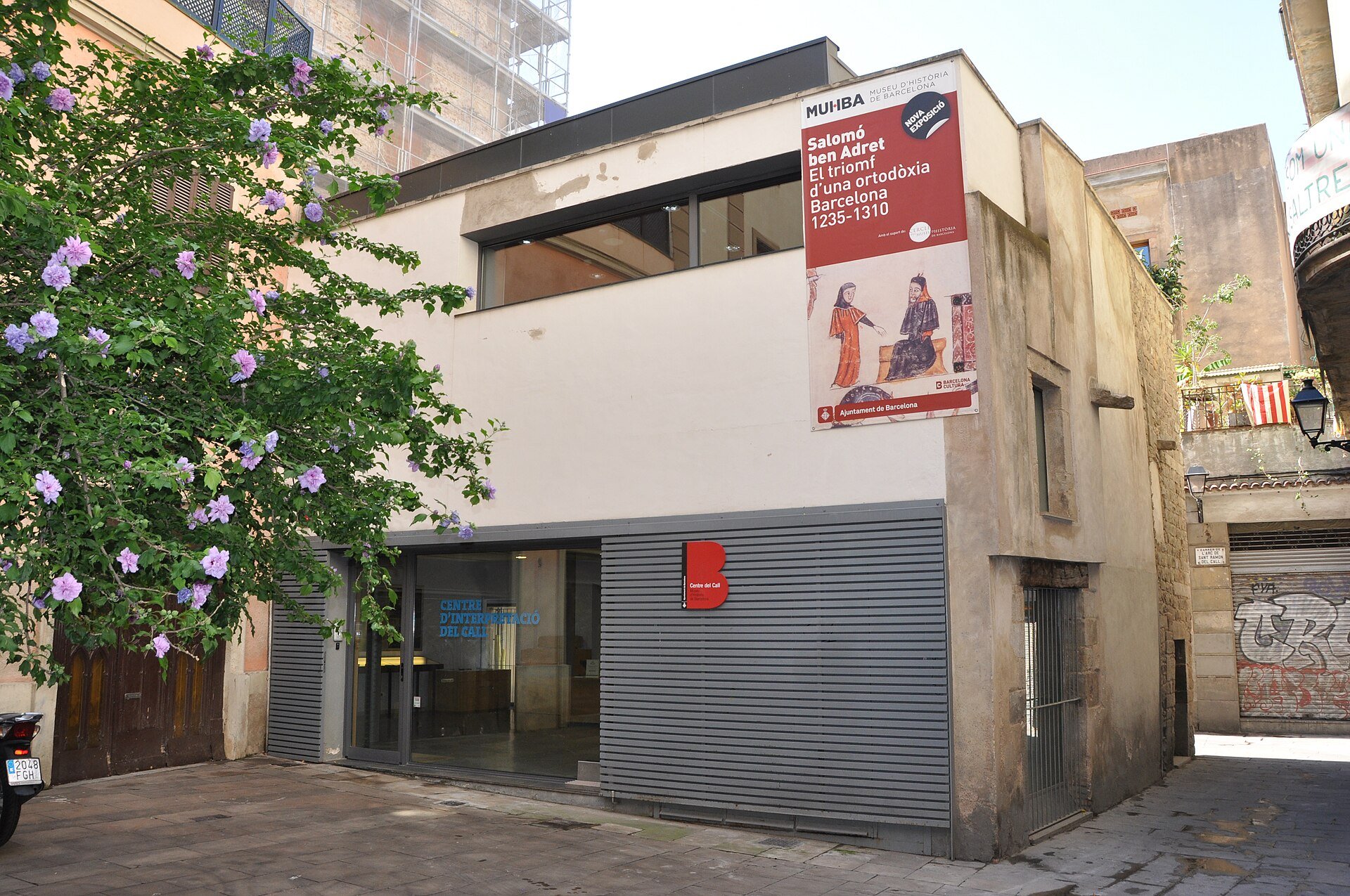
Tip. Admission to MUHBA El Call is free on the first Sunday of every month. Kids under 16 always get in free.
In the Call, even the street names hold memories. Carrer de Sant Domènec del Call was Synagogue street, and it was renamed after the saint of the day of the attack. Carrer de Sant Honorat used to be called de la Font dels Jueus (Fountain of the Jews), because the community had its own fountain: Jews weren't allowed to use everyone else's. On Carrer del Call, formerly called dels Torners, a stone section of the Roman wall peeks out. It was reused to build the Castell Nou, the fortress where some Jewish families took refuge in 1391.
There are surprises underground too. At the corner of Carrer de la Fruita and Sant Honorat, six huge 12th-century silos were discovered. Together they held about 90 tons of grain, enough food for some 2,400 or 2,500 people. That's more than lived in the neighborhood in the 12th century, so the silos are believed to have been used for large-scale trade or for collecting taxes.
And Carrer dels Banys Nous owes its name to some medieval baths. At number 10, at the back of a shop, there's a courtyard with arches that's often presented as a 12th-century Jewish ritual bath, or "mikveh." But the Barcelona History Museum (MUHBA) researcher in charge of its Call site says it's a 19th-century water tank. If you go in, keep in mind it's most likely not a Jewish bath.
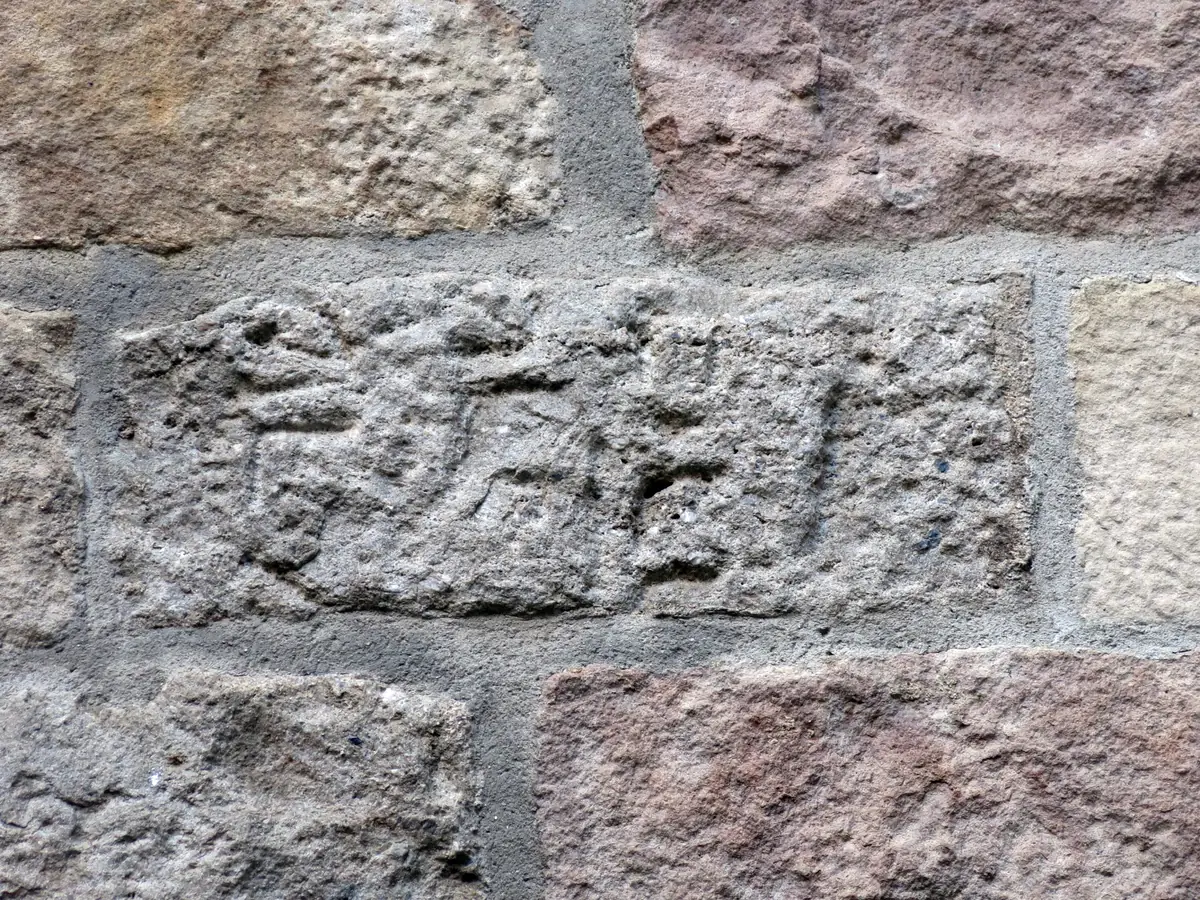
After 1391, the gravestones from the Jewish cemetery on Montjuïc passed to the Crown and were sold as building stone. That's why Hebrew letters turn up in walls in other parts of the Gothic Quarter. If you see a Hebrew gravestone in a wall, that piece of wall dates from after 1391.
Where to look
In Plaça del Rei, at the base of the Palau del Lloctinent, to the right of the door and next to the ground. And in Plaça de Sant Iu, next to the side entrance of the Museu Marès, where some Hebrew letters can be read perfectly.
Legend
It's said that the Catalan custom of "fer dissabte" (giving the house a thorough cleaning on Saturday) began among converts. It was a way to show they weren't keeping the Sabbath, the Jewish holy day. People say the same about the ham hung in plain sight in the kitchen. It's a popular explanation, with no documents to prove it. It's also said that some Sephardic families still keep the key to the house they left behind in the Iberian Peninsula.
Almost every guide lists the Synagogue on Carrer de Marlet as a must-see in the Call, and MUHBA El Call gets far less attention. Our take is the opposite: if you're only going inside one place, make it MUHBA El Call.
Why? It's the Barcelona History Museum's official site devoted to the neighborhood, it's set in a medieval house with original remains from the 13th and 14th centuries, and it costs €2.10. It's small and takes 20 to 30 minutes, but it gives you the context that makes the streets click afterward. The Synagogue costs €5, includes a paper map and is a self-guided visit of about 30 minutes. It's two small rooms below street level: an entrance hall and a main room. It's worth it if you're especially interested in Jewish heritage. Just keep in mind that the Barcelona History Museum itself doubts it was the Sinagoga Major.
If you have time and the topic interests you, you can easily do both, because they're about 50 meters (165 feet) apart. Together they cost €7.10 and take just under an hour.
Tip. If you want to see both, go Tuesday through Friday in the morning, because in winter that's when both are open at the same time. The Synagogue's hours change by season, so check its official website before you go.
Tip. Buy your Synagogue ticket on its official website, for €5. Resale sites charge more.
Tip. MUHBA El Call is open only a few hours. If you're making a special trip, call ahead at +34 93 256 21 22 to make sure it's open. Keep in mind that admission is free on Sunday afternoons at other MUHBA sites. El Call, however, closes at 2 p.m. on Sundays, so you can't take advantage of that here. The MUHBA combined ticket costs €7.30, is valid for 6 months and also covers the Plaça del Rei site, a 4-minute walk away.
People often say there's almost nothing left of the Jewish quarter and that the Synagogue is the only thing to see. That's not true: the medieval street layout is still there, and there are details you can see from the street without buying a ticket. According to MUHBA's official guide, the Call Major was a square about 150 meters (500 feet) on each side, so in 30 minutes you can walk all of it at an easy pace. It's about 500 meters (a third of a mile). Here's the route we suggest, in this order:
If you only have 30 minutes, going into the Synagogue isn't worth it, because the ticket and the visit take up almost all that time. What you can do is pop into MUHBA El Call for 10 or 15 minutes, since it's halfway along the route, if it's open. It's closed on Mondays, and Fridays and Saturdays are the only days it opens in the afternoon.
Tip. Do the walk first thing in the morning or late in the afternoon. The streets are very narrow, and around midday they fill up with tour groups.
In the Gothic Quarter, it's easy to end up somewhere made just for tourists. These are the places we recommend, all less than a 5-minute walk from the Call:
Tip. If you take our 10:30 a.m. Gothic Quarter tour, Can Culleretes or Bellafila are perfect for lunch afterward. If you join the 4:30 p.m. tour, Right Side or Caelum are a great pick for a coffee before you start.
These are the hours and prices published in November 2026 on the official MUHBA El Call website.
The Call fits into just a few streets, but it makes much more sense when someone stops you in front of the right stone and tells you what happened there. That's what our private Gothic Quarter tour does. It's 3 hours on foot with a licensed tour guide, just your group, in English or Spanish. It starts at 10:30 a.m. or 4:30 p.m. Kids ages 0 to 11 go free, and you can cancel free of charge up to 48 hours in advance. If you want to plan the rest of your walk, here's what to see in the Gothic Quarter, stop by stop. There's also our guide to visiting Barcelona Cathedral, a few minutes from the Call, and the story of Barcino, Roman Barcelona: the Jewish quarter grew up beside its walls. And if you're drawn to the city's darker stories, check out our Barcelona legends tour.
“Stephen was our tour guide. He gave us a very informative tour about the history of Spain… He explained great details on each site.”
Cindy · TripAdvisor, 2026
Before you go. Hours at MUHBA El Call and the Synagogue may change on public holidays and by season. Check their websites the same day. Remember that the Call is a neighborhood where people live: keep your voice down in its narrow streets. Main photo: Carrer de Marlet, by Enric (Wikimedia Commons, CC BY-SA 4.0).
Inside the Gothic Quarter, next to Plaça de Sant Jaume. The Call Major took up the streets between Carrer del Call, Carrer dels Banys Nous and Carrer de Sant Sever, with Carrer de Sant Domènec del Call in the middle. The nearest metro station is Jaume I (L4).
According to the Barcelona History Museum, it's a Catalan word meaning a narrow passage between two walls, an alley. Another explanation links it to the Hebrew "kahal," community or assembly.
Yes. The space that the Associació Call de Barcelona presents as the old Sinagoga Major, at Carrer de Marlet, 5, has been open to visitors with a ticket since 2002. It's small and isn't a place of worship, but a museum. The Barcelona History Museum places the main synagogue on that same block but doesn't identify it with number 5, so no one can say for sure that it was the Sinagoga Major.
If you're especially interested in Jewish heritage, yes: it costs €5, it's a self-guided visit of about 30 minutes, and it's a meaningful place of memory. If you're only going inside one place in the Call, we'd recommend MUHBA El Call first: it's the Barcelona History Museum's official site, it costs €2.10 and it gives you the context to understand the neighborhood. They're about 50 meters apart, so you can see both in just under an hour.
Take a walk of about 500 meters, all outdoors. Start on Carrer del Call and follow Sant Domènec del Call to Carrer de Marlet, with the Hebrew stone (number 1) and the Synagogue facade (number 5). Then go through Placeta de Manuel Ribé, where MUHBA El Call is, and along Arc de Sant Ramon del Call and Sant Honorat, ending in Plaça de Sant Felip Neri. We walk you through it street by street in the Call in 30 minutes.
Because of the attack of 1391, which began on August 5. The neighborhood was looted and burned and, according to MUHBA, around 300 people died rather than give up their faith. Many survivors converted or fled, and in 1423 the city obtained the privilege of never again hosting a Jewish community.
Yes. It got that name because Barcelona's Jewish community buried its dead there. Many gravestones from that cemetery ended up reused as building stone after 1391, and some can still be seen in walls in the Gothic Quarter.