


The Gothic Quarter is Barcelona's oldest core: two thousand years of history in less than one square kilometer. Underneath lies Barcino, the Roman colony. On top of it sits the medieval city of counts and kings. And there's a third layer that almost nobody tells you about: much of what looks medieval today was built in the 20th century. Knowing that changes how you see every corner, and it's what we show you on this route.
Roman Barcelona, known as Barcino, was founded in the 1st century BC, in the time of Augustus, on a small hill called Mont Tàber. It was a walled town with a grid of streets, and one of its two main streets still follows the line of today's Carrer del Bisbe. Medieval Barcelona grew on top of that Roman city: the Cathedral, the palace of the Counts of Barcelona, the Jewish Call and the Gothic churches.
The name "Gothic Quarter" (Barri Gòtic) is much more recent. People used to call it the Cathedral neighborhood. The label first appeared in 1911, in an article by the writer Ramon Rucabado, and it was followed by a project to beautify the old center. When Via Laietana was opened from 1908 onward, hundreds of houses were torn down, and many of the salvaged pieces (windows, doorways, entire facades) were relocated to other spots in the neighborhood. The work to make the area look monumental began in 1927 and continued, with pauses, until the 1970s.
That's why it pays to tell them apart. Truly Gothic: the inside of the Cathedral and its cloister, the Saló del Tinell, the Chapel of Santa Àgata, Santa Maria del Pi and Sants Just i Pastor. From the 19th and 20th centuries: the main facade of the Cathedral, the Pont del Bisbe and several "medieval" facades that were moved here stone by stone.
The route starts where one of the gates in the Roman wall once stood, next to the Jaume I metro exit (line 4). It's also our meeting point: look for the angel pointing its finger from a niche at number 2 on the square.
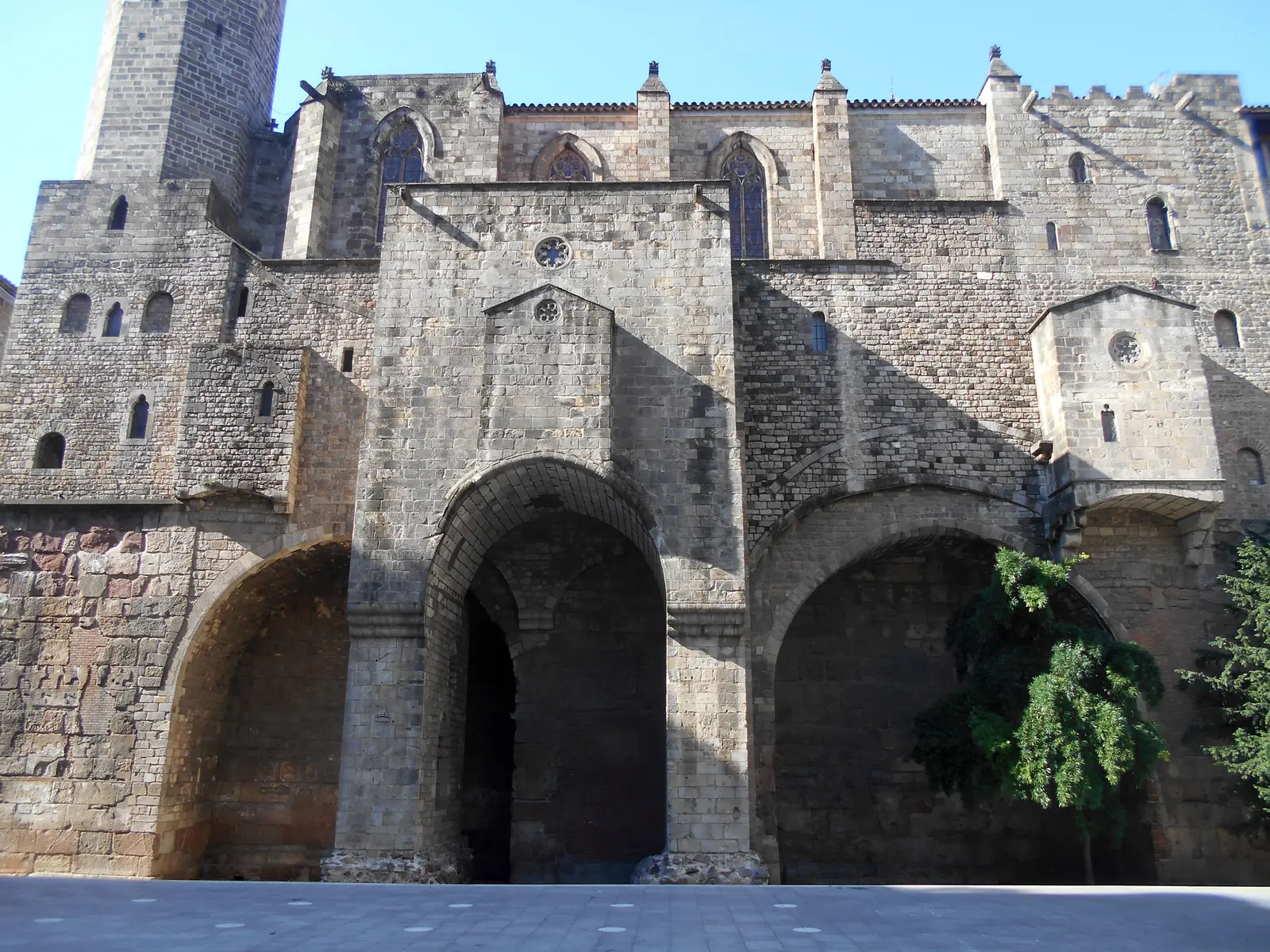
Barcino had a first wall from the time of Augustus and a second, stronger one, built in the late 3rd and early 4th centuries after raids by Germanic peoples. To build it, the funerary monuments outside the city were taken apart, which is why some of the large stones in the wall are reused tombstones.
Where to look
The best stretches of wall are in two squares. In Plaça Nova, across from the Cathedral, you'll see the towers of a Roman gate and the letters "BARCINO." In Plaça de Ramon Berenguer el Gran, the Chapel of Santa Àgata rests directly on the wall. Watch out for the aqueduct arches next to the gate in Plaça Nova: they're a 20th-century reconstruction, not Roman.
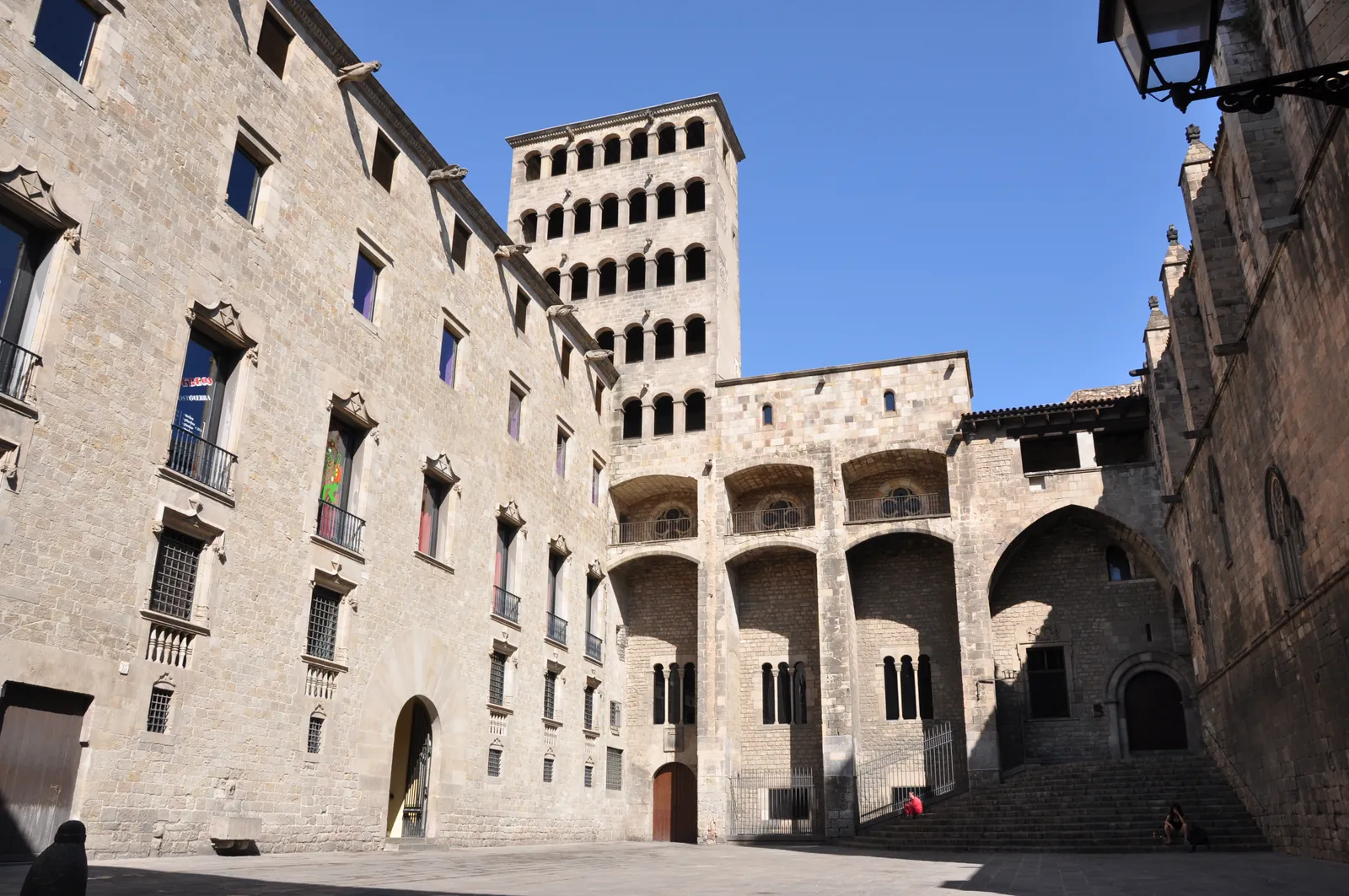
This is the most complete square in the neighborhood. Around it stands the Palau Reial Major (Grand Royal Palace), documented since 1116 as the residence of the Counts of Barcelona and later of the Kings of Aragon. Its great hall, the Saló del Tinell, was commissioned by King Peter IV, "the Ceremonious." It measures 33 meters long by 17 wide and is held up by six large stone arches. On one side is the Chapel of Santa Àgata, from the early 14th century, with an octagonal bell tower topped like a royal crown. On the other is the King Martin Tower. Despite the name, it was built in the 16th century, long after King Martin died in 1410.
According to tradition, this is where the Catholic Monarchs received Columbus in 1493, on his return from the Americas. What is documented is that in December 1492 a peasant, Joan de Canyamars, wounded Ferdinand the Catholic in the neck on the palace staircase. The king survived.
Beneath the square lies one of Barcelona's great treasures: more than 4,000 square meters of excavated Roman city, with a laundry and dye shop, fish-salting workshops and a winery. A detail historians like to share: the people of Barcino grabbed a quick bite at the taverns at midday and saved the feast for dinner. You can see all of this at the Barcelona History Museum (MUHBA) at Plaça del Rei, which requires a separate ticket. The entrance is in Casa Padellàs, a palace that originally stood on another street and was taken apart and rebuilt here stone by stone. When its foundations were dug in the 1930s, the Roman city came to light.
Where to look
On Carrer dels Comtes, on the side of the Museu Frederic Marès, there's a coat of arms of the Inquisition, which had its headquarters in this palace from 1487. It shows a cross, a sword (punishment) and an olive branch (reconciliation).
It's the oldest structure still standing in Barcelona, and many people walk right past it without noticing. At number 10 Carrer del Paradís, inside the courtyard of the Centre Excursionista de Catalunya, four Corinthian columns about 9 meters tall still stand. They belonged to the temple dedicated to Augustus, built on the highest point of the colony. Three are in their original position. The fourth was rebuilt from fragments of the temple and stood in Plaça del Rei until 1956, when it was placed next to the others.
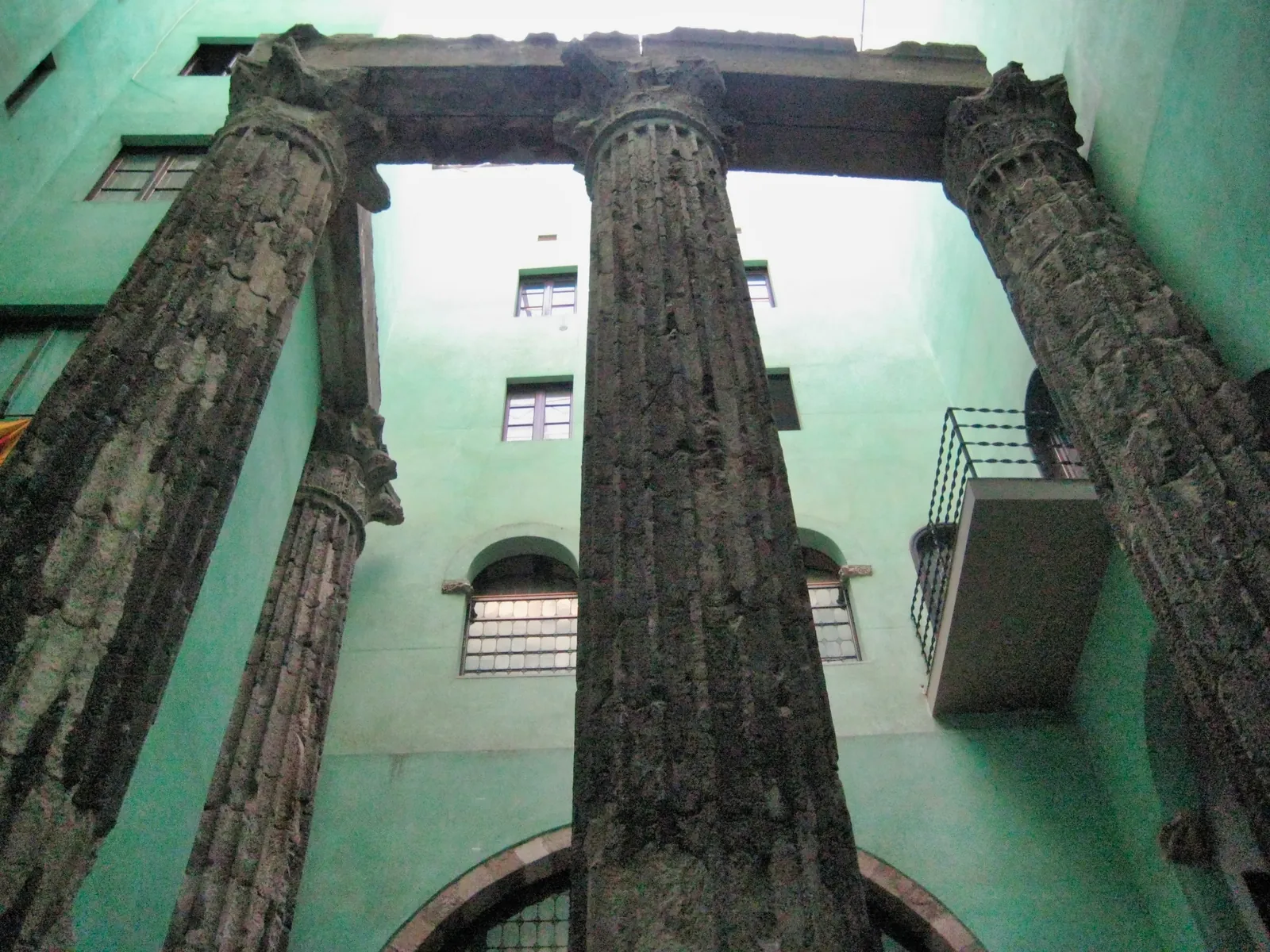
For centuries the temple was hidden inside other houses. It was identified in the 19th century, and in 1876 its columns were found holding up the wall and ceiling of a room.
Where to look
On the ground, in front of the door, a millstone marks the summit of Mont Tàber, the hill on which Barcino was founded.
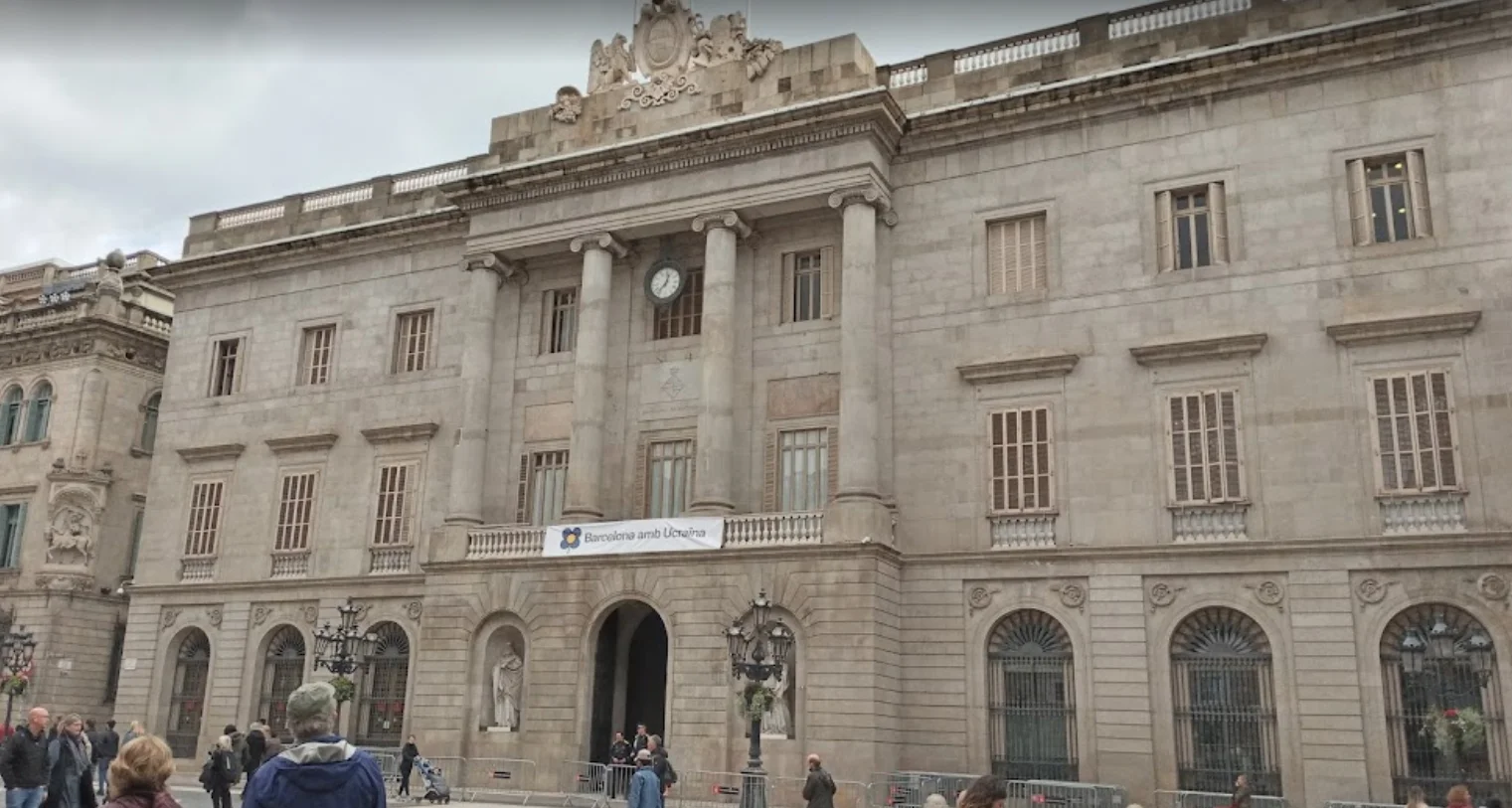
The Roman forum, the center of public life in Barcino, stood next to this square. Today Barcelona City Hall (Ajuntament de Barcelona) and the Palau de la Generalitat de Catalunya (seat of the Catalan government) face each other across it. Two thousand years later, the city is still governed from this square. In the Middle Ages, one of the gates of the Call (the Jewish quarter) opened onto this square, at the start of today's Carrer de Sant Honorat.
Where to look
To the right of the main door of City Hall there's a statue of Joan Fivaller, a city councillor in the 15th century.
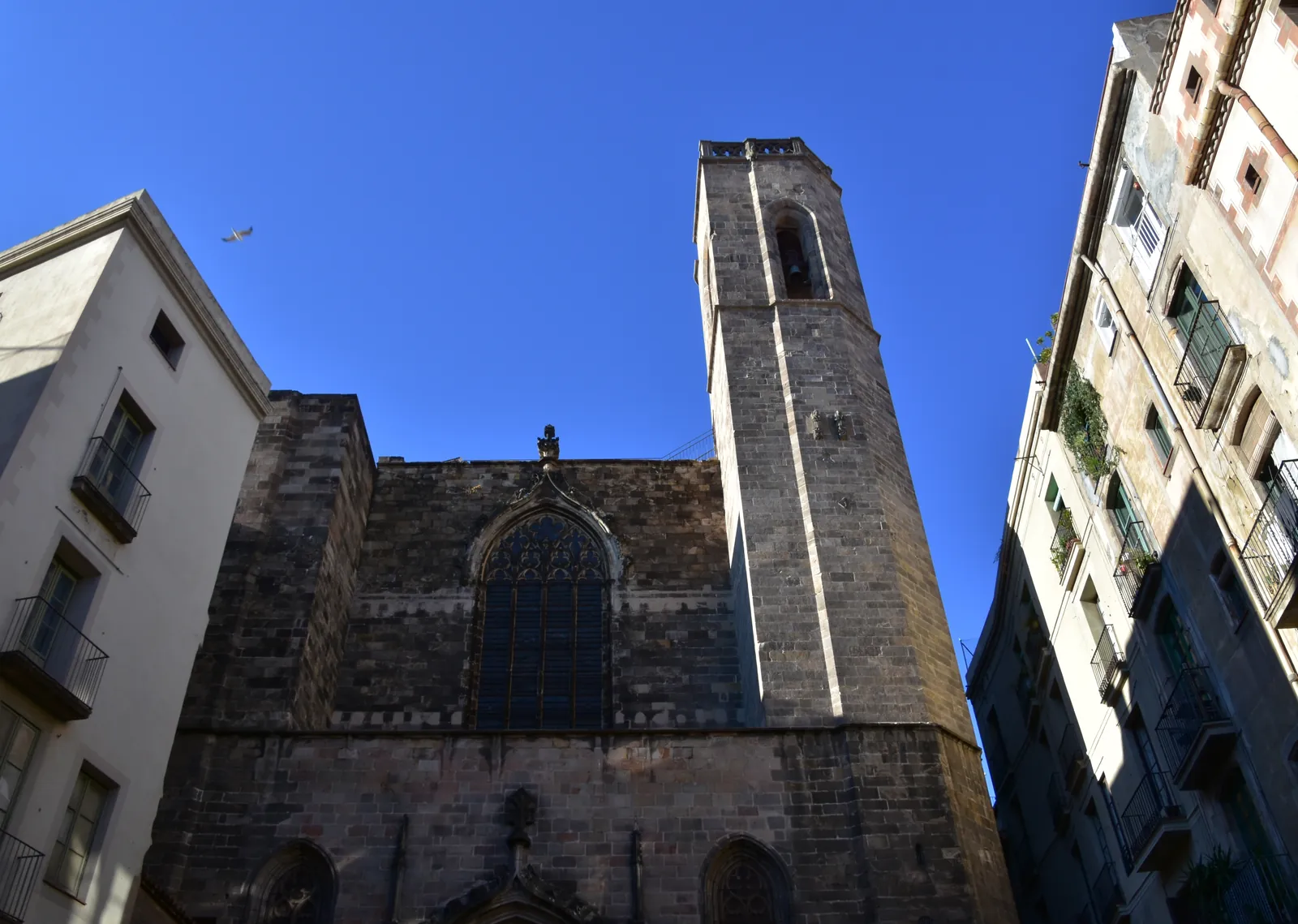
Two minutes from Sant Jaume is this Gothic church dedicated to Just and Pastor, two child martyrs. Tradition considers it Barcelona's oldest parish, and in 2012 the remains of a much earlier church were found beneath it. The current building was begun in 1342.
Something unique happened here: the sacramental will. A Barcelona citizen in danger of death outside the city could dictate his last wishes before two witnesses. The will was valid if, within six months, those witnesses swore to it before the altar of Sant Feliu in this church. The privilege dates back to the 9th century.
Where to look
Inside, next to the presbytery, a glass floor reveals the remains of the 6th-century church. Outside, in the square, the medieval Fivaller fountain still runs with water.
The Cathedral of the Holy Cross and Saint Eulalia (Santa Creu i Santa Eulàlia) is the city's most important church, because it's the seat of the bishop. Its first Gothic stone was laid on May 1, 1298, during the reign of James II (Jaume II), and construction lasted until 1463. The earlier Romanesque cathedral wasn't torn down. Instead, it was remodeled in phases while it stayed in use.
The main facade, the one in every photo, isn't medieval. For centuries it was a plain, unfinished wall. It was paid for in the late 19th century by the banker Manuel Girona and built between 1887 and 1890, inspired by a medieval design from 1408. When the scaffolding came down, the criticism poured in, and more decoration was added. The central dome wasn't finished until 1913, so it's from the same era as the Sagrada Família.
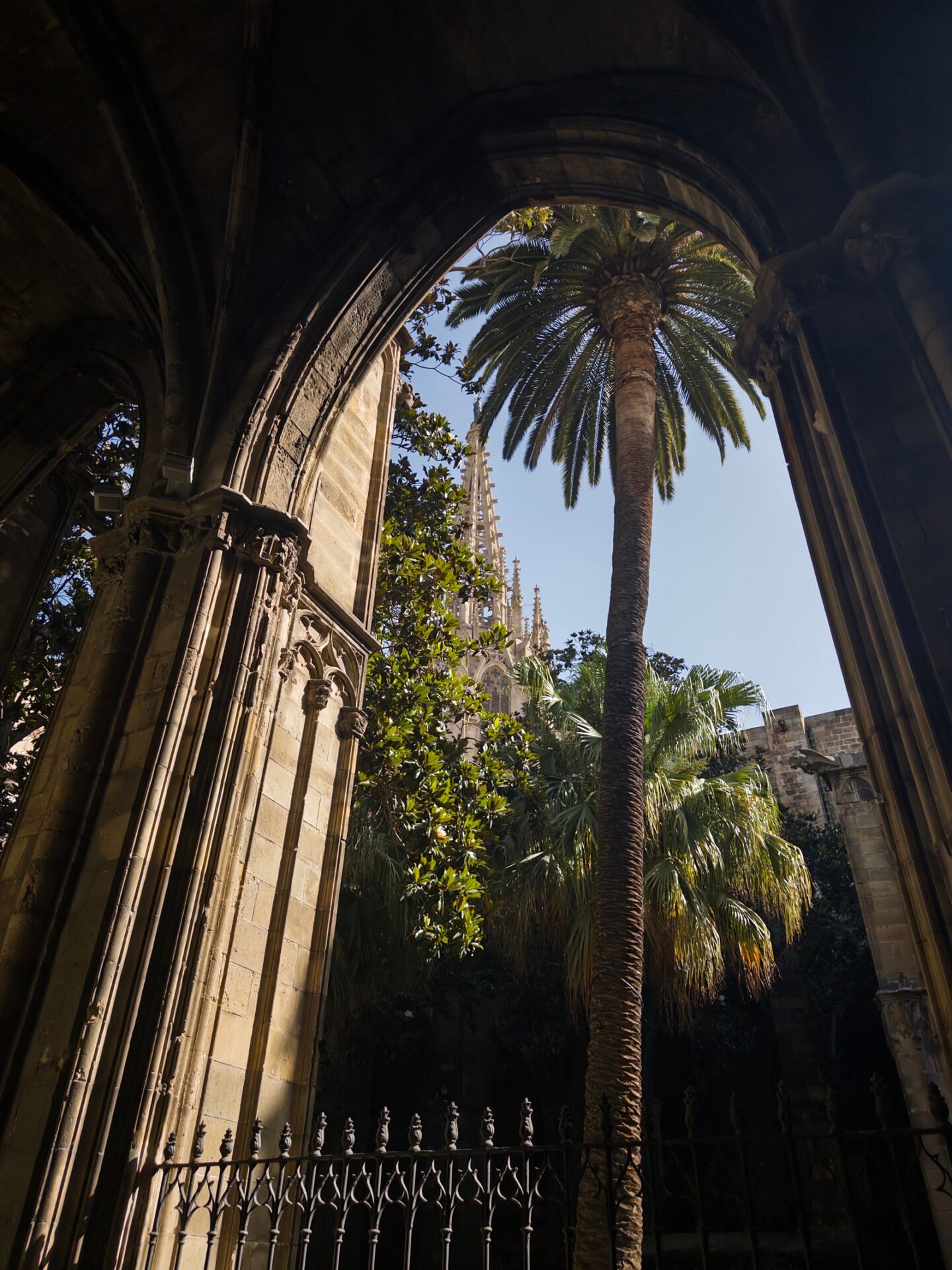
Inside, the must-see is the Gothic cloister, with a garden of palm and magnolia trees and 13 white geese. According to tradition, there are 13 because that was the age of Saint Eulalia, co-patron saint of Barcelona, when she was martyred. Beneath the high altar is the crypt, with the alabaster sarcophagus that holds the remains attributed to the saint. General admission costs €16 (price as of November 2026). With our tour, admission, the cloister and the crypt are included. If you're going inside, our guide to visiting Barcelona Cathedral covers what to see, opening hours and tickets. Check current opening hours on the official Barcelona Cathedral website.
Where to look
Walk around the back of the Cathedral. Among more than 150 gargoyles there's a unicorn and an elephant. To the left of the Sant Iu doorway you'll see a bricked-up door. It's all that's left of a passage between the palace and the Cathedral, built so King Martin could go to Mass without stepping into the street.
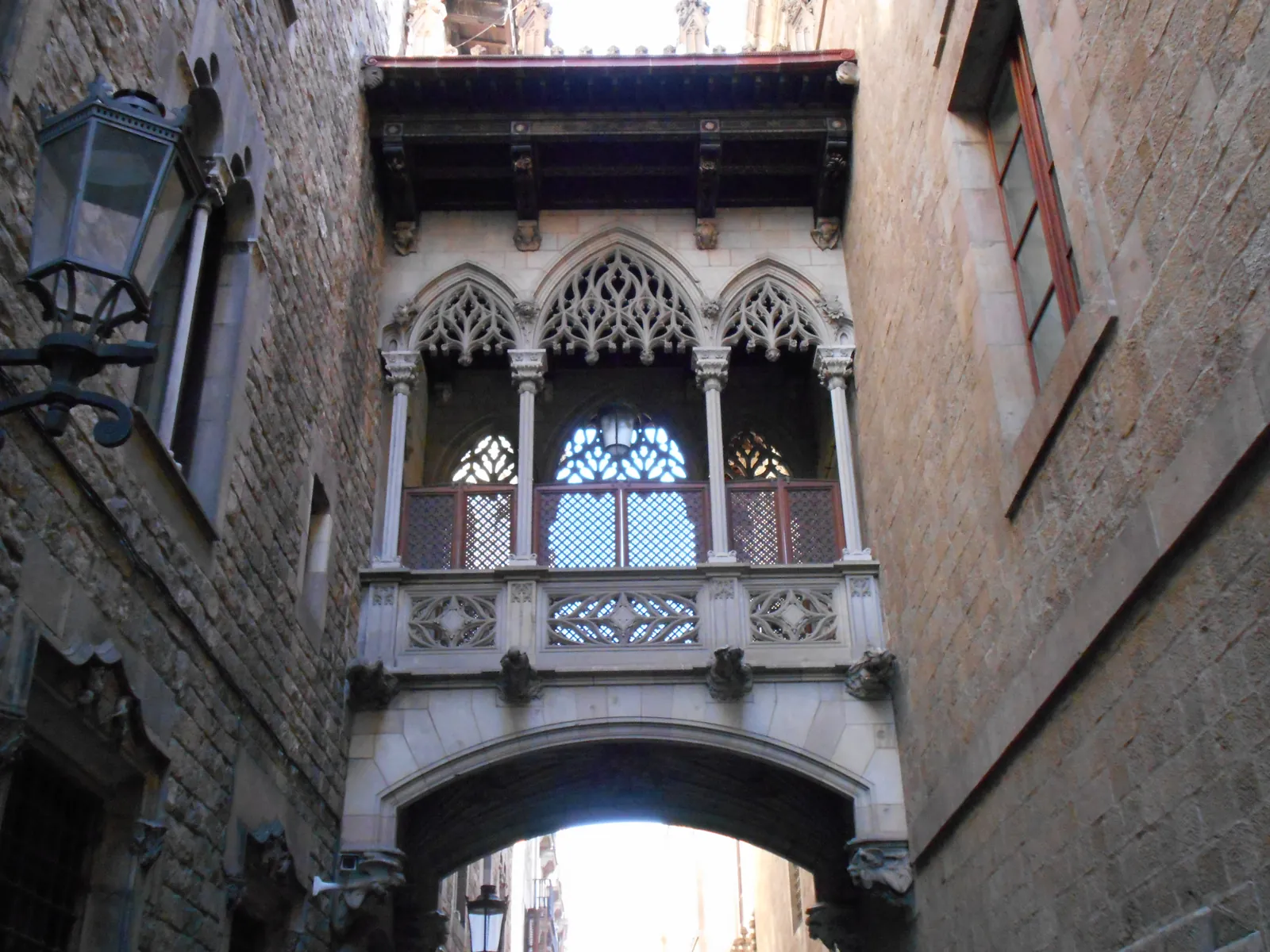
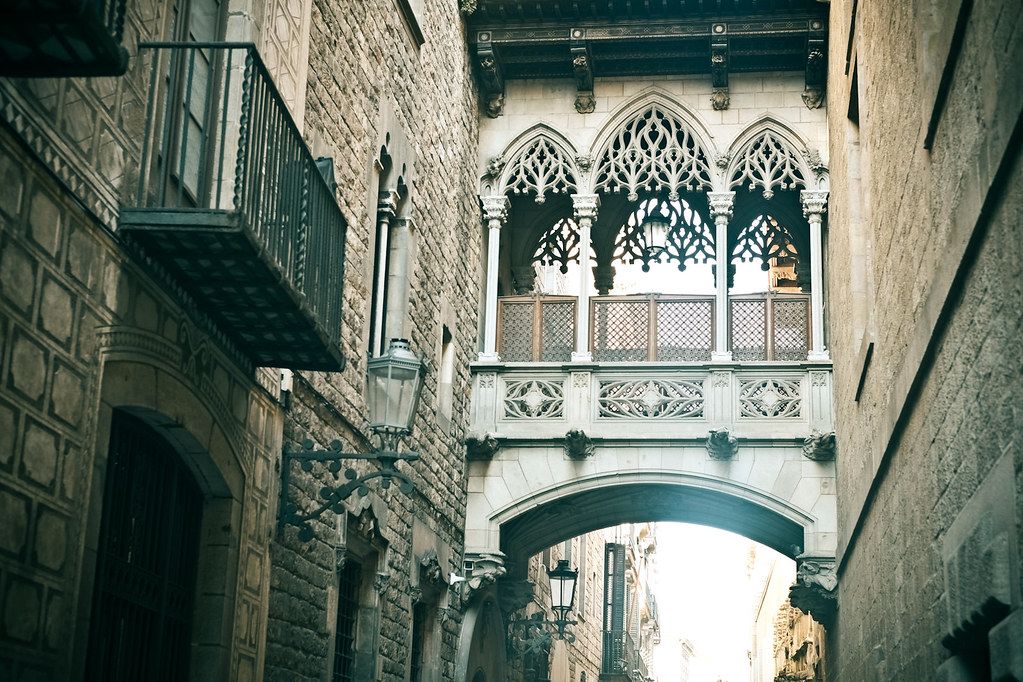
Carrer del Bisbe follows the line of one of the two main streets of Roman Barcino. Crossing above it is the Pont del Bisbe, the most photographed spot in the neighborhood. It looks Gothic, but it opened in 1928, for the 1929 International Exposition. That makes it younger than the Barcelona metro. It was designed by Joan Rubió i Bellver, a disciple of Gaudí. It links the Palau de la Generalitat with the Casa dels Canonges, which is now the official residence of the President of the Generalitat.
Legend
Under the center of the arch there's a skull pierced by a dagger, and nobody knows for sure why Rubió put it there. They say that if anyone pulls out the dagger, Barcelona will be destroyed, and that if you walk under the bridge backward while looking at it, your wish will come true.
It's the quietest square in the neighborhood, and it has a harsh history. For years, people said the holes in the church facade came from firing squads. In fact, they're shrapnel marks from the bombing by the Italian air force on January 30, 1938, during the Spanish Civil War. Forty-two people died, most of them children. The facade was deliberately left unrepaired, as a memorial.
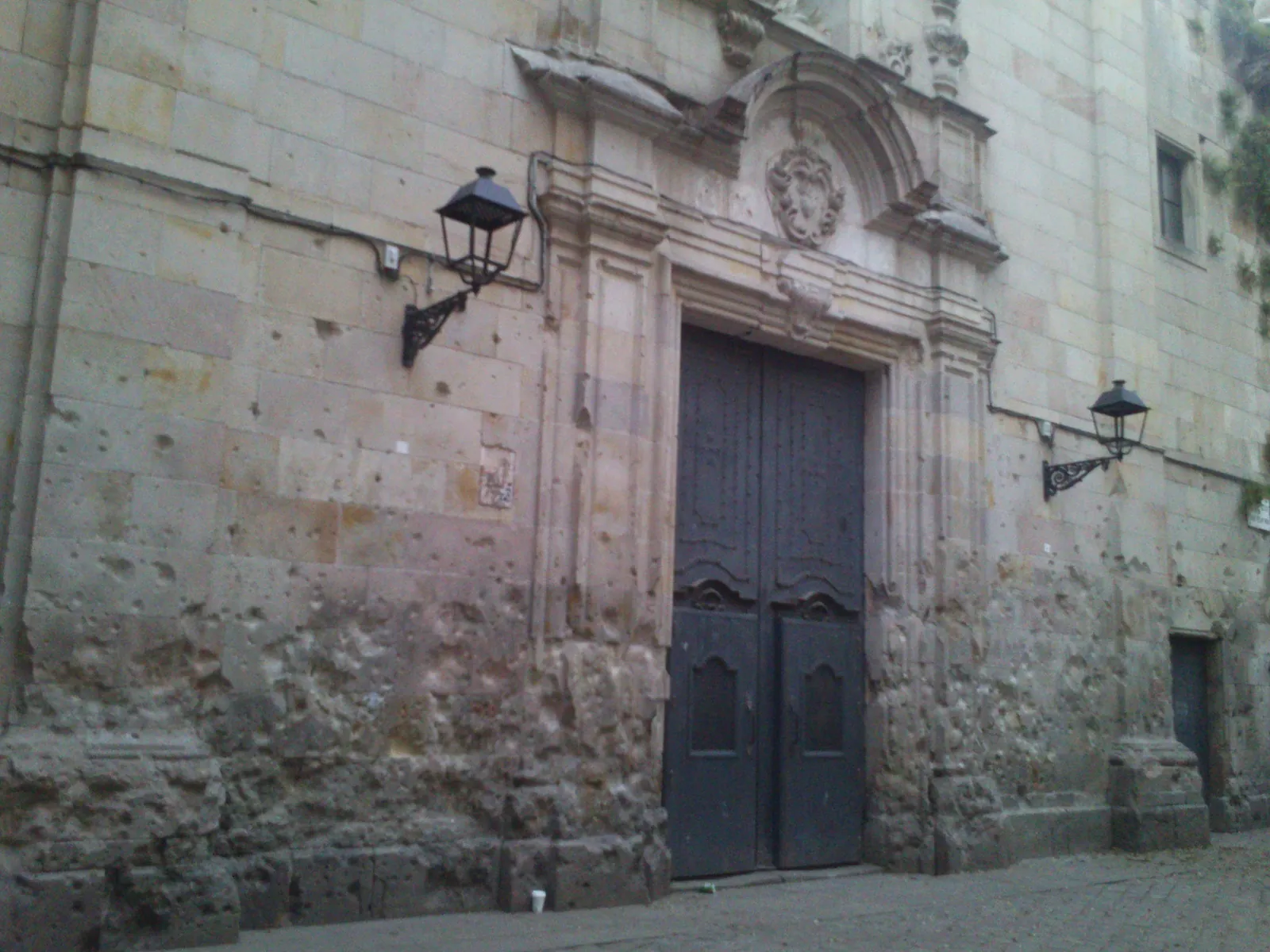
The rest of the square lay in ruins and was rebuilt around the 1950s with two 16th-century guild-house facades, the coppersmiths' and the shoemakers', brought stone by stone from other streets. If you're interested in this chapter of history, we cover it in depth on our Civil War tour in Barcelona.
Tip. The square may be closed in the mornings on school days, because it serves as a school playground. If you take our 10:30 a.m. tour on a school day, keep in mind it may be closed at that time. The entrance is on Carrer de Montjuïc del Bisbe. And a detail for Gaudí fans: he came to this church almost every day, because his confessor was here.
In Catalan, "call" means an alley: a narrow passage between two walls. That's exactly what its streets are like. This was home to one of the most important Jewish communities in the Crown of Aragon, with several synagogues, schools and ritual baths. The community buried its dead on the nearby mountain, which is why that mountain is called Montjuïc, "mountain of the Jews."
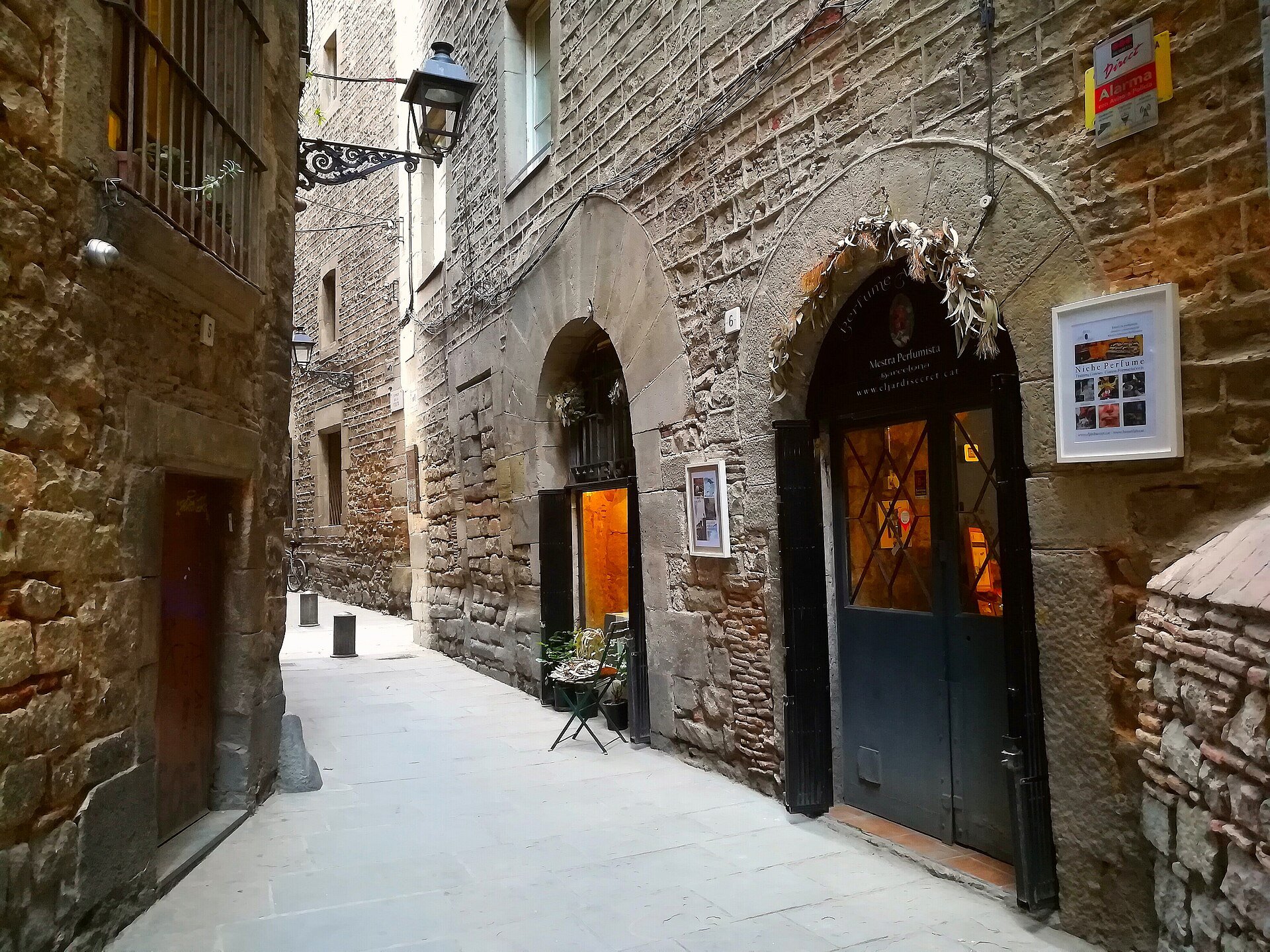
The great community came to an end in August 1391, when the quarter was attacked, looted and set on fire. According to the Barcelona History Museum, about 300 people chose to die rather than be baptized. In 1423 the city obtained the privilege of never again hosting a Jewish community. Today you can visit the former Sinagoga Major (Main Synagogue). And since 2015, MUHBA El Call has displayed objects from the excavations in the house of a 14th-century weaver.
Where to look
On Carrer de Marlet, at chest height, there's a stone plaque with a Hebrew inscription recalling a foundation by Samuel ha-Sardí. The one on the street is a copy. The original, from around 1260, is at the MUHBA. On some stone door frames in the neighborhood you can still see the grooves where the mezuzah was placed (a small case holding a sacred text that Jewish families put on the door).
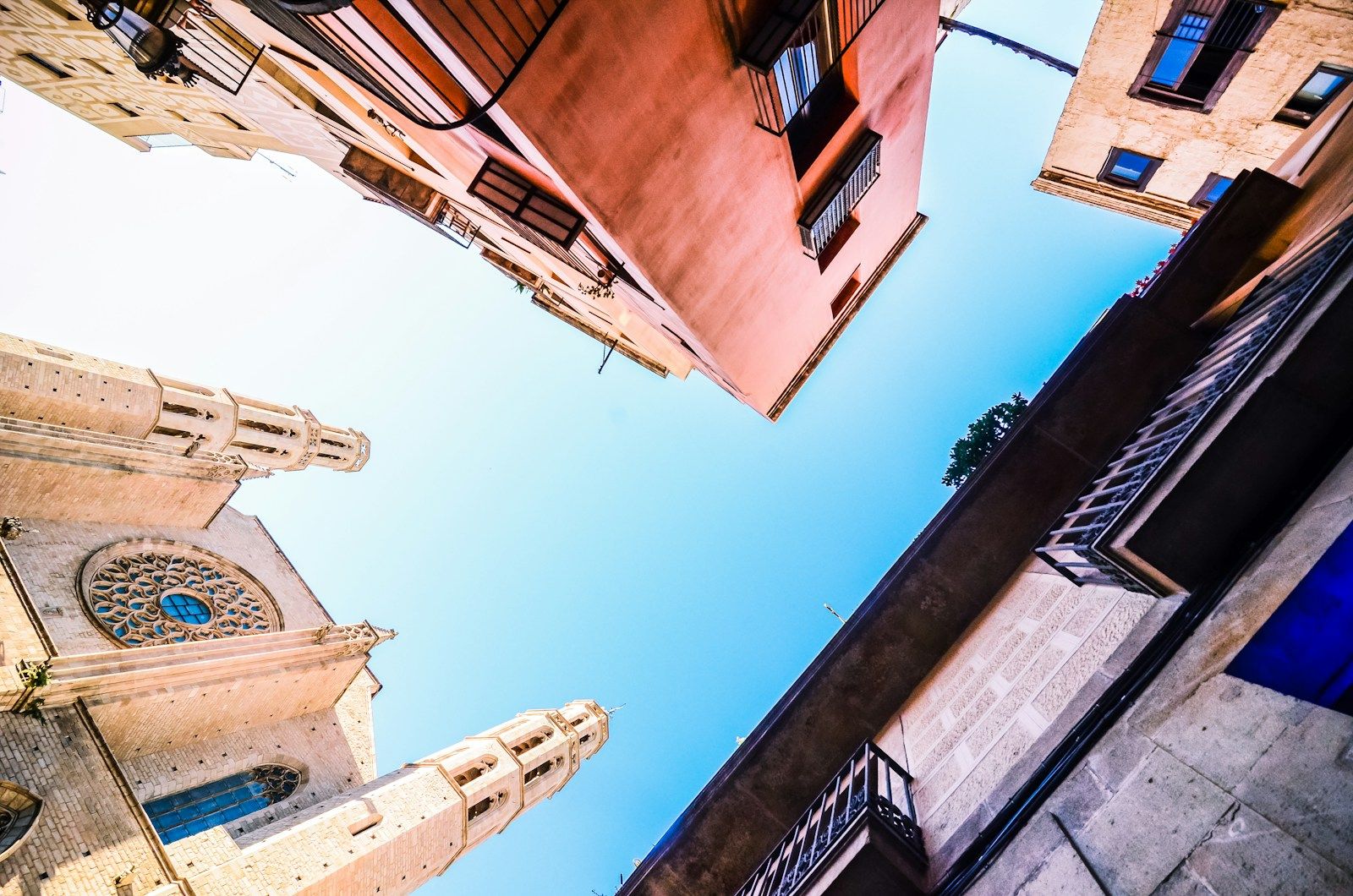
The route ends at one of the great churches of Catalan Gothic: a single nave 54 meters long, with buttresses instead of flying buttresses. It was built between 1320 and 1391. Its rose window, about 10 meters across, is one of the largest in Gothic architecture. The original was destroyed in the fire of July 1936, and the one you see today is a reconstruction by Josep Maria Jujol. The octagonal bell tower is 54 meters tall and was for centuries the tallest structure in the city.
Around it are Plaça del Pi and Plaça de Sant Josep Oriol, two of the nicest squares in the neighborhood to sit for a while. A fact if you're traveling in search of your roots: the parish archive survived the fire. It holds census records for half the city, street by street and house by house, from 1680 to 1935. People building their family tree come here to look them up.
Legend
The bell tower kept collapsing, again and again, until its last architect made a pact with the devil: he would hand over his soul on reaching the 100th step. He never went past the 99th. The devil, tricked, left his mark on that step, which today is the only broken one on the staircase.
Tip. Approach Santa Maria del Pi along Carrer de Petritxol, a narrow street of art galleries and chocolate shops. The church suddenly appears at the end.
You'll often hear that the Gothic Quarter is all tourist traps and that you have to go to another neighborhood to eat well. We disagree: inside the neighborhood there are still long-standing places cooking Catalan food, with no photo menus and no one pulling you in at the door. Here are three we recommend, close to the route:
Tip. If you take our 10:30 a.m. tour, Cafè de l'Acadèmia and Can Culleretes are just a few minutes from the route: a good option for lunch right after.
Is a guide worth it? The usual answer is yes for a first visit, and that you can go on your own if you're coming back. We agree, and the reason is that the neighborhood is deceptive: much of what looks medieval isn't. The Pont del Bisbe dates from 1928 and the Cathedral facade from the late 19th century. If you go alone you get the photo, but you'll probably think it's all from the 14th century, and you'll walk right past what's hidden: the columns of the Temple of Augustus inside a courtyard, Barcino under Plaça del Rei or the shrapnel marks at Sant Felip Neri. If you already know the city or prefer to go at your own pace, exploring on your own works well. Start at the MUHBA at Plaça del Rei, which explains Roman Barcino with its own displays.
You can do this route with just your phone, but many of its stories aren't written on any plaque: what's Roman, what's medieval and what was built a hundred years ago. On our private Gothic Quarter tour you're accompanied by an official tour guide, just with your group, who adapts the pace and the stops to what interests you. It lasts 3 hours and starts at 10:30 a.m. or 4:30 p.m. It runs in English or Spanish, and Cathedral admission is included. Children ages 0 to 11 go free, and you can cancel for free up to 48 hours in advance.
"Stephen was our tour guide. He gave us a very informative tour about the history of Spain… He explained great details on each site."
Cindy · TripAdvisor, 2026
If it's your first day in the city and you'd like a broader overview, the Welcome Tour to Barcelona covers the Gothic Quarter, El Born and El Raval. And if dark stories are more your thing, check out the Barcelona Legends tour.
Before you go. Opening hours, prices and access for the Cathedral, the MUHBA and the churches change by season and for celebrations. Check their official websites on the day of your visit. And remember that Plaça de Sant Felip Neri may be closed in the morning on school days.
Partly. The inside of the Cathedral, its cloister, the Saló del Tinell, Santa Àgata and Santa Maria del Pi are truly Gothic. The Cathedral facade, the Pont del Bisbe and several relocated facades date from the 19th and 20th centuries. The name "Gothic Quarter" has been in use since 1911.
No. They're two neighboring districts in the historic center, separated by Via Laietana. El Born lies to the east, around Santa Maria del Mar, and has its own tour of El Born and the Ciutadella.
At least 2 hours to see the essentials from the outside. The full 10-stop route fits into about 3 hours at a good pace, which is how long our tour lasts. If you also go inside the Cathedral and the MUHBA at Plaça del Rei, plan on half a day.
Our advice is to go before 10 a.m. or after 6 p.m., ideally on a weekday. Crowds follow the monuments' hours: on weekdays, the Cathedral's tourist visit runs from 9:30 a.m. to 6:30 p.m. Avoid going inside the Cathedral on Sunday, because it only opens for visits from 2 p.m. to 5 p.m. and gets packed.