


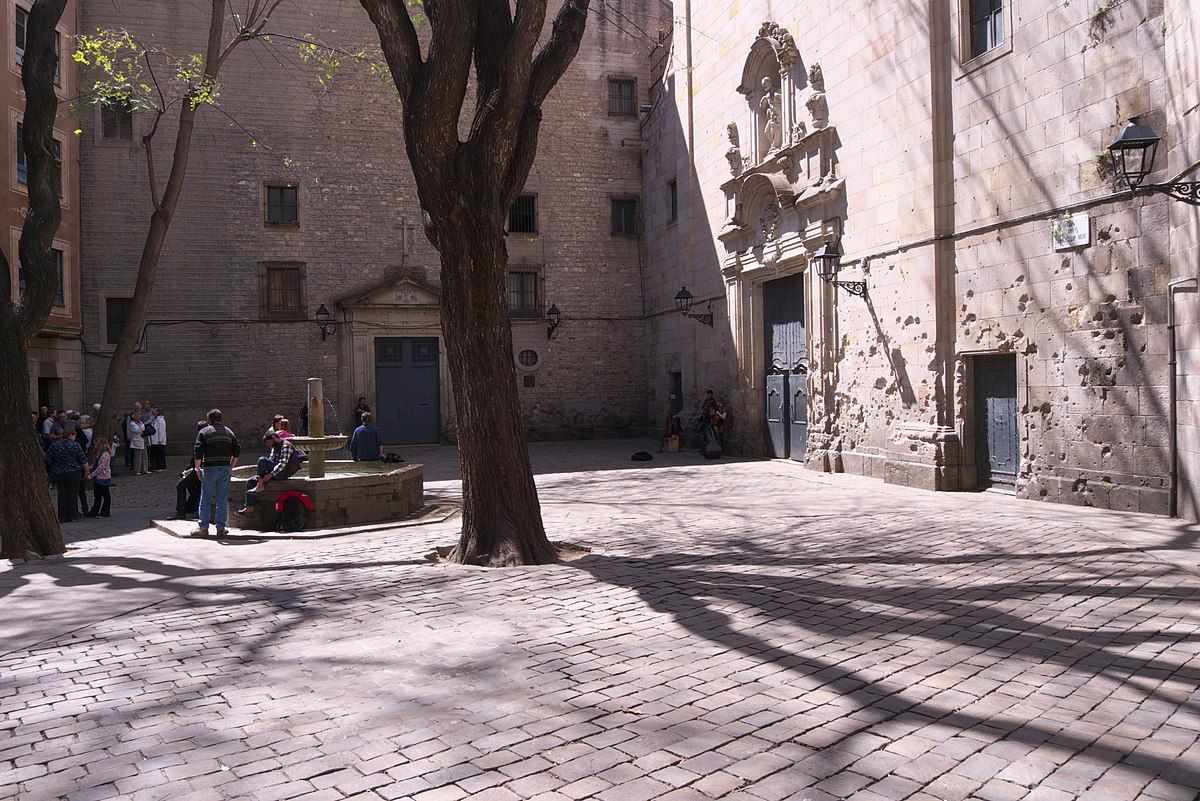
Many people stumble upon this square by chance, lost in the narrow lanes of the Gothic Quarter, and are surprised by what they find. There's a fountain in the middle, shady trees and a rare silence in the heart of the old town. It's one of the most photographed corners of Barcelona and a favorite spot for wedding photos. But step closer to the church and you'll understand that something serious happened here: the stone is riddled with holes. This guide explains what happened, what to look for and how to visit with the respect the place deserves.
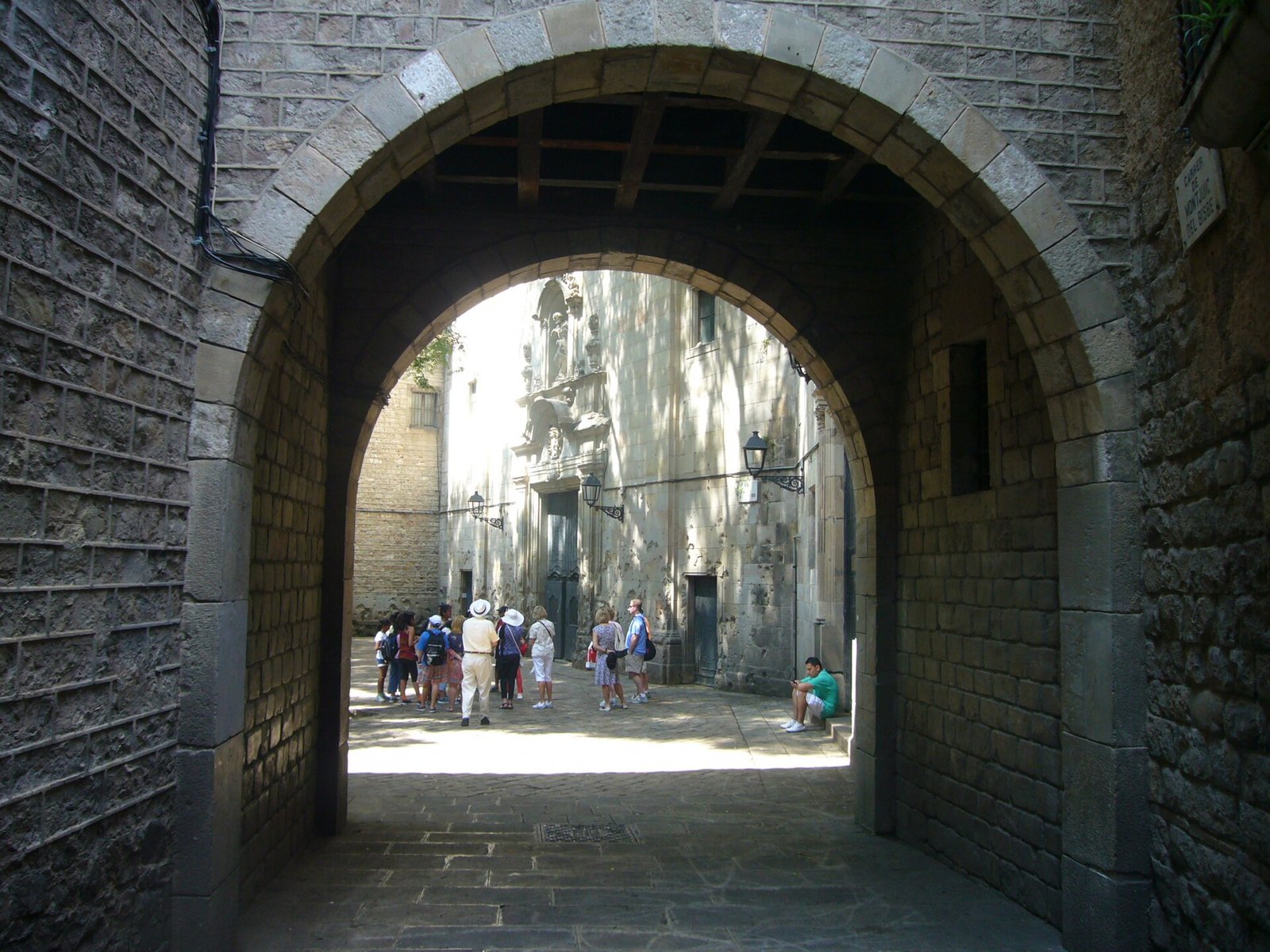
The square sits in the heart of the Gothic Quarter, behind the Cathedral, in the Ciutat Vella district. You can't see it from any main street. You get in through Carrer de Montjuïc del Bisbe, which branches off Carrer del Bisbe, or through Carrer de Sant Sever. We recommend coming in along Montjuïc del Bisbe, a narrow lane that opens onto the square under a stone arch. It's the best way to discover it, because as you step out of the arch, the church façade suddenly appears in front of you.
The Spanish Civil War broke out in July 1936. Barcelona was far from the front line, but it suffered the war from the air. The city was bombed hundreds of times, often by the Italian Fascist air force, Franco's ally, which was based in Mallorca. It was a new way of waging war: bombs no longer fell only on soldiers at the front, but on civilians, to spread fear.
On the morning of January 30, 1938, the Italian air force bombed Barcelona nonstop from 9:00 to 11:20, according to the city council's memory program. One of the bombs fell on Plaça de Sant Felip Neri. Forty-two people were killed, most of them children, and more than a hundred were injured. The buildings to the left of the church collapsed completely. The church itself was also damaged: its façade stayed standing, but it was covered in impact marks.
The exact date sometimes gets mixed up online (some sources say January 20), but the city plaque and Barcelona City Council both give January 30, 1938.
Legend
For decades, people said the holes in the façade came from firing squads, and some videos and guides still repeat it.
It isn't true. They are shrapnel marks from the bombs. The city council explains that it was Francoist propaganda that spread the firing-squad story, to hide its responsibility for the bombing. So if someone tells you people were executed here, now you know the real story is a different one.
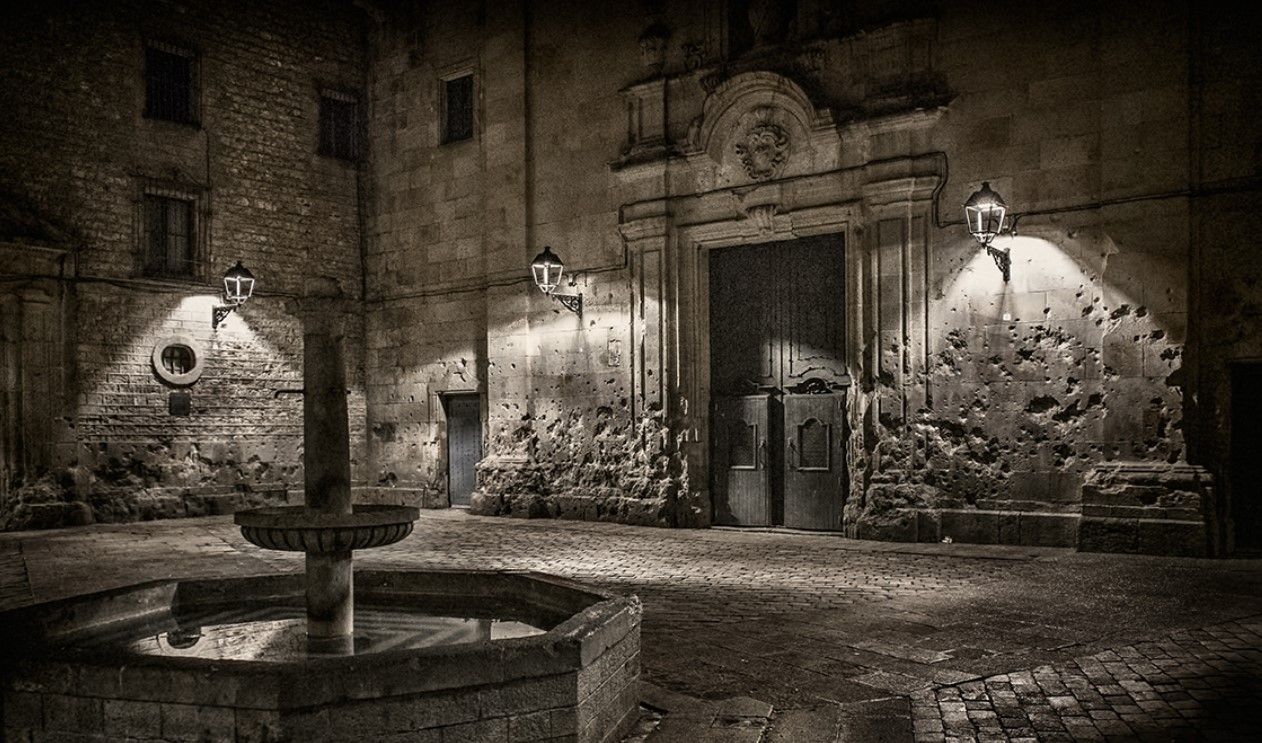
This is the first thing to look at. The Baroque façade of the church of Sant Felip Neri is pitted with holes of every size, from small punctures to chunks of stone torn away. After the war it was never repaired. It was left exactly as it was, as a reminder of what happened. From a distance the marks are easy to miss, but up close they're striking.
Where to look
Check both sides of the main door, especially the lower part of the wall, where many of the impacts are concentrated. In the evening, under the street lamps, they stand out even more.
In the square there's a bronze plaque placed by Barcelona City Council on January 31, 2007. It's in Catalan and says that 42 people died here, most of them children, as a result of the Francoist air force's action on January 30, 1938. In 2018 the city council added panels that explain the bombing in more detail.
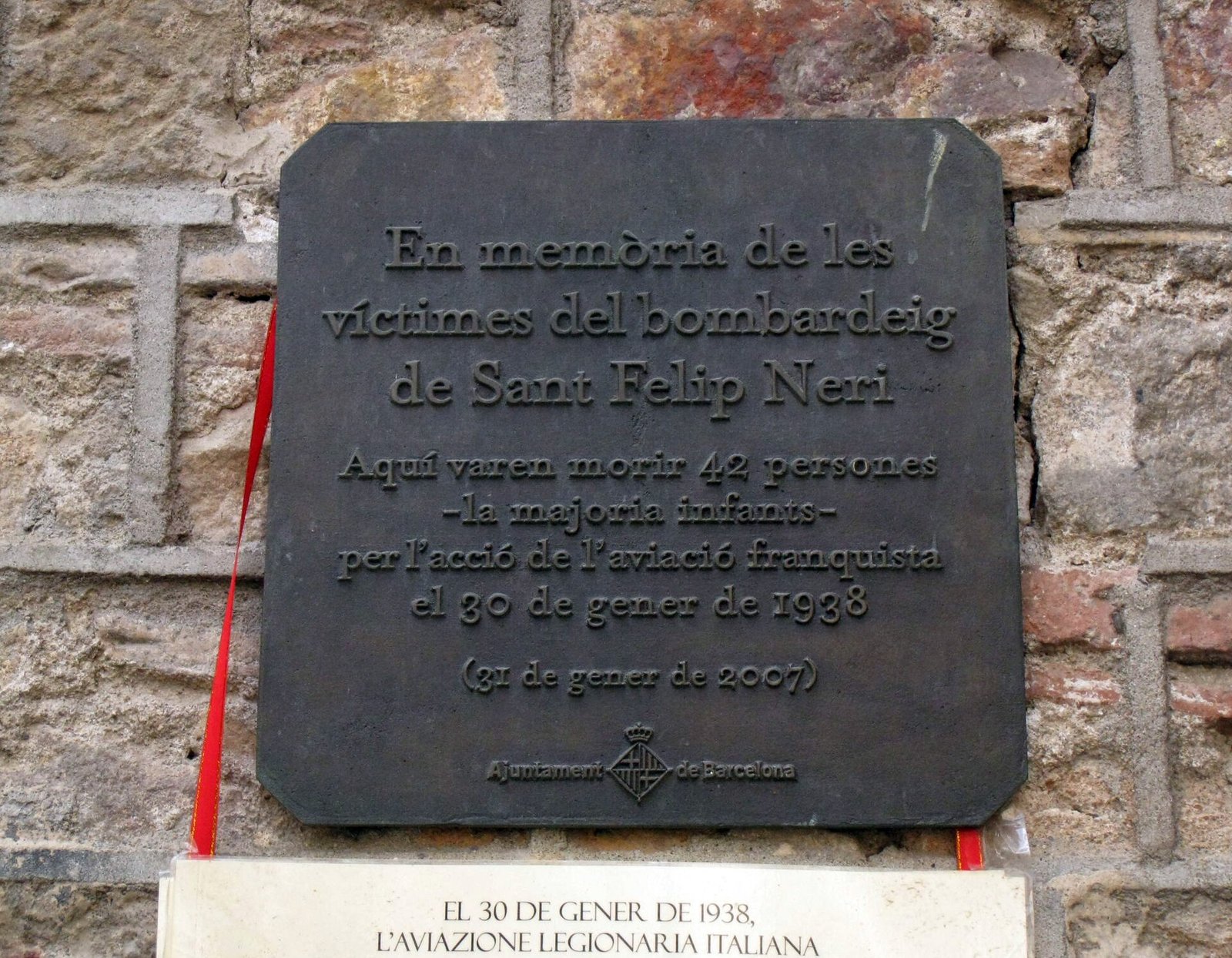
Tip. You may see flowers or ribbons next to the plaque. This is a place of remembrance. Keep your voice down, don't sit on the plaque and, if you take photos, don't disturb anyone who's there. Before you reach for your phone, read the 2018 panels, because they completely change the way you see the square. And when you take your photo, don't block the panels or the façade.
The church dates from the 18th century and is one of the few Baroque churches in the city. It was built by the Congregation of the Oratory of Saint Philip Neri, which had bought some buildings here for its convent in 1673. The church was finished in 1751.
It has a very special link with Antoni Gaudí. In his mature years, when he was working full time on the Sagrada Família, he came to this church every day to find some peace at the end of the workday. In 1901, the church commissioned two paintings of its saint from the Modernista painter Joan Llimona, who had known Gaudí for years. Llimona asked Gaudí to pose as his model. The paintings hang on either side of the oratory: one about the mystery of Communion and another, more festive, showing Saint Philip Neri surrounded by children with musical instruments.
Legend
It's said that Gaudí's soul lives in the church of Sant Felip Neri. The story also goes that he was on his way here on June 7, 1926, when he was hit by the tram that cost him his life.
Here's the square's big secret: it isn't as old as it looks. After the bombing, two empty lots stood for years where the collapsed buildings had been. In the late 1950s, the city council and its municipal architect, Adolf Florensa, remodeled the square to make it bigger and give it a historic look. Instead of building modern façades, they brought in Renaissance façades from other streets in the old town.
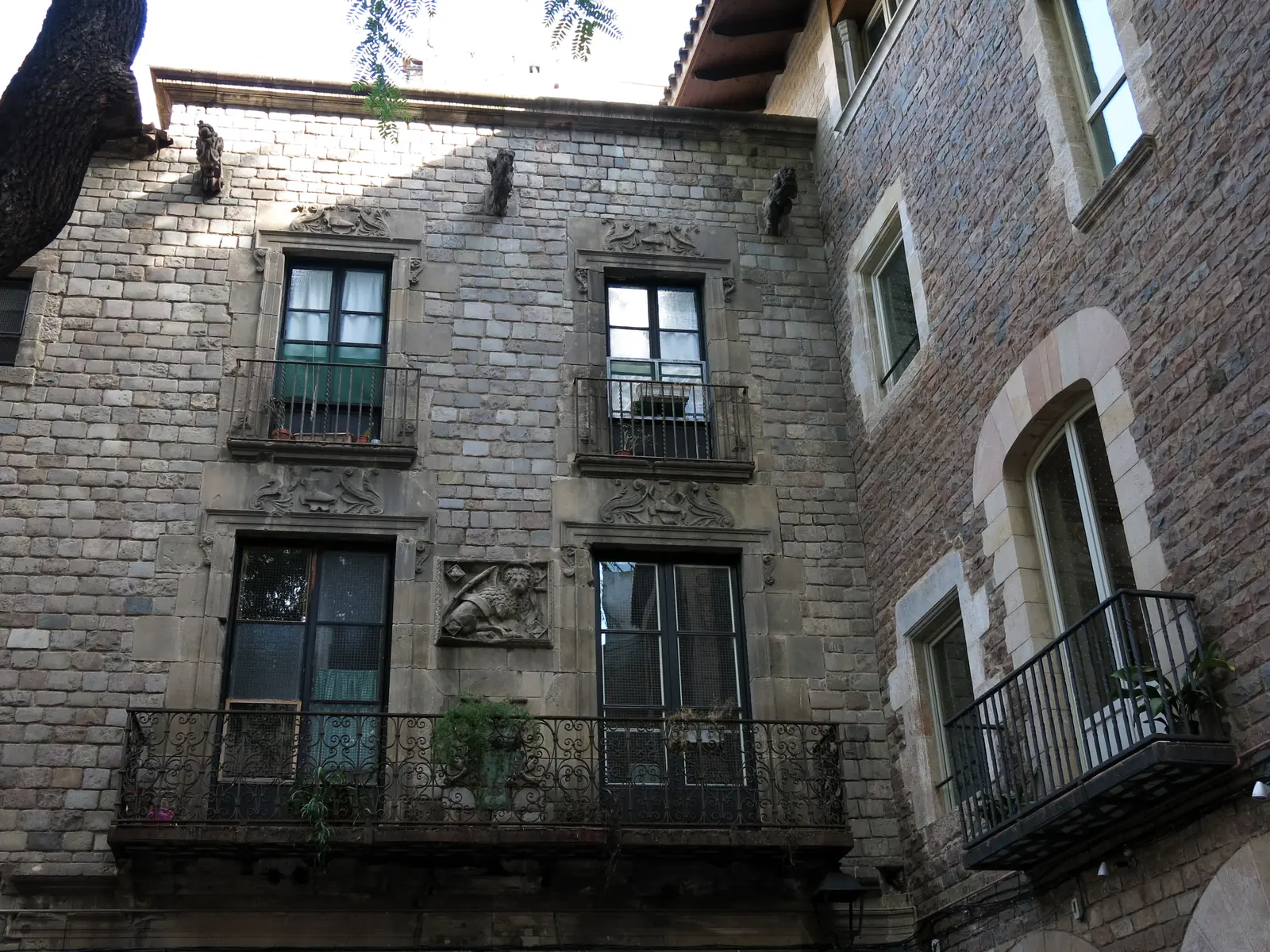
Art historian Agustí Cócola, who studied how the Gothic Quarter was built in the 20th century, cites these relocated façades as an example of how the neighborhood's medieval look was "manufactured." What you see is a collage of stones from different places around a wound of war. That doesn't make it any less valuable, because it reflects a very specific way of thinking about heritage in the Barcelona of those years.
The fountain in the center dates from 1962, part of the same remodel, and has eight sides. With it, and with the recent restoration of the façade of Casa Gironella, now a hotel, the square took on the look you see today. The trees and the sound of the water make it one of the quietest spots in the Gothic Quarter. That's why it was chosen for scenes in the movie "Perfume" and for Evanescence's "My Immortal" music video.
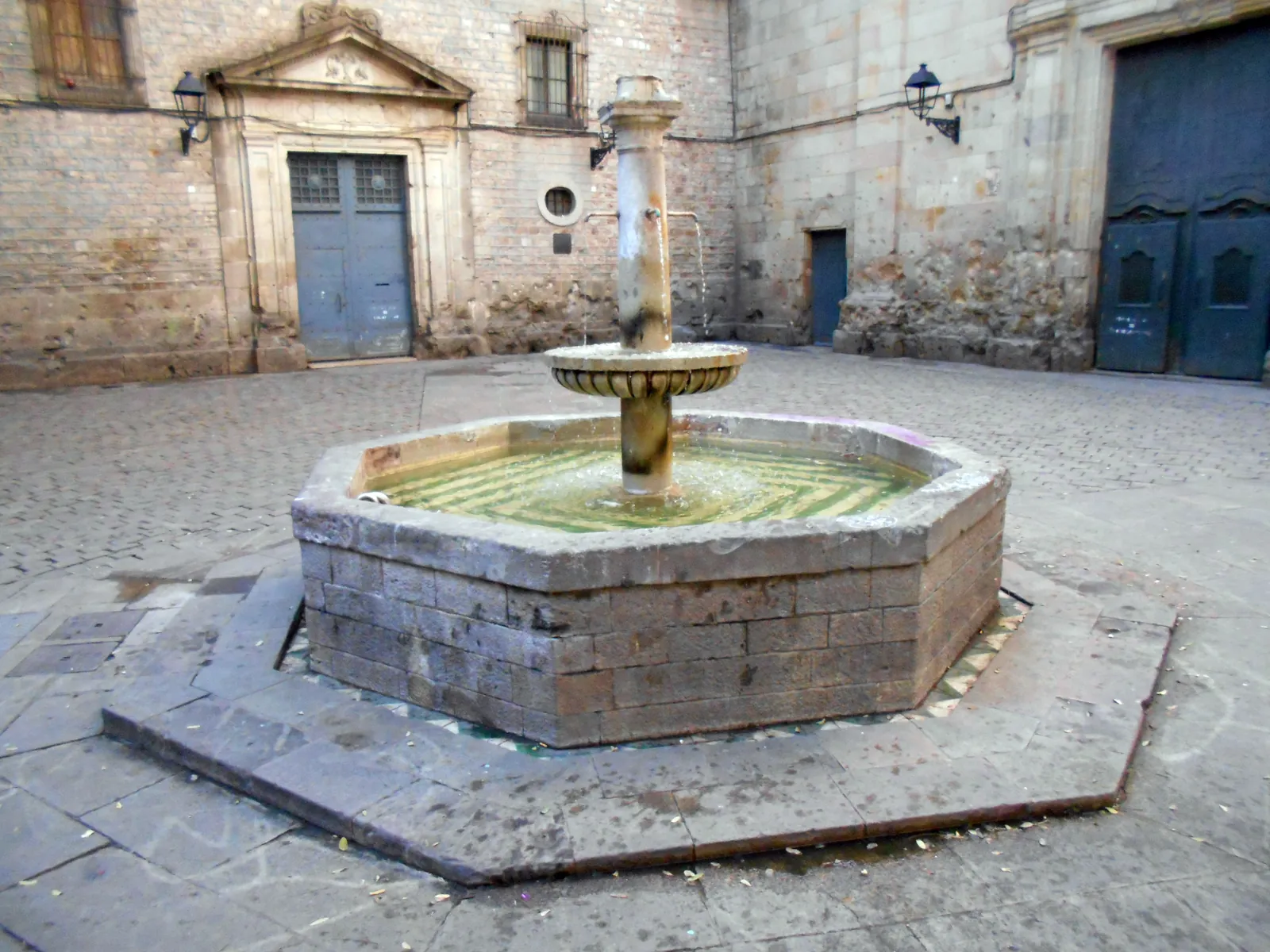
Tip. The fountain is part of a place of remembrance, so don't climb or sit on it. Keep in mind, too, that people live around the square and that the school and church entrances are here. When you take photos, keep the doors clear.
Before it was a square, this plot was the Cathedral's cemetery from the early 16th century. Parishioners and members of religious brotherhoods and guilds were buried here. So were people sentenced to death, which is why locals called it "the cemetery of the condemned".
The Congregation of the Oratory of Saint Philip Neri, known locally as the "filipons," arrived in 1673. It built its convent here and, next to it, the church, finished in 1751. In 1816 parish cemeteries were abolished and the site became a square, smaller than today's. You already know the rest: the 1938 bombing, the two empty lots and Florensa's remodel in the late 1950s, which gave it its current size and look.
Many guides say you can drop by any time, and hardly any of them mention the school. We see it differently, and there's an official reason. While the school's expansion work is underway, the city council (Ciutat Vella district) lets the school use the square as its playground on school days. The latest published schedule, for the 2025-2026 school year, closed it off with barriers from 10:00 to 11:30 am and from 12:30 to 2:30 pm. During those hours only residents, workers and people going to the church or to a business on the square could get through (Official Gazette of the Province of Barcelona, June 20, 2025). The decree says the measure can be extended until the work is finished. In May 2026 the square was still being closed. So it may be closed in the mornings on school days.
Tip. To find the square quiet and in the softest light, you have three options. On weekdays, go before 10:00 am or in the afternoon from 5:00 pm on, when recess and the big groups are over. On weekends, go early on Saturday or Sunday. Weekend and summer afternoons bring more groups and more photographers. If you find it closed on a weekday, switch the order: visit the Cathedral or the Call first, just a few minutes away, and come back in the afternoon.
If you're interested in the memory of the air raids, the Barcelona History Museum opens Refugi 307 to the public, a Civil War air-raid shelter in Poble-sec. And the city council explains the bombing of the square on its democratic memory page about Sant Felip Neri (checked in November 2026).
Almost every guide treats the square as a stop between the Cathedral and the Call, and many still recommend the Footwear Museum, which has closed. We suggest visiting it as part of a walk, in the most natural order, because that's how it makes the most sense: the Cathedral, Carrer del Bisbe, Montjuïc del Bisbe, Sant Felip Neri and the Call.
Tip. If you're visiting in the afternoon and want to go inside MUHBA El Call, go on a Friday or Saturday, because the rest of the week it's only open in the morning. And if you're heading to the Cathedral on a Sunday, remember cultural visits are only from 2:00 to 5:00 pm.
Lots of Gothic Quarter lists still mention cafés that have closed. These are the ones we've checked are still open (November 2026):
Tip. At Caelum, ask for a table in the basement room, with its exposed stone walls, which is the quietest one. The place is small and at certain times there's a wait, so it's best to skip Saturday and Sunday afternoons.
On our private Gothic Quarter tour, the square is one of the stops between the Cathedral and the Call. It's 3 hours on foot with a licensed tour guide, just your group, in English or Spanish, starting at 10:30 am or 4:30 pm. If you pick the 10:30 am tour on a school day, keep in mind the square may be closed at that time. Kids aged 0 to 11 go free and you can cancel for free up to 48 hours before. If the war is what interests you, our private Civil War tour in Barcelona takes you to the barricades of 1936, the Rambla that George Orwell described and the façades that still bear the shrapnel of the air raids, Sant Felip Neri included.
To plan the rest of your visit, here's what to see in the Gothic Quarter, stop by stop, and our guide to visiting Barcelona Cathedral, just a short walk from the square.
“Robert, a magnificent guide, shows and documents every place perfectly.”
Jorge · TripAdvisor, 2023
Before you go. The square is a place of remembrance and a school playground: visit quietly and respect recess hours. Main photo: Plaça de Sant Felip Neri, from the Willy's Plan media library. Photos of the plaque (Enfo) and Carrer de Montjuïc del Bisbe (Jordiferrer), from Wikimedia Commons.
On January 30, 1938, during the Spanish Civil War, the Italian air force, Franco's ally, bombed Barcelona and one of the bombs fell on this square. Forty-two people were killed, most of them children, and more than a hundred were injured.
They are shrapnel marks from the 1938 bombs. They don't come from firing squads, even though that story was told for years. The façade was left unrepaired as a reminder of the war.
Only partly. The church dates from the 18th century, but the square as you see it was rebuilt in the late 1950s with two Renaissance façades brought from other streets: the coppersmiths' and the shoemakers' guild houses. The fountain dates from 1962.
Scenes from "Perfume" and Evanescence's "My Immortal" music video were filmed here. It's also a very popular spot for wedding photos.
It's a free public square, but on school days it closes for part of the morning because it serves as the school playground. Your best bet is before 10:00 am, in the afternoon from 5:00 pm on, or early on the weekend. Keep your voice down, because it's a place of remembrance.
A few minutes' walk away you'll find Carrer del Bisbe and its bridge, the Cathedral and the Call, the old Jewish quarter, with MUHBA El Call. The Footwear Museum on the square has closed.