Guided tour of Picasso's Barcelona · Art and history

Private tour of Pablo Picasso's Barcelona with an official guide

Walking tour of the real settings of Picasso's training in Barcelona: La Barceloneta and the Old Port, the Porxos de Xifré, the Llotja de Mar, the La Mercè neighborhood, the Cathedral Square, Els Quatre Gats, and the Estación de Francia. Visit with an official tour guide.

Rating on TripAdvisor and Viator
0
Exterior and interior durability
0 h
Certified official tour guides
0 +
Exclusive private groups
0 %
About this tour

Pablo Picasso's Barcelona Tour: the settings where the artist was formed

Pablo Ruiz Picasso arrived in Barcelona in October 1895, at the age of 13. His father, José Ruiz Blasco, had just been appointed professor at the Provincial School of Fine Arts of Barcelona — La Llotja de Mar — and the whole family moved with him from A Coruña. Picasso enrolled that same autumn at La Llotja, where he completed in one month the entrance exams that other students took a year to finish. He spent the most formative period of his life in Barcelona: between 1895 and 1904 he developed his Blue Period, frequented Els Quatre Gats — the modernist café on Carrer Montsió that served as the headquarters for the Barcelona avant-garde — and exhibited there in 1900 alongside figures such as Ramon Casas, Isidre Nonell, and Ricard Canals in what was his first collective exhibition.

The guided itinerary covers the physical settings of that stage: the Old Port and Barceloneta where the teenage Picasso began painting seascapes and fishermen, La Llotja de Mar where he studied, the La Mercè neighborhood where he lived with his family at Carrer de la Mercè 3, Els Quatre Gats where he formed his network of contacts with Santiago Rusiñol, Miquel Utrillo, and other regulars of Modernisme, and Carrer Montcada where the Museu Picasso would later be installed — inaugurated in 1963 in the medieval palaces of Berenguer d’Aguilar and Meca.


What we'll visit

Tour itinerary: from Barceloneta to Els Quatre Gats

The tour begins at the Barceloneta Metro exit (L4) and heads north through El Born and the Gothic Quarter to Els Quatre Gats, ending at the Estación de Francia. Approximate duration: 3 hours.

Barceloneta Metro Station (L4) — Old Port — Porxos de Xifré

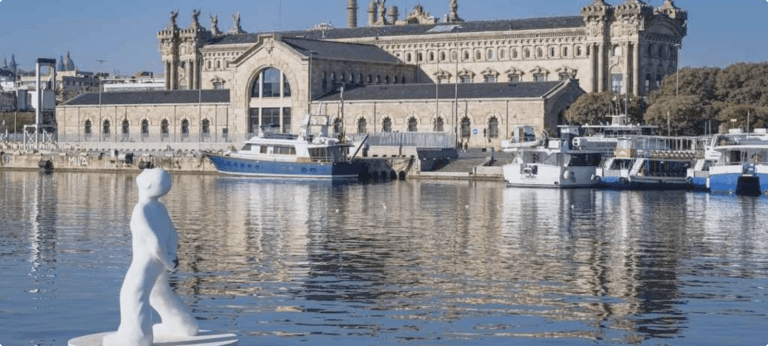
The arrival point for the Picassos in 1895 was the Port of Barcelona, the same one from which Columbus returned from America in 1493. The guide sets the scene for late 19th-century Barcelona: the city had not yet absorbed the surrounding municipalities (La Barceloneta was still a fishing neighborhood separated from the Eixample by the remains of the sea wall), and the young Picasso drew sailors, ships, and figures from the port that appear in his first preserved watercolors. The Porxos de Xifré (1836–1840), Barcelona’s first covered shopping arcade, frame the beginning of the Passeig d’Isabel II and still retain the reliefs of scenes from the American colonies that the shipowner Josep Xifré commissioned as a statement of transatlantic wealth.

Llotja de Mar — Provincial School of Fine Arts

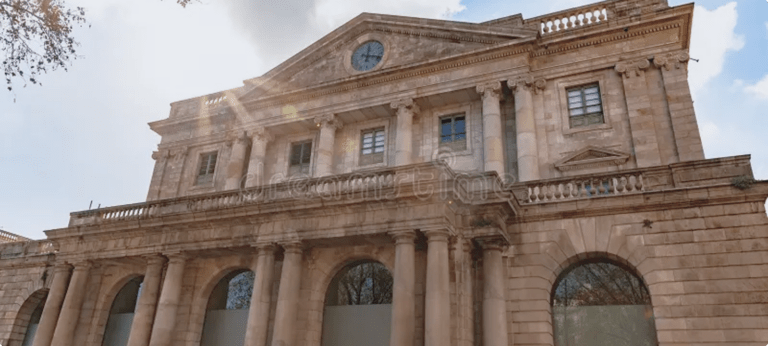
The neoclassical Llotja building, designed by Joan Soler i Faneca between 1774 and 1802 over the 14th-century medieval exchange, housed the most important artistic institution in Catalonia for two centuries. The Escola de Belles Arts operated on the main floor, while the Stock Exchange was located on the ground floor. Picasso studied here between 1895 and 1897. His father taught classes in the same classrooms. The interior of the building is not open to visitors, but the guide explains the academic curriculum of the time—life drawing, plaster cast copying, artistic anatomy—and why Picasso left it to enroll in Madrid in 1897, though not to stay there either.

La Mercè Neighborhood — 3 La Mercè Street

The Picasso family lived in this building between 1895 and 1896, the first of several Barcelona residences. The La Mercè neighborhood, between Barceloneta and the Gothic Quarter, was a network of narrow streets inhabited by artisans, port merchants, and middle-class families. The guide contextualizes the Barcelona of 1895: the 1888 Universal Exhibition had left behind the Ciutadella Park, the Arc de Triomf, and the city’s first electric lighting system, but also a municipal debt that would burden the city for decades. From the balconies of Carrer de la Mercè, Picasso sketched the everyday scenes of the neighborhood that appear in his notebooks from that period.

Cathedral Square — Gothic Quarter

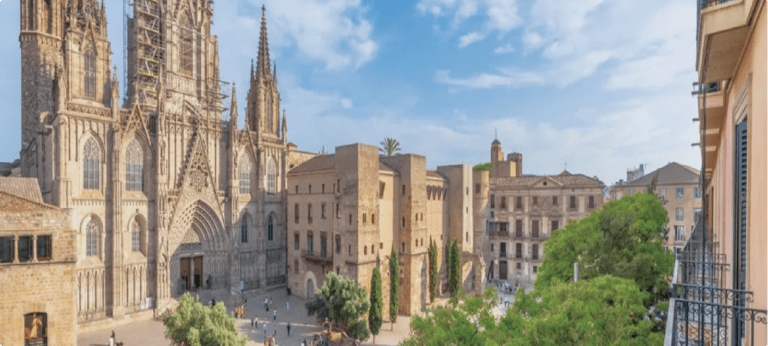
The route crosses the heart of the Gothic Quarter to reach the Cathedral Square, one of the spaces that Picasso portrayed repeatedly. The guide points out the architectural details that the painter captured in his youthful drawings: the Cathedral’s flying buttresses, the Pont del Bisbe (1928, the work of Joan Rubió i Bellver), and the cloister with geese. This is also the setting for the etching The Left-Handed Man (1899), Picasso’s first known graphic work, created in a local engraver’s workshop.

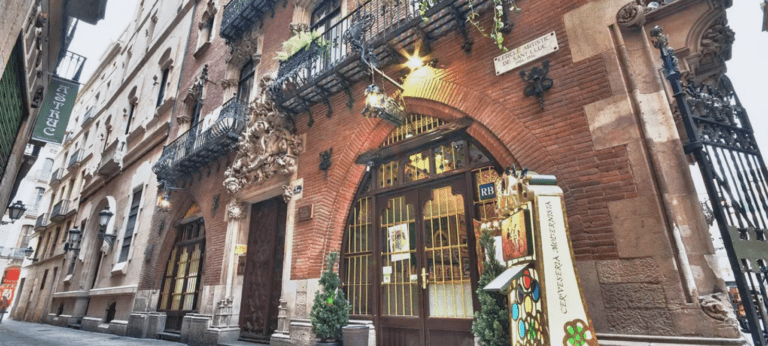
Els Quatre Gats — 3 bis Montsió Street

The modernist brewery founded in 1897 by Pere Romeu, Ramon Casas, and Miquel Utrillo was the nerve center of modernist Barcelona during the brief four years it was open (1897–1903). Picasso arrived at the age of 16, introduced by his friend Manuel Pallarès, and immediately became a regular figure at the gatherings. It was here that he designed the menu that still hangs framed, here that he exhibited his first portraits in 1900, and here that he met the artists who would open the doors of Paris to him. The building—Josep Puig i Cadafalch’s Casa Martí, 1896—is one of the first examples of Catalan architectural Modernisme. The venue continues to operate as a restaurant; the tour includes an exterior reading of the building and the historical context of what it represented.

Francia Station — End of the line

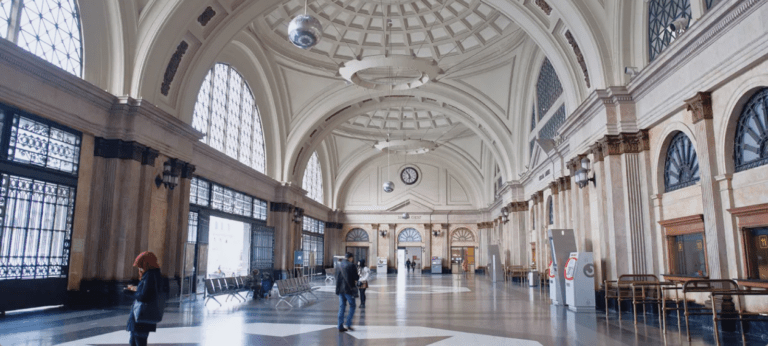
Picasso left for Paris for the last time in April 1904 from the Estación de Francia (at that time called Estació del Nord, on the same site). He never resided in Barcelona again. The current station, inaugurated in 1929, preserves the original iron structure and Art Déco lobby. The guide concludes the tour with a summary of the legacy of the Barcelona period in Picasso’s later work — the angular faces of the Blue Period, the figures of Les Demoiselles d’Avignon (1907) which he himself linked to the memory of Carrer d’Avinyó — and provides guidance on how to visit the Museu Picasso afterwards, just a few minutes away on foot.


What's included

What is included in this private tour of Picasso's Barcelona

INCLUDED

  • ✓ Private official tour guide
  • ✓ 3-hour guided walking tour
  • ✓ Barceloneta, Llotja, La Mercè, Gothic, Els Quatre Gats
  • ✓ Available in Spanish and English
  • ✓ Free cancellation (up to 48h before)

NOT INCLUDED

  • ✗ Picasso Museum admission (not included in the tour)
  • ✗ Food or drinks
  • ✗ Transport to the meeting point

Pricing

Picasso's Barcelona tour price — per group, not per person

The price is per group, not per person. The total is split among all participants. The more people, the lower the cost per head.

Low Season (October 1 – April 30)

PeopleTotalPer person
1 person€199€199 / person
2 people€178€89 / person
3 people€267€89 / person
4 people or more€70 / person

High Season (May 1 – September 30)

PeopleTotalPer person
1 person€330€330 / person
2 people€300€150 / person
3 people€330€110 / person
4 people or more€90 / person

Tour schedule

Available time slots

The Picasso’s Barcelona tour is one of the most requested by groups with an interest in art and history — book well in advance if you are arriving during high season.

  • 10:30 AMMorning session
  • 4:30 PMAfternoon session

Tour details

Languages, accessibility and practical information

DURATION
3 hours
TOUR TYPE
100% private — your group only
LANGUAGES
English · Spanish
GUIDE
Official tour guide (Títol de Guia de Turisme de Catalunya, Generalitat)
ACCESSIBILITY
Walking tour through streets and squares; no stairs on the main route. Suitable for wheelchairs and reduced mobility.
PETS
Allowed (outdoor route)
MINIMUM BOOKING
7 days before
CHILDREN
Free (0–11 years). All ages welcome.

Meeting point

Where to find your guide for the Picasso's Barcelona tour

Barceloneta Metro Station Exit (L4) — Passeig Joan de Borbó

Your guide will be waiting for you at the Barceloneta Metro exit (Line 4, Passeig Joan de Borbó side). After booking, we will provide you with the guide’s phone number so you can meet up easily.

Metro Barceloneta (L4), Passeig Joan de Borbó exit

Tour checkpoints


Cancellation Policy

Free cancellation up to 48 hours before the tour

Free cancellation available

You can cancel free of charge up to 48 hours before the tour start time. Cancellations made less than 48 hours in advance or no-shows will not be refunded.


FAQs

Frequently asked questions about the Picasso's Barcelona tour

Does the tour include the Picasso Museum?

No. The route takes place entirely outdoors: the buildings where he lived, the cafés where he debated, the streets he sketched before leaving the city in 1904. What the tour provides is the urban and historical context that the museum cannot give you.

The combination of tour + museum on the same day works very well, and in that order: entering the museum after the tour turns the artworks into documents of the places you have just seen. The Museu Picasso is less than a 10-minute walk from the end point of the tour. Tickets at the box office or at museupicasso.bcn.cat — in high season, book in advance.

Which of Picasso's works can be directly linked to the locations on this tour?

Several, and the guide connects them one by one to each location. The First Communion (1896, Museu Picasso) was painted in the family apartment on Carrer de la Mercè — the model was his sister Lola. Science and Charity (1897, Museu Picasso) was painted in his father’s studio at the Llotja. The menu for Els Quatre Gats (1899–1900), featuring portraits of the founders Ramon Casas and Pere Romeu, was designed by Picasso at the age of 17 and is reproduced in the current establishment. The series of seascapes and harbor figures from 1895–1896 are the first documented works of his Barcelona period.

Is this tour suitable for people with no knowledge of art or Picasso's work?

Yes. The tour does not assume any prior knowledge. The guide builds the historical context — the Barcelona of 1895, Modernisme, the artistic gatherings — before delving into the specific work. Visitors who know Picasso well will find facts and connections that do not appear in any guidebook; those who do not know him leave the tour with a sufficient framework to enjoy the museum afterwards.

Can this tour be combined with the Gothic Quarter Tour or the El Born Tour?

The Picasso route crosses part of the Gothic Quarter and El Born, but with a very specific focus: the buildings and spaces related to his life in the city. If you want to delve deeper into the medieval history of the Gothic Quarter or the urban fabric of El Born beyond Picasso, the specific tours for each neighborhood are the natural complement — on different days, since all three routes last 3 hours each.

Can the Llotja de Mar be visited from the inside?

No, the Llotja de Mar does not have regular public visits: the building currently houses the headquarters of the Barcelona Chamber of Commerce. The Generalitat de Catalunya occasionally organizes visits to the medieval Saló Gòtic (14th century) as part of the Portes Obertes program. The tour includes an exterior reading and explanation of the building, the School of Fine Arts that operated inside it, and Picasso’s relationship with the institution.


Reviews

Reviews of our Picasso's Barcelona tour

★★★★★

I went to the Picasso Museum the next day and understood twice as much. The explanation of his Barcelona period at Els Quatre Gats was what left the biggest impression on me — I didn't know that café had existed or what it represented.

Catherine L.New York, USA · TripAdvisor
★★★★★

We did the tour in the morning and the Picasso Museum in the afternoon. Perfect combination. The guide connected each place with a specific work — La Llotja with Science and Charity was the most revealing moment of the tour.

Robert & Anna T.London, UK · Viator
★★★★★

We are art history teachers and it was a surprise how rigorous the content turned out to be. The section on Barceloneta and the Old Port, with the fishing watercolors that Picasso made upon his arrival, is a fact that none of us knew.

María J. y grupoMadrid, ES · Google
★★★★★

What I appreciated most was that the guide explained why Picasso left Barcelona. It's not just that he 'went to Paris' — there is a context of academic failure, tension with his father, and ambition that changes the entire reading of his early work.

James D.Chicago, USA · TripAdvisor

Other tours you might also be interested in

More private tours in Barcelona

Private tour of Montjuïc with official guide

Tour of Montjuïc, the mountain from which power controlled Barcelona for centuries. From here, they bombarded the city and executed its president; on this very mountain, they staged a major International Exposition under the dictatorship of Primo de Rivera and hosted the Olympic Games that returned Barcelona to the world. Tour with an official tour guide.

Welcome tour to Barcelona

Private welcome itinerary through the central neighborhoods of Barcelona: the Arc de Triomf, Ciutadella Park, El Born, the Gothic Quarter, and El Raval. Sangria included at the end. Tour with an official tour guide.

Tour of mysterious and forbidden Barcelona

Walking itinerary through El Raval, the Gothic Quarter, Las Ramblas, and Plaza Cataluña: secret passages, public execution sites, famous crimes, and the stories that the official version of the city would prefer to forget. Tour with an official tour guide.

Contact

Do you have questions about the tour? We reply within 24h

If you have any questions or special needs before booking, write to us — we reply in less than 24 hours.


Write to us

Great! We have received your information.

We were unable to process your submission. Please try again.

You can also find us on

Reserva Ahora Reserva Ahora