We knew Barcelona had great street art but we had no idea who Joan Brossa was or everything behind the murals of El Raval. The guide changed everything.
Inicio / Tours privados / Private Tours in Barcelona / Barcelona Street Art Tour
Walking itinerary through the Gothic Quarter and El Raval, murals of Poble Sec and the Montjuïc stairs, with stops in front of works by Joan Brossa, Jaume Plensa, Joan Miró, Josep Maria Subirachs, and contemporary graffiti and mural artists. Tour with an official tour guide.


Barcelona has one of the densest and most documented street art scenes in Europe, and it is no coincidence. The city has accumulated decades of tension between real estate speculation, tourism pressure, and a neighborhood culture that resists. The art on the walls is the visible record of this tension: there are works that have been on the same wall since the eighties, and there are murals commissioned by the City Council that coexist twenty meters away from pieces that appeared overnight and without permission. This private guided tour does not do graffiti tourism — it does cultural history.
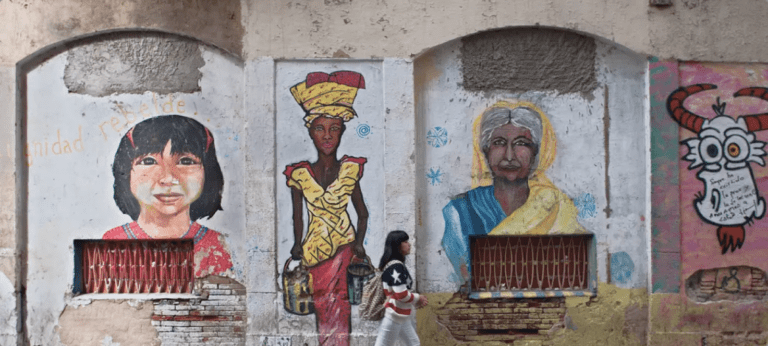
The itinerary starts in the Gothic Quarter, where the concentration of Joan Brossa’s visual poetry turns the street into a literary medium. Brossa —a poet, playwright, and artist born in the Gràcia neighborhood in 1919— developed a language from the 1940s onwards that blended surrealist tradition with anti-Franco political provocation. His works in public spaces are not decoration: they are acts of deferred resistance. The tour continues towards the Raval —the neighborhood that 19th-century urban planning tried to enclose behind La Rambla— where murals by artists like Escif, Roc Blackblock, and the Fasía collective document decades of conflict between local residents and gentrification, and where Joan Miró’s intervention at the Pla de l’Os (1976) marks the first major gesture of public art in the post-Franco city.
Three neighborhoods, four decades of street art, and a final climb to Montjuïc: the route starts in the Gothic Quarter with Brossa’s visual poetry, crosses the Raval through its murals of resistance, passes through Poble Sec, and ends at the Montjuïc stairs with the muralism that turned that hillside into an open-air gallery.
The starting point is the series of interventions by Joan Brossa scattered throughout the streets of the Gothic Quarter: letters, signs, and everyday objects re-signified as three-dimensional poems. The guide contextualizes Brossa’s trajectory within the Dau al Set group (1948), the first avant-garde movement of post-war Catalan art, and explains why his visual poetry can only be correctly read against the backdrop of the dictatorship’s political history.
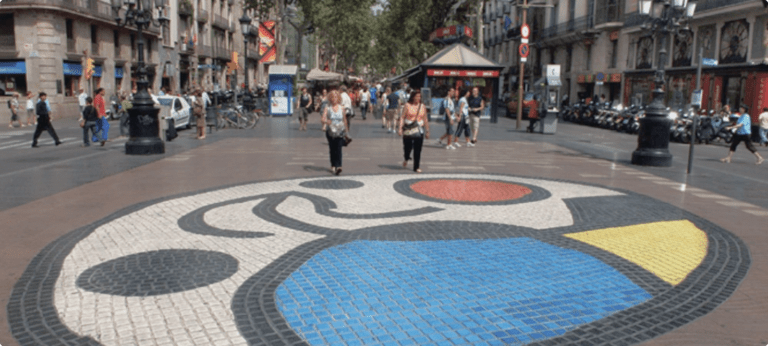
Joan Miró’s mosaic embedded in the pavement of La Rambla, opposite the Mercat de la Boqueria, is the first major work of public art installed in Barcelona after Franco’s death. Miró donated it to the city in 1976, the year Catalonia recovered its provisional Generalitat and the first Statute of Autonomy was still under discussion. The guide explains the geometry and palette of the work within the artist’s symbolic system, and why Miró chose that precise location.
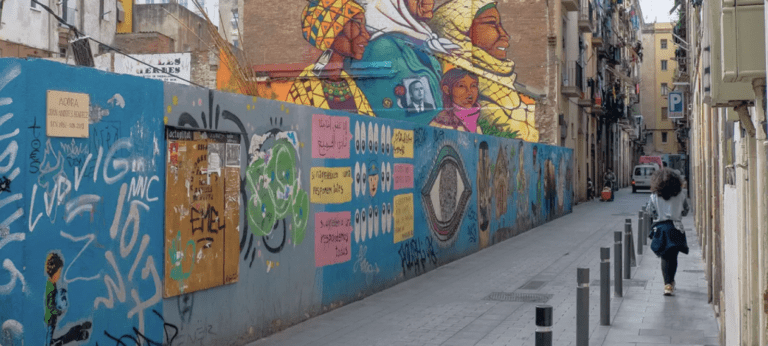
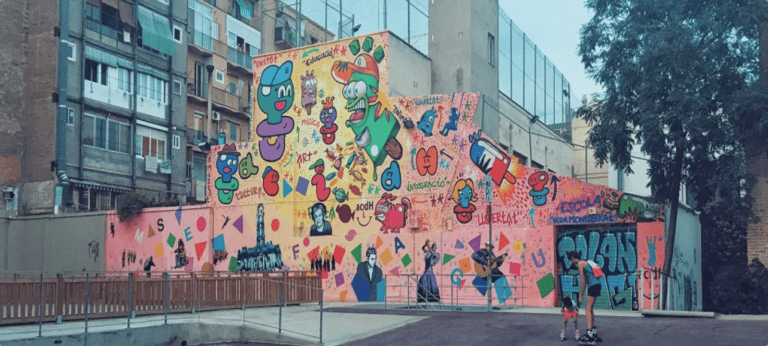
The densest section of the route. For decades, El Raval was Barcelona’s most stigmatized neighborhood: the Barrio Chino of the 1930s, the neighborhood of internal migration in the fifties and sixties, the neighborhood of heroin in the eighties. Street art here is not aesthetic: it is narrative. The guide points out works by artists of different generations—from the pioneers of Barcelona graffiti to the most recent political muralism—and explains the neighborhood’s transformation process since the opening of the MACBA (Museu d’Art Contemporani de Barcelona) in 1995, the urban development event that triggered the current gentrification.
The tour passes through the transition zone between the old town and Poble Sec, where the guide places Subirachs’ works in the broader context of his career: a sculptor trained in expressionism, who went through geometric abstraction before taking charge of the controversial Passion Facade of the Sagrada Família (1987). His interventions in public space are less well-known than those of the basilica, but equally charged with narrative intent.
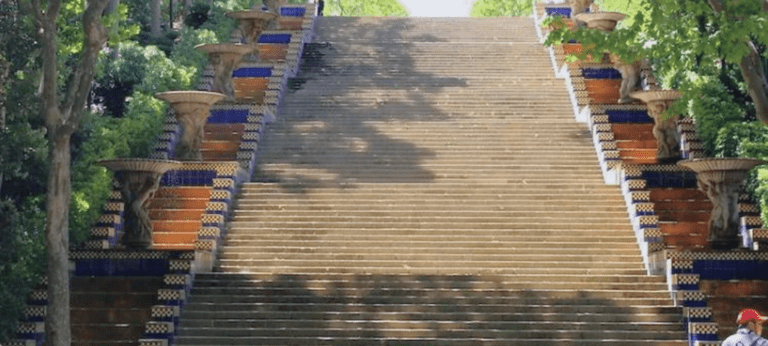
The final stretch climbs the stairs connecting Poble Sec with the Montjuïc hillside. This space was transformed starting in the 1980s by artists from Barcelona’s muralist movement, and today it accumulates layers of work from different eras and styles. The guide distinguishes between pieces with institutional permission and those that appeared without it, explains the unwritten rules of the local scene, and closes the tour with an overview of how Barcelona manages—and sometimes commodifies—its own street art.
INCLUDED
NOT INCLUDED
The price is per group, not per person. The total is split among all participants. The more people, the lower the cost per head.
| People | Total | Per person |
|---|---|---|
| 1 person | €199 | €199 / person |
| 2 people | €178 | €89 / person |
| 3 people | €267 | €89 / person |
| 4 or more people | — | €70 / person |
| People | Total | Per person |
|---|---|---|
| 1 person | €330 | €330 / person |
| 2 people | €300 | €150 / person |
| 3 people | €330 | €110 / person |
| 4 or more people | — | €90 / person |
* Children (from 0 to 11 years old): free. No hidden fees or booking surcharges.
The private Barcelona street art tour is one of the most highly demanded in the cultural segment — book well in advance if you arrive during high season.
* We recommend booking at least 7 days in advance. The afternoon session is especially recommended: the side light during the last hours of the day brings out the colors and textures of the murals with a sharpness that the morning doesn’t provide.
Your guide will be waiting for you at the exit of the Barceloneta Metro (line L4). After booking, we will provide you with the guide’s phone number so you can find each other without any difficulty.
Barceloneta Metro (L4), exit
Free cancellation available
You can cancel free of charge up to 48 hours before the tour start time. Cancellations made less than 48 hours in advance or no-shows will not be refunded.
The tour includes both. Part of the route passes by pieces with institutional permission or public commissions — Miró’s mosaic on La Rambla, works by Brossa installed with the support of the Ajuntament, and murals from the “Barcelona és art” program. But the itinerary also includes unauthorized work that has been part of the urban landscape of El Raval and Poble Sec for years. In each case, the guide distinguishes the legal origin of the piece and explains why Barcelona has historically chosen to tolerate —and in some cases recover— unauthorized street art instead of systematically erasing it.
The tour does not include admission to any museum. The itinerary is entirely outdoors and focuses on art in public spaces: murals, sculptures, installations, and graffiti in the streets, squares, and steps of the neighborhoods you pass through. MACBA is featured as a contextual reference—the guide explains its role in the transformation of El Raval since 1995—but the tour does not enter the building. If you would like to complement the tour with a visit to MACBA or the Picasso Museum, we can recommend how to organize it before or after the tour.
The Montjuïc stairs section involves a climb of about 10–15 minutes at a brisk pace, with steps. It is not demanding for anyone with average physical fitness, but it is not accessible for wheelchair users or people with severely reduced mobility. If anyone in the group has difficulties, please let us know when booking: the guide can adapt the final stretch so the group can access the Montjuïc sites via an alternative route with less of an incline. The rest of the route —Gothic Quarter, Raval, Poble Sec— is flat.
The itinerary includes permanent works —Miró’s mosaic (1976), Joan Brossa’s interventions, pieces by Subirachs in public spaces— that have been in the same locations for years. It also passes through areas with more dynamic art: the Raval and the Montjuïc steps have walls that are frequently renewed, and the guide adapts the stops to what is there at the time of the visit. Regular artists on the circuit include Escif, Roc Blackblock, Nano4814, and local Catalan political muralism collectives; the specific presence of each piece depends on the date.
Yes. The street art tour is 100% outdoors and dogs are allowed. If you are coming with a pet, please indicate this when booking so the guide can keep it in mind from the start. For groups that want to combine both tours, we can organize the tour on consecutive days without any problem.
We knew Barcelona had great street art but we had no idea who Joan Brossa was or everything behind the murals of El Raval. The guide changed everything.
The part with the Montjuïc stairs was the most impressive — huge murals that don't appear in any guidebook. Without the tour, we would never have made it there.
Fascinating to see the difference between commissioned and illegal art explained in context, in front of the pieces. The Raval section is incredible — a neighborhood story you don't expect.
We are designers and we were looking for something more than the big museums. This tour gave us exactly that: street art with real political and historical context. Highly recommended.
If you have any questions or special needs before booking, write to us — we reply in less than 24 hours.