I thought I knew Barcelona, but I had no idea about the history behind the '92 Games. The Born stretch with the medieval tournaments was a huge surprise. The guide made it absolutely fascinating.
Inicio / Tours privados / Private Tours in Barcelona / Barcelona Sports Tour
Walking itinerary through the Old Port (Moll de la Fusta), the streets of El Born and the Gothic Quarter where the city's medieval sports were held, Poble Sec and Montjuïc — venue of the 1992 Olympics. Visit with an official tour guide.


Barcelona’s relationship with sport does not start in 1992. It begins much earlier: in the medieval jousting tournaments held at the Fossar de les Moreres in El Born, in the first harbor regattas that turned Barceloneta into the city’s most sporting seaside neighborhood. Sport, in Barcelona, is also urban history.
This guided tour traces that history from the ground up: the real-life stages where Barcelona competed, trained, lost, and won over more than two thousand years. The starting point is the Barceloneta Metro station — a neighborhood built in 1753 by military engineer Juan Martín Cermeño to house the fishermen displaced by Philip V’s Ciutadella —, and the itinerary moves through the old port, El Born, the Gothic Quarter, and Poble Sec to the foot of Montjuïc, the mountain that on July 25, 1992, became the most-watched stage in the world when archer Antonio Rebollo lit the Olympic cauldron with a flaming arrow.
In 2h 30 min on foot, with an official tour guide, the tour connects specific episodes: Barcelona’s first Olympic champion from the Ancient Games, the medieval sports that El Born and the Gothic Quarter still preserve in their layout, the Barcelona that radically transformed its coastline to host the ’92 Games, and the history of Barça as a sporting and political phenomenon that can only be understood through the city that created it.
The tour begins at the Barceloneta Metro exit (L4) and proceeds on foot, following the chronological history of sports in the city:
The neighborhood built in 1753 that for two centuries was the maritime and sporting heart of Barcelona’s coastline. The regattas between fishermen’s guilds, the first sea swimming competitions, and the 19th-century rowing clubs that transformed Barceloneta into the city’s first organized sports area.
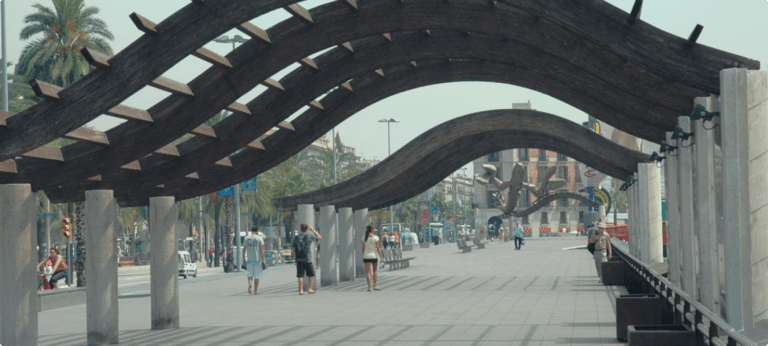
El Moll de la Fusta, restaurado entre 1981 y 1987 como el primer gran proyecto de recuperación del litoral antes de los Juegos, fue durante siglos el puerto de carga del gremio de carpinteros y el escenario de las competiciones náuticas de la Barcelona preindustrial. El guía contrasta el antes y el después: lo que el 92 significó para el frente marítimo de la ciudad, que hasta entonces era una zona industrial cerrada a los barceloneses.
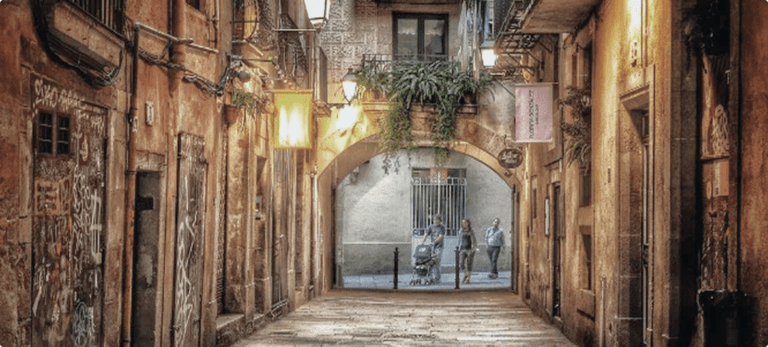
El Born was, between the 14th and 17th centuries, the city’s sports and festive venue par excellence: knightly tournaments, equestrian jousts, and crossbow shooting competitions were held in the Plaça del Born — today Passeig del Born — which was the medieval equivalent of the municipal stadium. The guide reconstructs what that space was like, which disciplines were contested, and who competed.
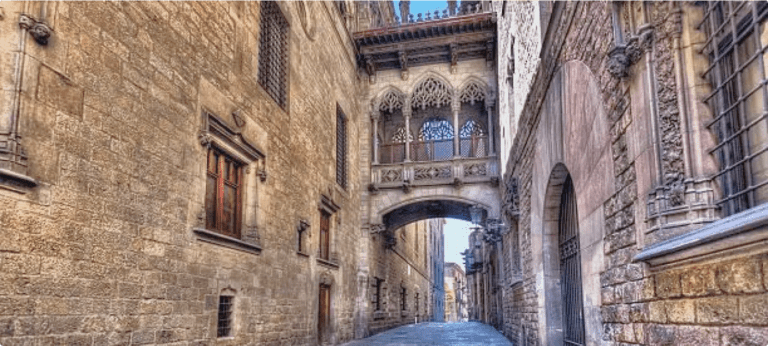
In the streets of the Gothic Quarter — Plaça de Sant Felip Neri, Carrer dels Banys Nous, the surroundings of the Cathedral — ball games, strength competitions, and guild tournaments were held for centuries, which the guide identifies on the ground based on the street layout and historical records.
The working-class neighborhood of Poble Sec, built on the slopes of Montjuïc starting in 1870, was the starting point of the mountain’s Olympic transformation. The guide explains the history of Montjuïc as a sporting space: from the 1936 Olympic Games — awarded to Berlin in 1931 and countered in Barcelona with the organization of the People’s Olympiad of July 1936, cut short by the outbreak of the Civil War —, to the 1992 bid, won against Brisbane, Belgrade, Birmingham, Amsterdam, and Paris, and the urban transformation that turned the mountain into the most ambitious sports complex built in Spain in the 20th century.
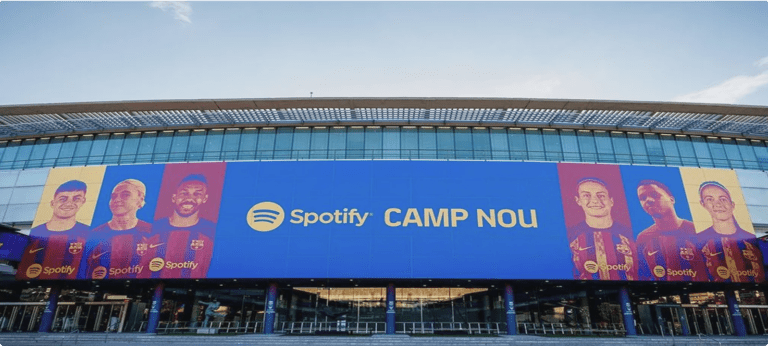
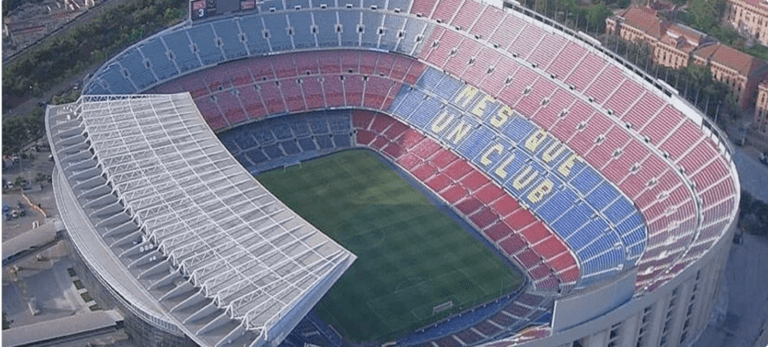
The tour concludes with the role of Fútbol Club Barcelona in the city’s sporting and political history. Founded in 1899 by the Swiss Hans Gamper, during the Franco regime the club became the only legal space for expressing Catalan identity — Camp Nou, inaugurated in 1957, was the place where people could sing in Catalan without risk. The guide places this political dimension in the context of the neighborhoods we have toured.
INCLUDED
NOT INCLUDED
The price is per group, not per person. The total is split among all participants. The more people, the lower the cost per head.
| People | Total | Per person |
|---|---|---|
| 1 person | €199 | €199 / person |
| 2 people | €178 | €89 / person |
| 3 people | €267 | €89 / person |
| 4 or more people | — | €70 / person |
| People | Total | Per person |
|---|---|---|
| 1 person | €330 | €330 / person |
| 2 people | €300 | €150 / person |
| 3 people | €330 | €110 / person |
| 4 or more people | — | €90 / person |
* Children (0 to 11 years old): free. No hidden fees or booking surcharges.
The private sports tour of Barcelona is the most in-demand for groups interested in urban history and Olympism — book well in advance if you are arriving during peak season.
* We recommend booking at least 7 days in advance. During high season (May–September), guides work at full capacity — the earlier you book, the more schedule options you will have available.
Your guide will be waiting for you at the Barceloneta Metro exit, line 4 (L4). After booking, we will provide you with the guide’s phone number so you can find each other without any hassle.
Barceloneta Metro (L4), exit
Free cancellation available
You can cancel free of charge up to 48 hours before the tour start time. Cancellations made less than 48 hours in advance or no-shows will not be refunded.
No. This is a walking tour of the city’s urban spaces — streets, neighborhoods, the port, and the foot of Montjuïc — that places sport in its historical context. Camp Nou and the Lluís Companys Olympic Stadium have their own inside tours with separate tickets; if you are interested in combining them, contact us when booking and we will guide you on how to organize your day.
The itinerary reaches the foot of Montjuïc, not the summit. The incline of the final stretch is gentle and accessible for any fitness level. There are no steep climbs or flights of stairs that cannot be avoided. If anyone in the group has reduced mobility, please let us know when booking.
Yes. Sport is the common thread, but the tour is urban history: how Barcelona grew, which political episodes marked its relationship with sport, and how the ’92 Games physically transformed the city. You don’t need to be a football or athletics fan to find the tour interesting — you just need curiosity about the city.
Both. Barça and the ’92 Games are the two main focal points of the tour, but the guide places them within a broader chronology — the medieval sports of El Born, the first nautical competitions of Barceloneta, the thwarted 1936 Olympic bid. Barça appears not only as a club but as a political phenomenon: its role during the Franco regime, the symbolic dimension of Camp Nou, and why the club is inseparable from the city’s identity.
It depends on the angle that interested you the most. If the episode of the 1936 People’s Olympiad and Barcelona’s political history has hooked you, the Private Tour of Civil War Barcelona goes into detail about this period from another angle. If you prefer to continue exploring the coastline and the seaside neighborhood, the Private Tour of La Barceloneta is the natural next step. And if you want to come full circle with an overview of the city before or after, the Welcome Tour provides the broadest context.
I thought I knew Barcelona, but I had no idea about the history behind the '92 Games. The Born stretch with the medieval tournaments was a huge surprise. The guide made it absolutely fascinating.
We are big Barça fans and the tour exceeded all expectations. The part of the club's history during the Franco regime, in the neighborhoods where it all took place, is something you won't find in any museum.
We weren't particularly sporty, but we signed up for the Olympic history. It was one of the best tours we've ever done. The story of the '36 bid that they didn't win because of the Civil War is incredible.
Our guide knew every corner of El Born and the Gothic Quarter, with specific names, dates, and anecdotes. The route from the port to Montjuïc gives you a perspective of Barcelona that you don't get with any other tour.
If you have any questions or special needs before booking, write to us — we reply in less than 24 hours.