We had read Homage to Catalonia before the trip and wanted to see the real places. The guide took us to the Poliorama building and read us Orwell's passage on the spot. There is no better way to do it.
Home / Private Tours in Barcelona / Barcelona Civil War Tour
Walking route through Plaça de Catalunya, La Rambla, the Gothic Quarter and El Born: the barricades of July 1936, the Poliorama where Orwell lived through the May Days of 1937, façades scarred by shrapnel from the 1938 bombings and Lluís Companys's Generalitat. With an official tour guide.
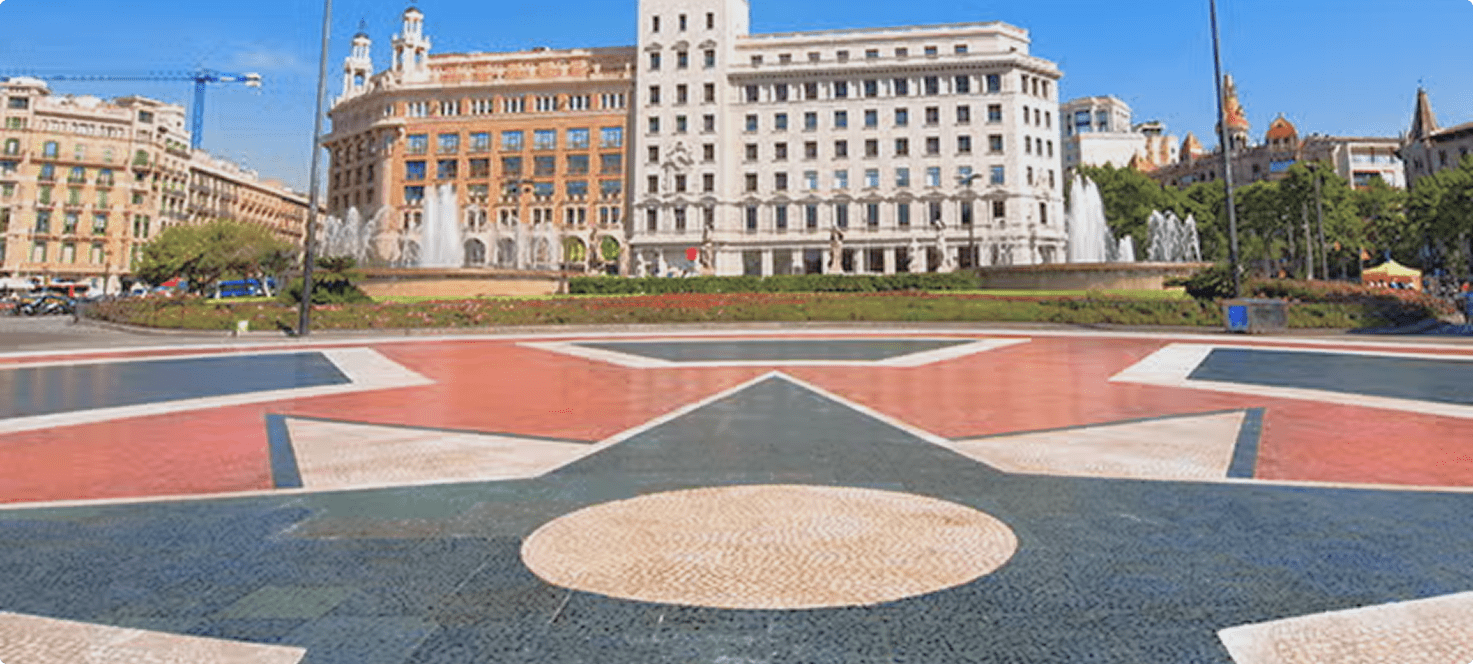
On July 19, 1936, the military columns that were supposed to take Barcelona in a matter of hours were stopped dead in their tracks by the armed workers of the CNT-FAI and forces loyal to the Republic. Within 48 hours, the city was in the hands of the unions. Las Ramblas filled with militiamen, luxury hotels became headquarters for political parties and unions, and the Hotel Colón on Plaza de Cataluña (which no longer exists) became the headquarters of the PSUC. It was the beginning of a revolution within a war.
This private historical walk covers the places where that history unfolded between 1936 and 1939: Plaça de Catalunya, where the uprising was stopped; Carrer dels Tallers, where industrial, working-class Barcelona was born; La Rambla, where Orwell lived through and described the May Days of 1937; the Gothic Quarter streets that filled with barricades; the façades still scarred by shrapnel from the Italian air raids of 1938; and Lluís Companys’s Palau de la Generalitat. All with names, dates and concrete political context.
The tour is not an abstract chronological overview: it is history at street level. The official guide works with primary sources, is well-versed in historiographical debates, and can answer questions without disrupting the group’s pace. For readers of Orwell or Hemingway, students of contemporary history, or anyone who wants to understand why Barcelona is the city it is today, this private guided tour offers a narrative thread that museums rarely manage to provide.
The walk starts at Plaça de Catalunya, heads into the Raval along Carrer dels Tallers to the CNT headquarters, returns to La Rambla, crosses the Gothic Quarter to Plaça de Sant Jaume and ends at the Fossar de les Moreres, next to Santa Maria del Mar. No tickets needed: every stop is seen from the street.
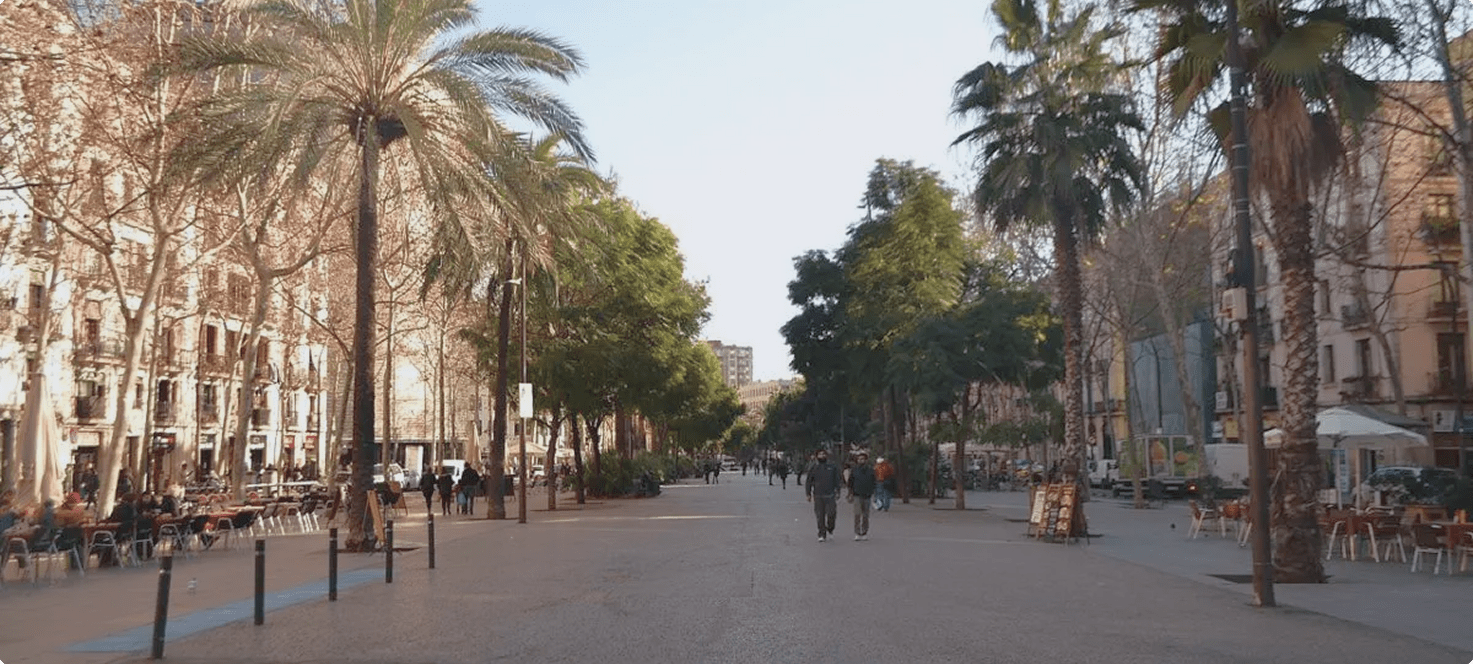
This is where the rebel troops who marched out of their barracks, Pedralbes among them, clashed with the workers and loyalist forces who stood up to them. Your guide reconstructs the day: who was where, how the unions organized their resistance and why the uprising’s defeat in Barcelona was decisive for the course of the war. The Hotel Colón, which became the headquarters of the PSUC communist party, stood where the Apple Store is today, on the corner of Passeig de Gràcia; your guide places it with period photographs.
Heading down from Plaça de Catalunya, the route turns into Carrer dels Tallers, in the Raval, the city’s first industrial neighborhood. At number 75 stood El Vapor, the Bonaplata, Rull, Vilaregut & Co. factory, considered the first in Spain to run on a steam engine: it started up in 1833 and workers burned it down in August 1835, seeing the machines as a threat to their jobs. Your guide explains how Catalonia got ahead of the rest of Spain in the Industrial Revolution and how those factories created a working class that would go on to organize: in 1910 the CNT, the anarchist union that would lead the resistance on July 19, 1936, was founded in Barcelona. The stop ends in front of the CNT’s current headquarters on Carrer de Joaquín Costa, a few steps from MACBA.
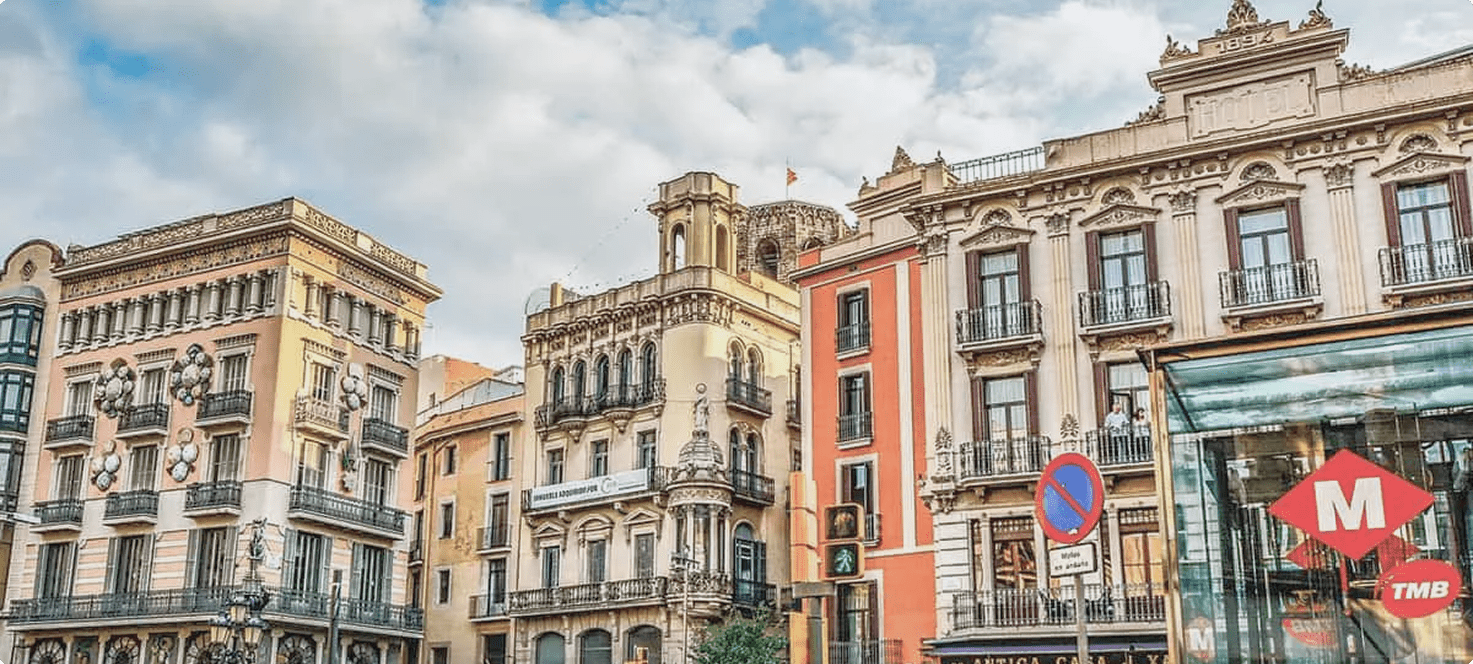
George Orwell arrived in Barcelona in December 1936 to fight with the POUM militia. In May 1937, on leave in the city, he witnessed the war within the war: the CNT and the POUM against the PSUC and the government for control of the Republican rear. Orwell spent those days on the roof of the Poliorama theater on La Rambla, rifle in hand, and told the story in Homage to Catalonia. Your guide points out the building from the street and explains what was happening around it.
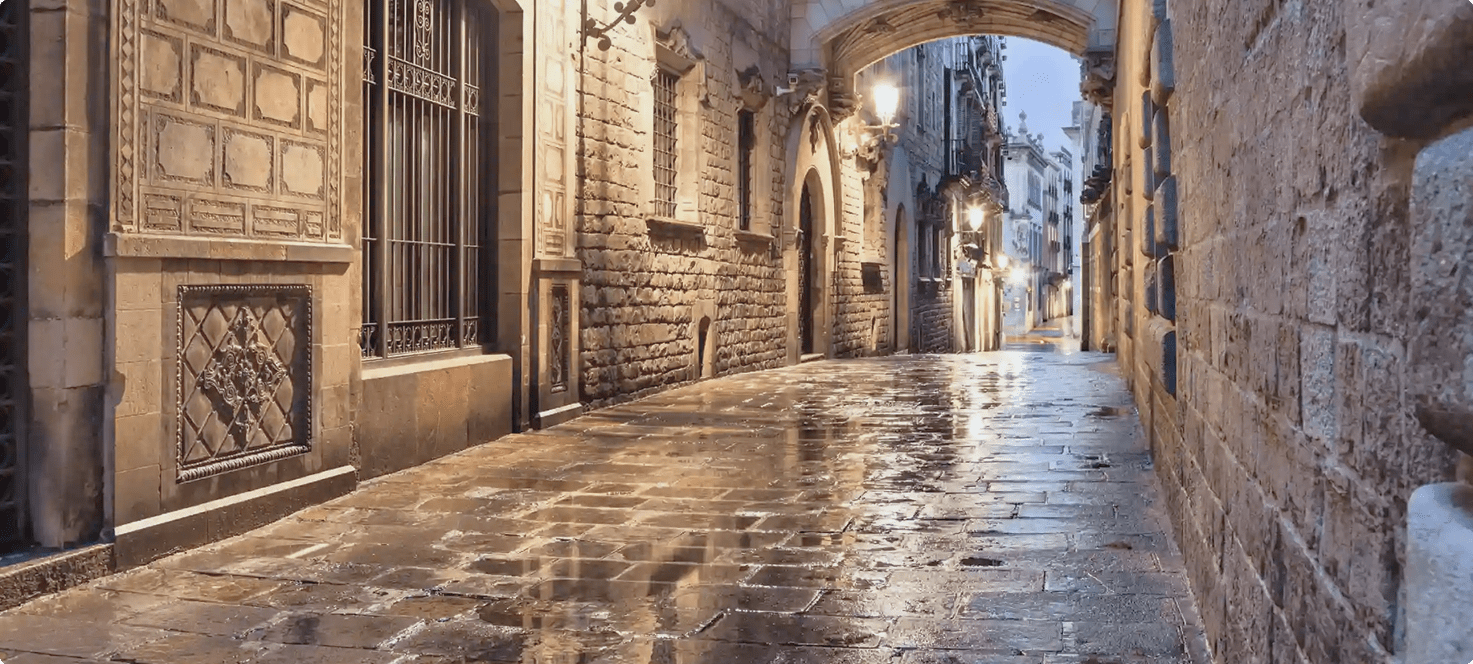
The medieval streets of the Gothic Quarter filled with barricades in the first days of the uprising, built with paving stones torn up from the ground. Your guide explains the geography of power in the city during the war, which areas each force controlled and how that changed over three years, and shows the scars the conflict left, such as the shrapnel from the 1938 bombing still visible on the façade of Sant Felip Neri.
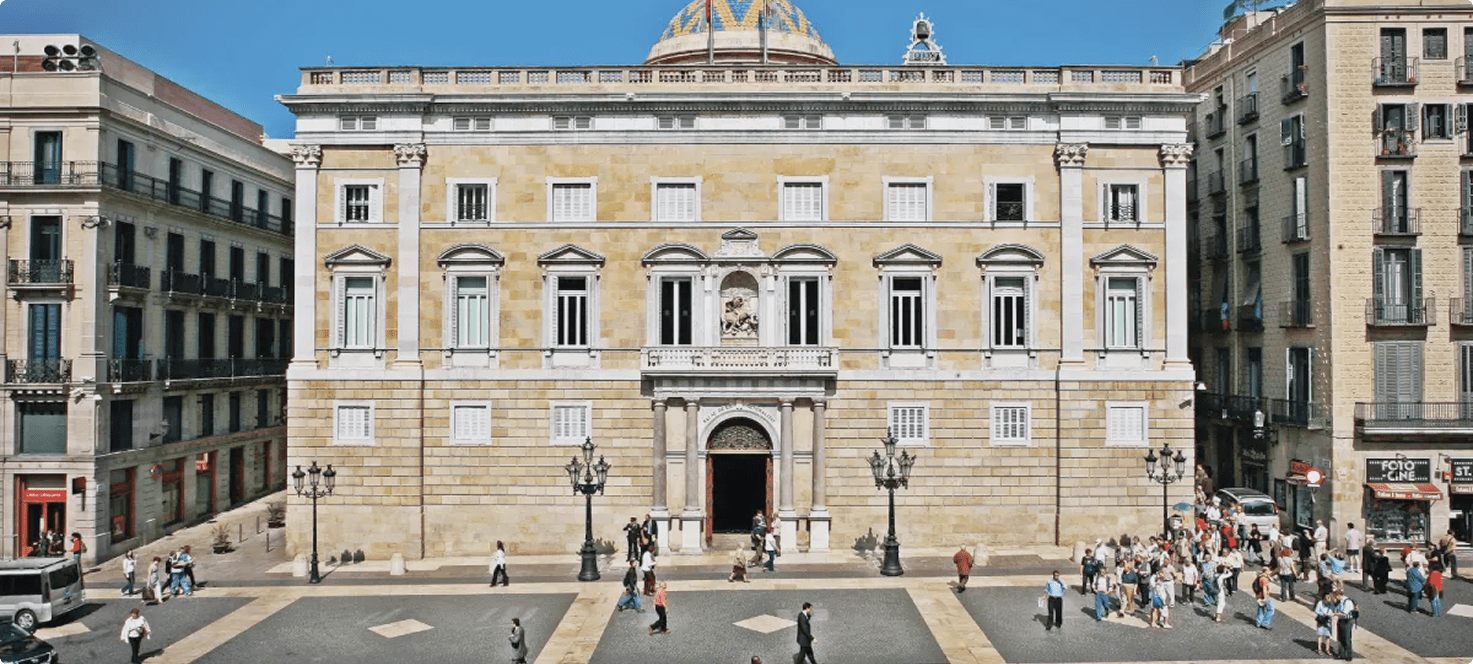
The Palau de la Generalitat was the political heart of Republican Catalonia. Lluís Companys, president of the Generalitat from 1934, went into exile at the end of the war; the Gestapo arrested him in France in 1940 and handed him over to Franco’s Spain, which had him shot at Montjuïc Castle on October 15 of that year. Your guide places the Palau on the wartime map of power, explains the tensions between the Generalitat and the unions and describes the last days before Franco’s troops entered Barcelona on January 26, 1939.
Next to the basilica of Santa Maria del Mar, this square has held since 1714 the remains of those who fell defending Barcelona during the Siege that ended the War of the Spanish Succession. Although the episode predates the Civil War, over time the Fossar became a symbol of resistance that Francoism tried to silence: during the dictatorship it was forbidden to commemorate the Diada here, and the flame that burns in the cauldron today was not installed until 2001, already in democracy. The motto engraved in the square, that no traitor is buried here, sums up a spirit of struggle for Catalan freedoms that also ran through the years of the Republic and the war of 1936-1939. Walking to this corner of El Born shows how the memory of different defeats is woven into the same urban space.
INCLUDED
NOT INCLUDED
The price is per group, not per person: the total is split among everyone, so the more people in your group, the less each person pays.
| People | Total | Per person |
|---|---|---|
| 1 person | €326.70 | €326.70 / person |
| 2 people | €314.60 | €157.30 / person |
| 3 people | €326.70 | €108.90 / person |
| 4 people | €387.20 | €96.80 / person |
| 5 people | €453.75 | €90.75 / person |
| 6 people or more | — | €84.70 / person |
| People | Total | Per person |
|---|---|---|
| 1 person | €326.70 | €326.70 / person |
| 2 people | €314.60 | €157.30 / person |
| 3 people | €326.70 | €108.90 / person |
| 4 people | €387.20 | €96.80 / person |
| 5 people | €453.75 | €90.75 / person |
| 6 people or more | — | €84.70 / person |
* Children aged 0 to 11: free. No hidden fees or booking surcharges.
Book early if you’re arriving in Barcelona in high season.
* We recommend booking at least 7 days in advance to guarantee guide assignment. During peak season (May–September), guides work at full capacity: the earlier you book, the more schedule options you will have available.
Your guide will be waiting for you at the Catalunya metro exit (L1 and L3). After booking, we will provide you with the guide’s phone number so you can easily locate them at the meeting point.
Metro Catalunya · L1 / L3
Free cancellation available
You can cancel free of charge up to 48 hours before the tour start time. Cancellations made less than 48 hours in advance or no-shows will not be refunded.
If this is your first time approaching the subject, this private tour is designed to build the context from scratch: the guide establishes who the CNT-FAI, the POUM, and the PSUC were before reaching the locations where they clashed, and places each site within the chronology of the conflict without taking anything for granted. If, on the other hand, you have already read Orwell, know the history of the Second Republic, or have a background in contemporary history, the tour can go much further: the guide works with primary sources and is prepared to delve into the historiographical controversies that a group with prior knowledge might want to explore.
If you have read Homage to Catalonia and want to see the real-life locations, this is the tour. The Poliorama building on Las Ramblas: where Orwell spent the May Days of 1937 barricaded with a rifle: is one of the stops on the tour. The guide works with the text: reading the passage in which Orwell describes his position, pointing out the building from the street, and explaining what was happening on Las Ramblas block by block as he wrote. We also cover the context of the POUM, the repression after May ’37, and why Orwell had to flee Barcelona.
No. This private tour takes place entirely in public spaces (streets, squares, and facades) without access to any paid monuments or museums. If you would like to visit the Poble Sec air-raid shelter after the tour (the most accessible of those managed by the Museu d’Història de Barcelona), the guide can advise you on how to book it. It is a complementary visit that fits in well the next day.
If you are coming with teenagers aged 12–13 and up who are interested in history, the tour works very well: the content is dense, but the guide knows how to adapt it without losing rigor. We do not recommend it for younger children: the focus is political and historical, without the immediate visual component of other tours like the Sagrada Família or the Gothic Quarter. If you are coming with children under 10, please let us know when booking and the guide will adjust the narrative as much as possible.
If you want to understand Barcelona in depth, this tour pairs very well with our private Gothic Quarter tour, which covers the two thousand years of history before it in the same area, and with our Pablo Picasso and Barcelona tour, which portrays the late 19th and early 20th-century city where the painter trained. Together they give a complete historical reading of the city without overlapping.
For this tour, the schedule does not affect the content: all locations are outdoors and work the same in both time slots. That said, the afternoon session (4:30 PM) has the advantage that, at the end of the tour, the group is right in the heart of the historic center to have dinner or a drink in the bars of the Gothic Quarter or El Born: neighborhoods that are explored during the tour. If you arrive during high season and have flexibility, the morning usually has more guide availability.
Yes. The tour can be booked from 1 person. The price is per group: for two people, the total is €314.60 (€157.30 per person). The more people in your group, the less each person pays, down to €84.70 per person for groups of 6 or more. You’ll find the full table on this page; if you have any questions, message us on WhatsApp before booking.
We had read Homage to Catalonia before the trip and wanted to see the real places. The guide took us to the Poliorama building and read us Orwell's passage on the spot. There is no better way to do it.
Our guide knew the subject at a level that goes far beyond any general-interest book. Three hours felt too short. I recommend it to anyone who wants to understand 20th-century Barcelona.
We took the tour with a group of historians and the guide was up to the task at all times. He knows the primary sources, the historiographical controversies, and the streets all at once. That is not easy to find.
I've been to Barcelona three times and never really understood what happened here in '36. This private tour completely changed how I see the city. It's well worth it even if you don't have a prior interest in history.
If you have any questions or special needs before booking, write to us — we reply in less than 24 hours.