We did it in the afternoon and it was perfect. I never thought the story of Santa Eulàlia could be so visual — the guide took us to the column of martyrdom and suddenly the legend made real sense.
Inicio / Tours privados / Private Tours in Barcelona / Barcelona Legends Tour
Walking tour through the narrow medieval streets of El Born and the Gothic Quarter, where the myths of Santa Eulàlia, the cathedral dragon, and the creatures that inhabit the gargoyles of the old town were born — and many other stories that only make sense in the place where they occurred. Tour with an official tour guide.


Barcelona accumulates more than two thousand years of history in a single square kilometer of its old town. That time does not disappear — it settles in the form of legends, stone creatures, street names that no longer make sense, and stories that Barcelonians have repeated from generation to generation without knowing exactly when they began. This private guided tour gathers the oldest and most documented of them: not tour-guide anecdotes, but myths with historical roots that explain how the city built its identity over the centuries.
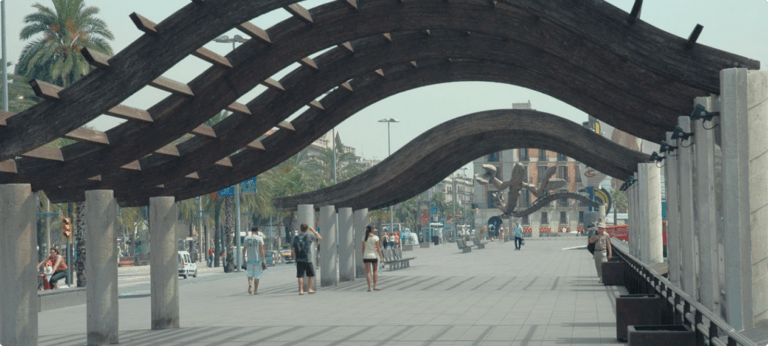
The itinerary starts at Moll de la Fusta, the old port, and winds through the medieval narrow streets of El Born and the Gothic Quarter for three hours. The guide connects each legend with the physical space where it was born: the column where Santa Eulàlia was tied, the cathedral cloister where they say the dragon she faced lived, the small square where tradition places the murder of Guifré el Pilós. No reenactments or staging — just the knowledge of an official guide and the stones that have been telling the same story for centuries.
The tour begins at Moll de la Fusta and heads inland into the old town, following the logic of the legends: from the myths of the sea and medieval trade to the foundational stories of the city’s Roman and Christian core.
The port of Barcelona predates the city. In Roman times, the colony of Barcino used this stretch of coastline for the trade of wine, oil, and garum. The guide points out the exact spot where medieval galleys used to dock and explains the legend of the port’s mermaid — a figure that appears repeatedly in the tales of Catalan sailors between the 14th and 16th centuries — and its connection to the sculptural representations of the Llotja de Mar, the commercial exchange building that still stands in the Born neighborhood.
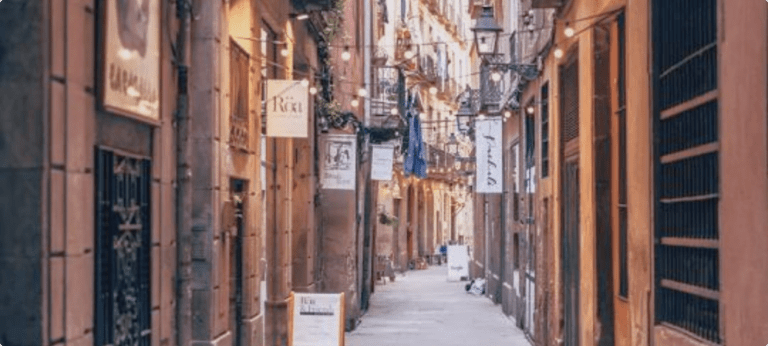
The Born neighborhood retains its urban layout virtually intact since the 14th century. The guide walks through some of its narrowest alleyways and explains the legend of the Lady with the Umbrella: the female figure described by local residents in 18th-century documents walking at night in the rain without getting wet, identified by some as the ghost of a merchant ruined in the crisis of 1714. The tour also passes in front of the Mercat del Born, beneath whose glass floor the archaeological remains of the neighborhood demolished by order of Philip V after the fall of the city can be seen.
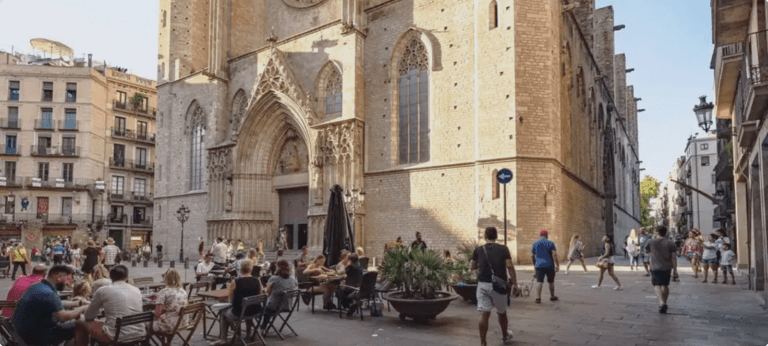
The Basilica of Santa Maria del Mar, built between 1329 and 1384 with funding from the port porters’ guild, is one of the finest examples of Catalan Gothic. The guide explains the legend of the bastaixos — the porters who carried the stones on their shoulders from the Montjuïc quarry — and how this figure of the worker building their own neighborhood’s church became one of the defining symbols of working-class Barcelona. The bastaixos are represented in the two stone figures that have guarded the main entrance of the basilica since 1383.
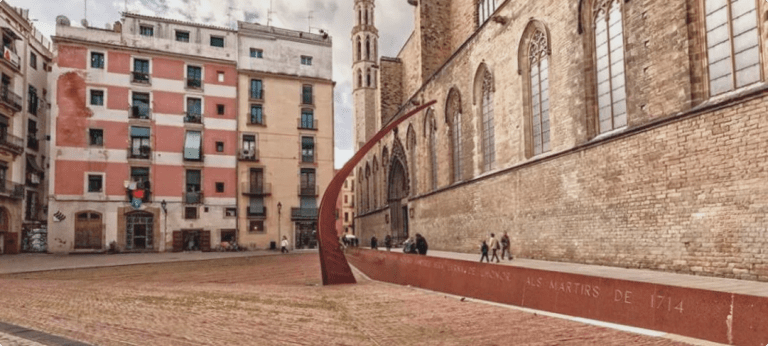
Just a few meters from the side entrance of Santa Maria del Mar lies the Fossar de les Moreres, the old cemetery where the defenders of Barcelona who fell during the siege of 1714 were buried. According to oral tradition recorded in 19th-century chronicles, a female figure in white wanders the site on September nights — the month of the anniversary of the city’s fall on September 11, 1714 — stopping by the gravestones of the fallen before vanishing at dawn. The legend blends with historical memory: today, the Fossar is a space of collective mourning with an eternal flame lit since 1989, and the White Lady is inseparable from that weight.
The Gothic Quarter was literally built on top of Barcino, the colony founded by Augustus around 10 BC. The guide points out the spots where the Roman city comes to the surface: the remains of the Temple of Augustus inside the Centre Excursionista de Catalunya, the towers and stretches of wall that survived integrated into medieval facades, the layout of the cardo maximus beneath today’s Carrer del Bisbe. This is where the legend of the serpent of Barcino begins — a colossal reptile that medieval texts placed in the sewers of the Roman city — and its subsequent connection to the dragon of Santa Eulàlia.
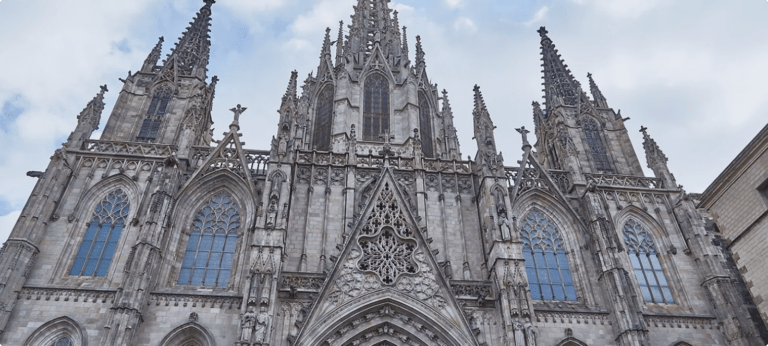
Barcelona Cathedral, begun in 1298 over the former Romanesque cathedral, is the central setting for the legend of Saint Eulalia: the young Christian woman from Barcelona who, according to tradition, was martyred by the Roman governor Dacian in 303 AD after refusing to worship the Roman gods. The guide reconstructs the complete cycle: the thirteen torments described in the acts
This small square in the Gothic Quarter, opened in 1837 after the confiscation of church property, preserves on its church walls the shrapnel marks from a bombing that killed forty-two people in January 1938. The site holds two layers of legend: the oldest places the workshop of the shoemaker Fluvià here, a figure from Barcelona folklore linked to medieval guilds; the most recent, the story of the bombing and the children from the adjacent school who died in it. The guide explains both and lets the space speak.
INCLUDED
NOT INCLUDED
The price is per group, not per person. The total is split among all participants. The more people, the lower the cost per person.
| People | Total | Per person |
|---|---|---|
| 1 person | €199 | €199 / person |
| 2 people | €178 | €89 / person |
| 3 people | €267 | €89 / person |
| 4 or more people | — | €70 / person |
| People | Total | Per person |
|---|---|---|
| 1 person | €330 | €330 / person |
| 2 people | €300 | €150 / person |
| 3 people | €330 | €110 / person |
| 4 or more people | — | €90 / person |
* Children (0 to 11 years old): free. No hidden fees or booking surcharges.
The private Barcelona legends tour is one of the most popular tours during peak season — book well in advance if you are visiting in summer.
* We recommend booking at least 7 days in advance to guarantee guide assignment. During peak season (May–September), guides work at full capacity — the earlier you book, the more options you will have.
Your guide will be waiting for you at the Barceloneta metro exit (L4), at the entrance to Moll de la Fusta, at the foot of the Columbus Monument. After booking, we will provide you with the guide’s phone number so you can easily find each other.
Barceloneta Metro L4 · Moll de la Fusta
Free cancellation available
You can cancel free of charge up to 48 hours before the tour start time. Cancellations made less than 48 hours in advance or no-shows will not be refunded.
No. The tour includes more stories than those described here — the ones mentioned are a representative selection to give you an idea of the type of content and the level of historical rigor. The guide places each story in its historical context, explaining which parts are based on documentary evidence and which are oral tradition. Some legends may vary slightly depending on the day’s route or the group’s interests.
Yes, from ages 7–8. The dragons, gargoyles, and tales of medieval saints work really well with children of that age — the visual appeal of the old town is immediate, and the guide adapts the vocabulary to the group. Some parts of the tour, such as Plaça de Sant Felip Neri, touch on the Civil War: the guide adjusts the depth of the explanation based on the ages of those present. Children under 12 go free. Please let us know the ages of the children when booking.
The tour includes the Cathedral cloister — where the thirteen geese of Saint Eulalia are — provided that access is free at the time of the visit. The interior nave is not included. If you wish to enter the nave, we also recommend booking the Private Tour of the Gothic Quarter and Barcelona Cathedral, which includes guided access to the interior.
The Gothic Quarter and Cathedral Private Tour covers the history of the Gothic in all its breadth: Roman, medieval, and Renaissance Barcelona, with Cathedral entry included. This legends tour has a specific thematic focus — the folklore, myths, and stories born in those very streets — and extends the area towards El Born and the port. These tours are complementary, not overlapping. Many visitors do one each day.
We did it in the afternoon and it was perfect. I never thought the story of Santa Eulàlia could be so visual — the guide took us to the column of martyrdom and suddenly the legend made real sense.
He hecho muchos tours a pie por Europa. Este destacó porque el guía realmente explicó el origen de cada leyenda: no solo la historia, sino de dónde venía y por qué arraigó. La zona del Born fue mi favorita.
We did it with our two children, aged 9 and 11. The cathedral's dragon and the gargoyles fascinated them. The guide adapted everything without it feeling like a tour for kids — a very good balance.
La plaza de Sant Felip Neri fue el momento más emotivo de todo el viaje. Nunca la habríamos encontrado por nuestra cuenta, y sin el guía no habríamos entendido qué significaban esas marcas en las paredes.
If you have any questions or special needs before booking, write to us — we reply in less than 24 hours.