Guided tour of La Barceloneta

Private tour of La Barceloneta with an official guide

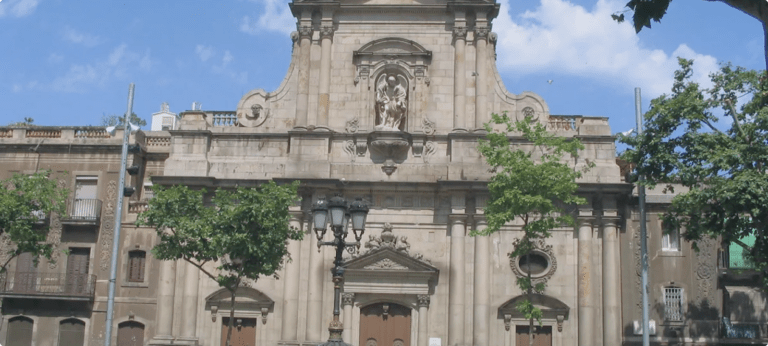
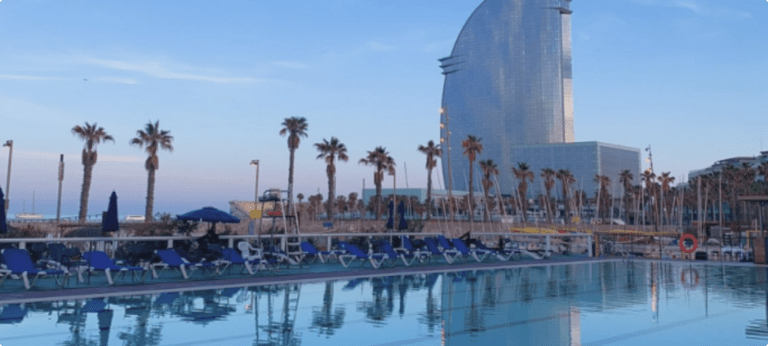
Walking tour of the fishermen's quarter founded in 1753, the seafront promenade renovated after the 1992 Olympic Games, the W Hotel by Ricardo Bofill, the Barcelona Swimming Club, Barceloneta Park, the Market Square, and the Church of Sant Miquel del Port. Tour with an official tour guide.

Rating on TripAdvisor and Viator
0
Exterior and interior durability
0 h
Certified official tour guides
0 +
Exclusive private groups
0 %
About this tour

Private tour of La Barceloneta: the neighborhood built on a sandbar

La Barceloneta exists because in 1714 Philip V demolished the Ribera neighborhood to build the Citadel, and its inhabitants needed a place to live. For nearly 40 years, they did not have their own neighborhood: they were rehoused in barracks inside the Citadel itself and in requisitioned houses in the Raval while the city debated what to do with them. Military engineer Juan Martín Cermeño solved the problem in 1753 by designing a new neighborhood on the sandbar between the sea and the port: a grid of narrow streets, three-story blocks, and an urban model designed to house fishermen and port workers in the smallest possible footprint. The neighborhood’s streets are barely five meters wide. The blocks, nine meters of facade. It is the Barcelona that grew up right next to the sea, before Barcelona turned to face the sea.

For two centuries, La Barceloneta lived with its back turned to the rest of the city: a working-class, industrial neighborhood, set apart from the center, with beaches that were industrial dumping grounds until the 1980s. The 1992 Olympic Games changed everything. The urban redevelopment that accompanied the Games did not just build the Olympic Port and the Olympic Village: it rehabilitated four kilometers of coastline, buried the railway tracks that cut the neighborhood off from the sea, and gave Barcelona back the beach it had ignored for decades.

In a 3-hour walking tour, the route crosses both layers—Cermeño’s grid, intact in its layout, and the Olympic seafront that surrounds it—from the Metro exit to the Paseo Marítimo.


What we'll visit

Tour itinerary: from La Barceloneta to the Paseo Marítimo

The route starts at the Barceloneta Metro exit (L4) and moves towards the sea, crossing the neighborhood and the waterfront:

Metro Barceloneta and access to the neighborhood (L4, Passeig de Joan de Borbó)

The entry point to the neighborhood, where the guide introduces the context: the demolition of the Ribera neighborhood in 1714 and the 40 years that elapsed until Cermeño designed Barceloneta in 1753. The decision to build on the sandbank – land reclaimed from the sea – explains the unique morphology of the neighborhood: narrow, elongated and completely surrounded by water on three sides.

Neighborhood streets and San Miquel del Port Church (Plaça de la Barceloneta)

The eighteenth-century Barceloneta, which is still recognizable in its layout. The five-meter wide streets, the blocks of first floor plus two floors that Cermeño designed to maximize density without exceeding the maximum height allowed in the original project, and the Church of San Miquel del Port, completed in 1755, as the only public facility that the original plan of the neighborhood incorporated. The guide analyzes the baroque façade and the inscription on the façade, which identifies the designer and the date of construction.

Barcelona Swimming Club (Passeig Marítim, founded in 1907)

The first swimming club in Spain, founded on November 10, 1907 by Bernat Picornell, based on the Paseo Marítimo since the Olympic reform. The guide explains the history of swimming in Barcelona in the 20th century and the role that the coastal sports clubs played in the city’s relationship with the sea before the beaches were for public use.

Barceloneta Park and Market Square (Mercat de la Barceloneta)

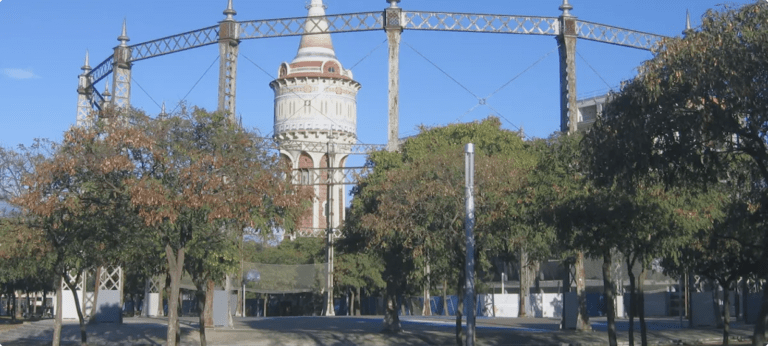
The only green space in the neighborhood, created in the 1990s by burying the section of railway track. Next to it, the market square with the Mercat de la Barceloneta building, built in 1884 and renovated between 2007 and 2012: the neighborhood’s supply market for more than a century. The guide reconstructs the daily life of the neighborhood before and after the Olympic Games.

Promenade and waterfront (1992 Olympic renovation)

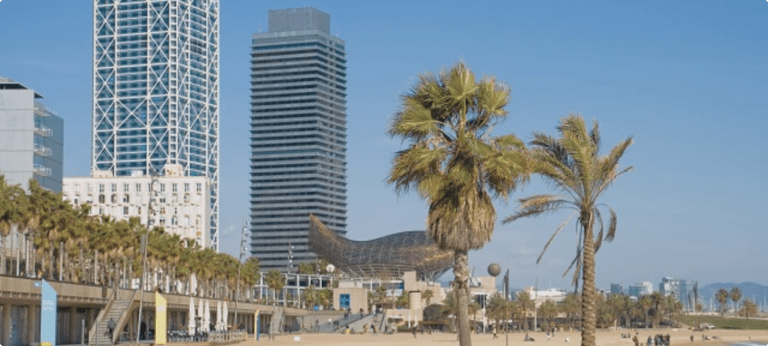
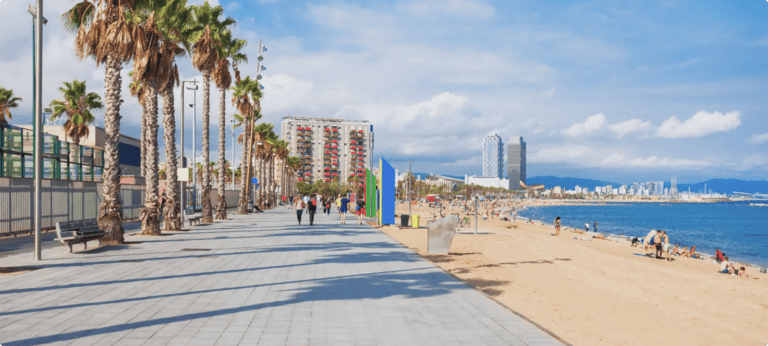
The stretch of coastline recovered for the city in the urban development operation for the 1992 Olympic Games: four kilometers of promenade, beach and public space where there used to be factories, railroad tracks and landfills. The guide explains the scope of the transformation – the burying of the coastal railway line, the filling of the beaches with sand brought from Almeria – and the urban controversy that accompanied the operation.

Hotel W and Puerto Olímpico (Ricardo Bofill, inaugurated 2009)

Ricardo Bofill’s sailboat at the southern end of the Paseo Marítimo: the building that became the new visual landmark of Barcelona’s waterfront and has divided the opinion of the locals since its inauguration. Next to the W Hotel, the Olympic Port, built to host the sailing regattas of the 1992 Games, is today the city’s second largest marina with more than a thousand moorings.


What's included

What's included in this private tour of La Barceloneta

INCLUDED

  • ✓ Private official tour guide
  • ✓ 3-hour guided tour.
  • ✓ Complete tour of the neighborhood and waterfront.
  • ✓ Available in English and Spanish
  • ✓ Free cancellation (up to 48 hours before)

NOT INCLUDED

  • ✗ Entrance fees to museums or venues.
  • ✗ Food or beverages
  • ✗ Transport to the meeting point.

Pricing

Barceloneta private tour price - per group, not per people

The price is per group, not per people. The total is divided among all participants. The more people, the lower the cost per head.

Low Season (October 1 - April 30)

PeopleTotalPer person
1 people199€199€ / people
2 people178€89 / people
3 people267€89 / people
4 people or more-70 / people

High Season (May 1 - September 30)

PeopleTotalPer person
1 people330€330 / people
2 people300€150 / people
3 people330€110€ / people
4 people or more-90€ / people

Tour schedule

Available time slots

The private tour of La Barceloneta is one of the most popular in summer because of the combination of historic district and waterfront – book early if you arrive in high season.

  • 10:30 hs.Morning session
  • 16:30 hs.Afternoon session

Tour details

Languages, accessibility and practical information

DURATION
3 hours
TOUR TYPE
100% private - only your group
LANGUAGES
Spanish - English
GUIDE
Official tourist guide (Títol de Guia de Turisme de Catalunya, Generalitat de Catalunya)
ACCESSIBILITY
Flat and accessible route. The streets of La Barceloneta have narrow cobblestone sections - please indicate any needs when booking.
MASCOTAS
Check availability when booking
MINIMUM RESERVE
7 days before (before in high season)
CHILDREN
Free (0-11 years). All ages welcome.

Meeting point

Where to find your Barceloneta tour guide

Barceloneta Metro exit (L4) - Passeig de Joan de Borbó, Barcelona

Your guide will be waiting for you at the Metro Barceloneta exit (line 4). After booking we will provide you with the guide’s telephone number so that you can be reached without complications.

Barceloneta Subway (L4)

Tour checkpoints


Cancellation Policy

Free cancellation up to 48 hours before the tour

Free cancellation available

You can cancel free of charge up to 48 hours before the tour start time. Cancellations made less than 48 hours in advance or no-shows will not be refunded.


FAQs

Frequently asked questions about the private tour of La Barceloneta

Why hire a tour for a neighborhood that can be covered on foot in twenty minutes?

You can tour the neighborhood in twenty minutes, but much of its history goes unnoticed without context. What the guide provides is the reading: why the streets are exactly five meters wide, what was on this sandbank before 1753, what happened to the residents of the Ribera neighborhood displaced by Philip V, how the neighborhood survived two centuries ignored by the rest of the city, and what the Olympic transformation meant for the people who lived here. Without that context, La Barceloneta is a neighborhood by the sea. With it, it is one of the most concrete and documented urbanistic experiments in Barcelona’s history.

What is left of the original 18th century neighborhood? Has it changed much?

The street layout is virtually identical to that of 1753. The original blocks of first floor plus two floors have been mostly replaced by taller buildings – urban planning regulations were modified throughout the 19th and 20th centuries – but the grid, the width of the streets and the orientation of the blocks are as Cermeño drew them. The Church of San Miquel del Port (1755) is the best preserved historic building in the neighborhood and one of the few elements of Cermeño’s original project that has not been substantially modified.

How was La Barceloneta transformed during the 1992 Olympic Games?

Before 1992, the neighborhood was cut off from the sea by the train tracks of the Coast Line. The Olympic project buried the coastal railway line, freed the beachfront and created the Promenade on the recovered space. The beaches of La Barceloneta were filled in with sand brought from Almería – the beach you see today is made of artificial sand – and the Olympic Port was built from scratch to house the sailing regattas. The urban development operation transformed four kilometers of industrial coastline into public space in less than four years.

Where to eat in La Barceloneta after the tour?

The neighborhood has a high concentration of tourist-oriented restaurants on Passeig Marítim, but the best places are in the interior streets. The guide can guide you at the end of the tour depending on what you are looking for. For tapas in a place with history: La Cova Fumada (Carrer del Baluard, 56) – historic bar known for having invented the bomb in the 50s, no menu, no reservations, closes at noon. For arròs caldós, paella or fideuà in a classic: Les 7 Portes (Passeig d’Isabel II, open since 1836), El Merendero de la Mari or Can Solé (Carrer de Sant Carles, 4), open since 1903 and one of the oldest seafood restaurants in the neighborhood.

What is the difference between the Barceloneta tour and the tour of El Born and the Citadel?

They are complementary tours that touch on the same history from different angles. The tour of El Born and the Citadel focuses on the medieval quarter destroyed in 1714 and the fortress that Philip V built over it – the political history of the siege and its urban consequences in the center of the city. The tour of La Barceloneta starts at that same historical point – the displacement of the residents of the Ribera neighborhood – but follows it to the sea: the neighborhood that was built to house those same residents, the port and working-class Barcelona of the 18th century, and the Olympic transformation of the coastline. Made on different days, the two tours together give a complete view of what happened in that part of the city between 1714 and 1992.


Reviews

Reviews of the private tour of La Barceloneta

★★★★★

We had been to Barceloneta beach a thousand times without knowing anything about the history of the neighborhood. The guide explained how Cermeño designed each street and why they are so narrow. Impressive.

Rachel & Tom B.New York, USA - TripAdvisor
★★★★★

The part about the 92 Olympic Games and how they transformed the coastline was what surprised us the most. We didn't know that before the works there were train tracks right where the Paseo Marítimo is now.

Lluís M.Barcelona, ES - Google
★★★★★

We loved the combination of the old fishing neighborhood and the Olympic waterfront. Our guide knew the history in impressive detail - especially about what the area looked like before 1992.

James H.Edinburgh, UK - Viator
★★★★★

We did it with 8 and 11 year olds. They loved the church of San Miquel and the story of why the neighborhood was built on the sea. The guide adapted the explanations perfectly.

Ana y Javier S.Madrid, ES - TripAdvisor

Other tours you might also be interested in

More private tours in Barcelona

Private tour of Montjuïc with official guide

Tour of Montjuïc, the mountain from which power controlled Barcelona for centuries. From here, they bombarded the city and executed its president; on this very mountain, they staged a major International Exposition under the dictatorship of Primo de Rivera and hosted the Olympic Games that returned Barcelona to the world. Tour with an official tour guide.

Welcome tour to Barcelona

Private welcome itinerary through the central neighborhoods of Barcelona: the Arc de Triomf, Ciutadella Park, El Born, the Gothic Quarter, and El Raval. Sangria included at the end. Tour with an official tour guide.

Tour of mysterious and forbidden Barcelona

Walking itinerary through El Raval, the Gothic Quarter, Las Ramblas, and Plaza Cataluña: secret passages, public execution sites, famous crimes, and the stories that the official version of the city would prefer to forget. Tour with an official tour guide.
Contact

Do you have questions about the tour? We reply within 24h

If you have any questions or special needs before booking, write to us — we reply in less than 24 hours.


Write to us

Great! We have received your information.

We were unable to process your submission. Please try again.

You can also find us on

Reserva Ahora Reserva Ahora